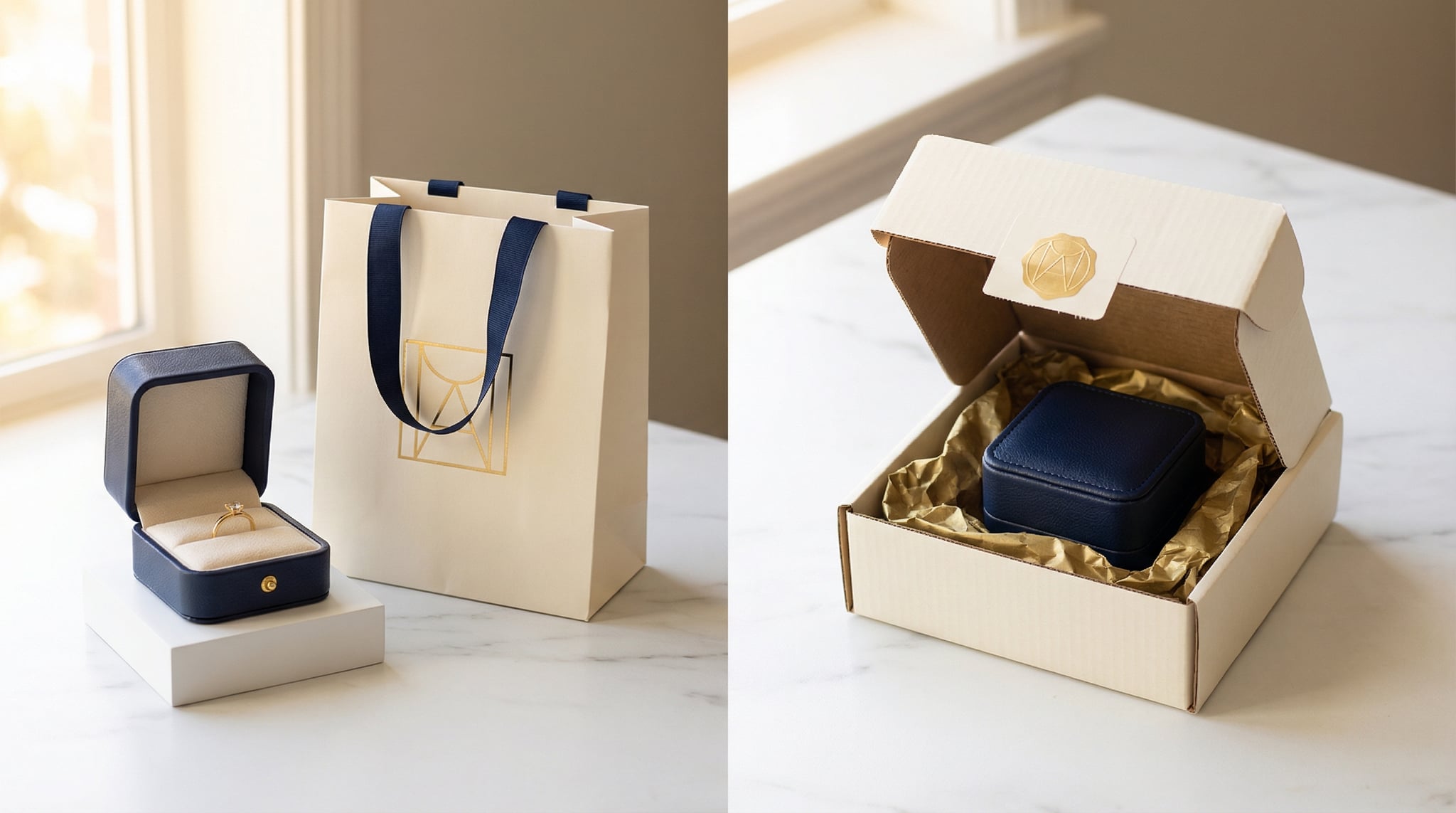
Two Channels, Two Sets of Demands
Retail and e-commerce jewelry packaging serve the same brand — but they solve fundamentally different problems. Retail packaging needs to attract attention on a counter, invite touch, and coordinate with shopping bags a customer carries out the door. E-commerce packaging needs to survive transit, replace the in-store experience with a compelling unboxing moment, and protect a $200 necklace inside a shipping truck for five days.
Most jewelry brands sell through both channels. The question is not which type of packaging to choose — it is how to design a system that serves both without doubling your budget or diluting your brand.
What Retail Jewelry Packaging Prioritizes
Display Presence and Counter Appeal
In a retail environment, your packaging is selling before anyone opens it. Boxes sit on glass counters, inside illuminated cases, and on shelves alongside competitors. The exterior finish, color, and proportions need to hold their own under store lighting.
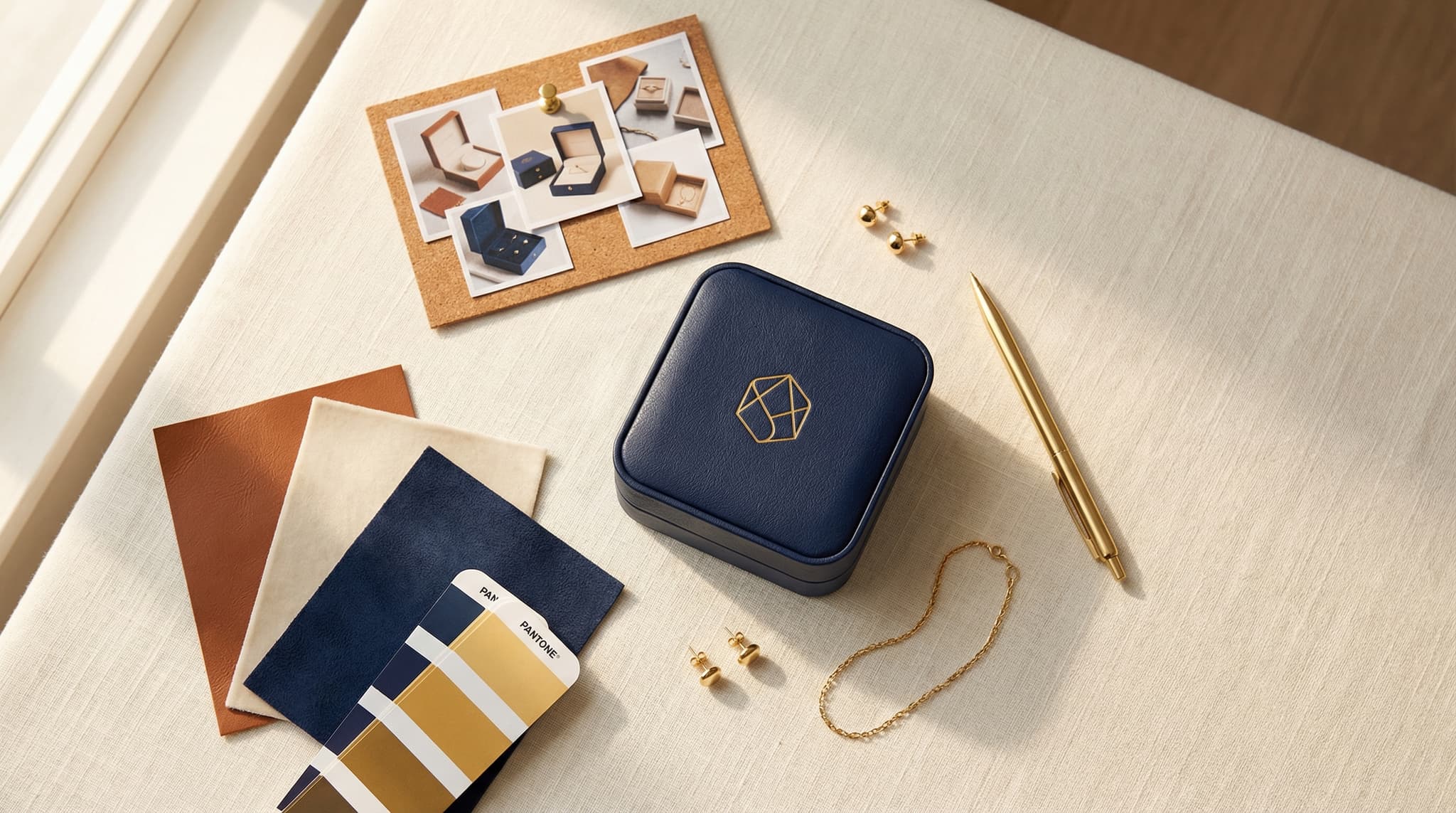
This means materials with visual depth — genuine leather with a visible grain, velvet that catches light, or textured paper with a soft-touch lamination. Finishes like gold foil stamping or blind embossing read well at arm's length and reward closer inspection.
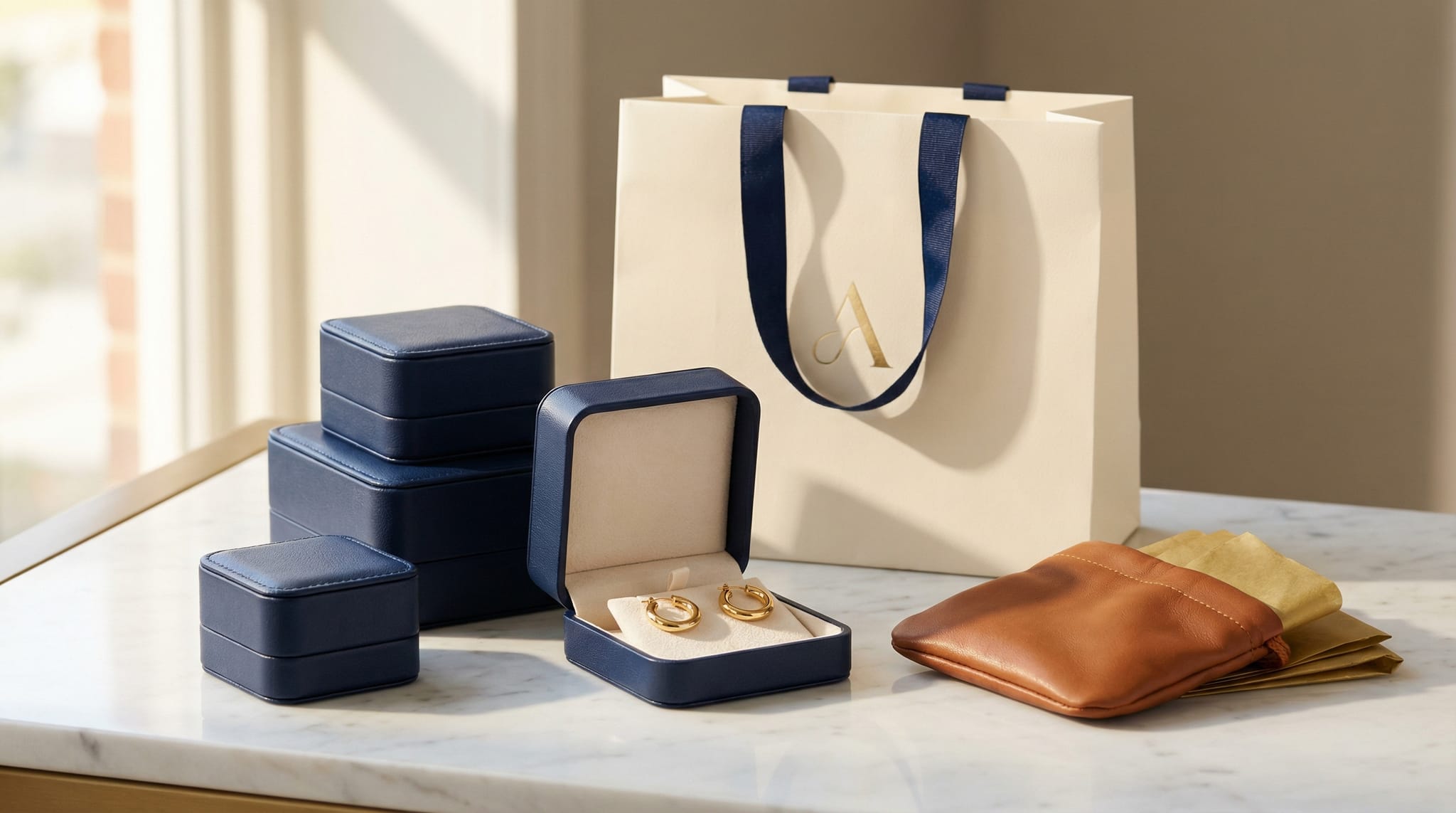
Stackability matters too. Retail staff need to arrange, restock, and store packaging efficiently. Boxes with flat lids, consistent dimensions across a size range, and stable stacking profiles make daily operations easier.
Try-On Accessibility
Retail packaging opens and closes dozens of times before a customer buys. A sales associate pulls a ring from its box, hands it across the counter, replaces it, and moves to the next piece. Magnetic closure boxes and hinged lids handle this repetition well. Clasps and ribbon closures slow the process and can feel awkward in a sales interaction.
Interior inserts need to release and receive jewelry cleanly — no fumbling with a ring slot while a customer watches. Ribbon pulls, spring-loaded cushions, and precision die-cut foam all serve this purpose.
Coordinated Shopping Bags
The retail experience extends beyond the box. A branded shopping bag is the final touchpoint — and the most publicly visible one. Customers carry it through the mall, down the street, into a restaurant. The bag's weight, handle quality, and print finish all signal your brand's positioning.
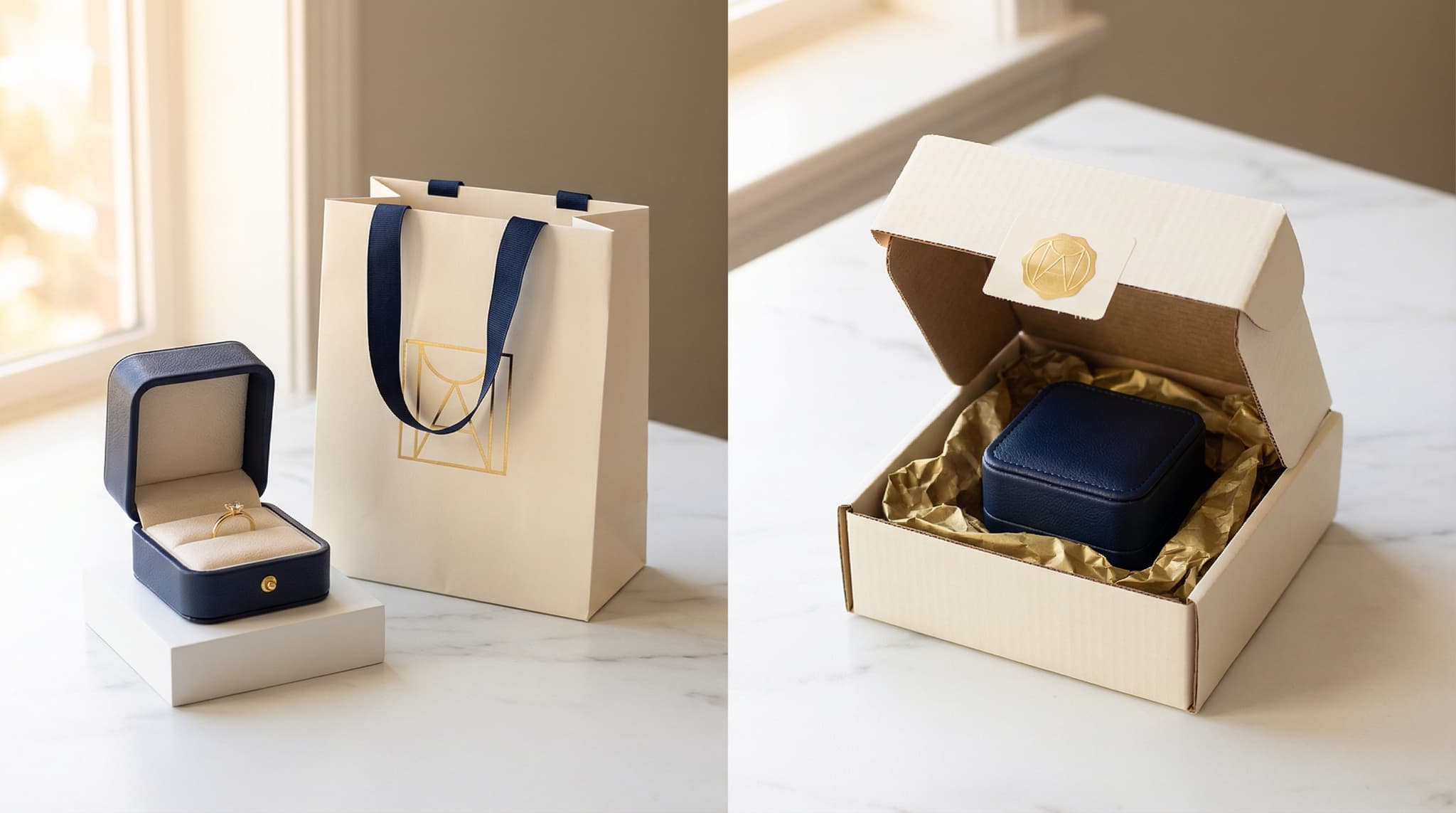
Coordinating your box and bag as a suite — matching colors, consistent logo placement, complementary materials — creates a cohesive impression that reinforces brand recognition at every stage.
What E-Commerce Jewelry Packaging Prioritizes
Transit Protection
An e-commerce jewelry box travels through sorting facilities, delivery trucks, and doorsteps. It may be dropped, stacked under heavier parcels, or left in weather. The packaging needs to arrive in the same condition it left your fulfillment center.
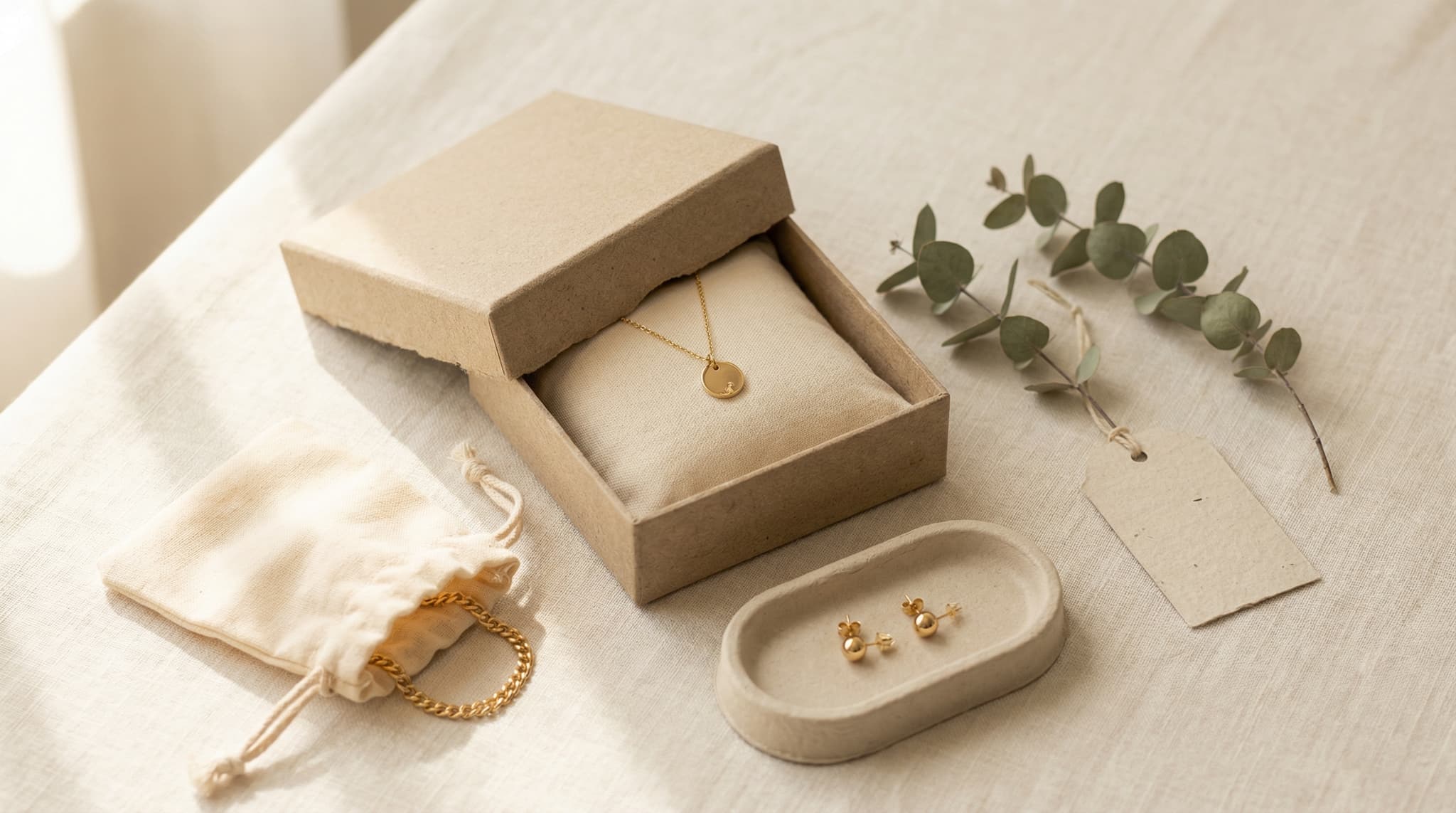
This demands a layered approach: the jewelry box itself, surrounded by protective padding (tissue, foam, or kraft paper), inside a rigid outer mailer or shipping box. The inner box protects the jewelry. The outer layers protect the inner box.
Collapsible magnetic boxes — which ship flat and assemble with magnetic tabs — are particularly popular with e-commerce brands because they reduce storage footprint in fulfillment centers while maintaining a rigid, premium feel once assembled.
The Unboxing Experience Replaces the Store
In retail, a sales associate presents your product, answers questions, and creates a personal connection. Online, your packaging does all of that alone. The unboxing experience is the single physical brand moment for an e-commerce customer — and it needs to carry the full weight of that interaction.
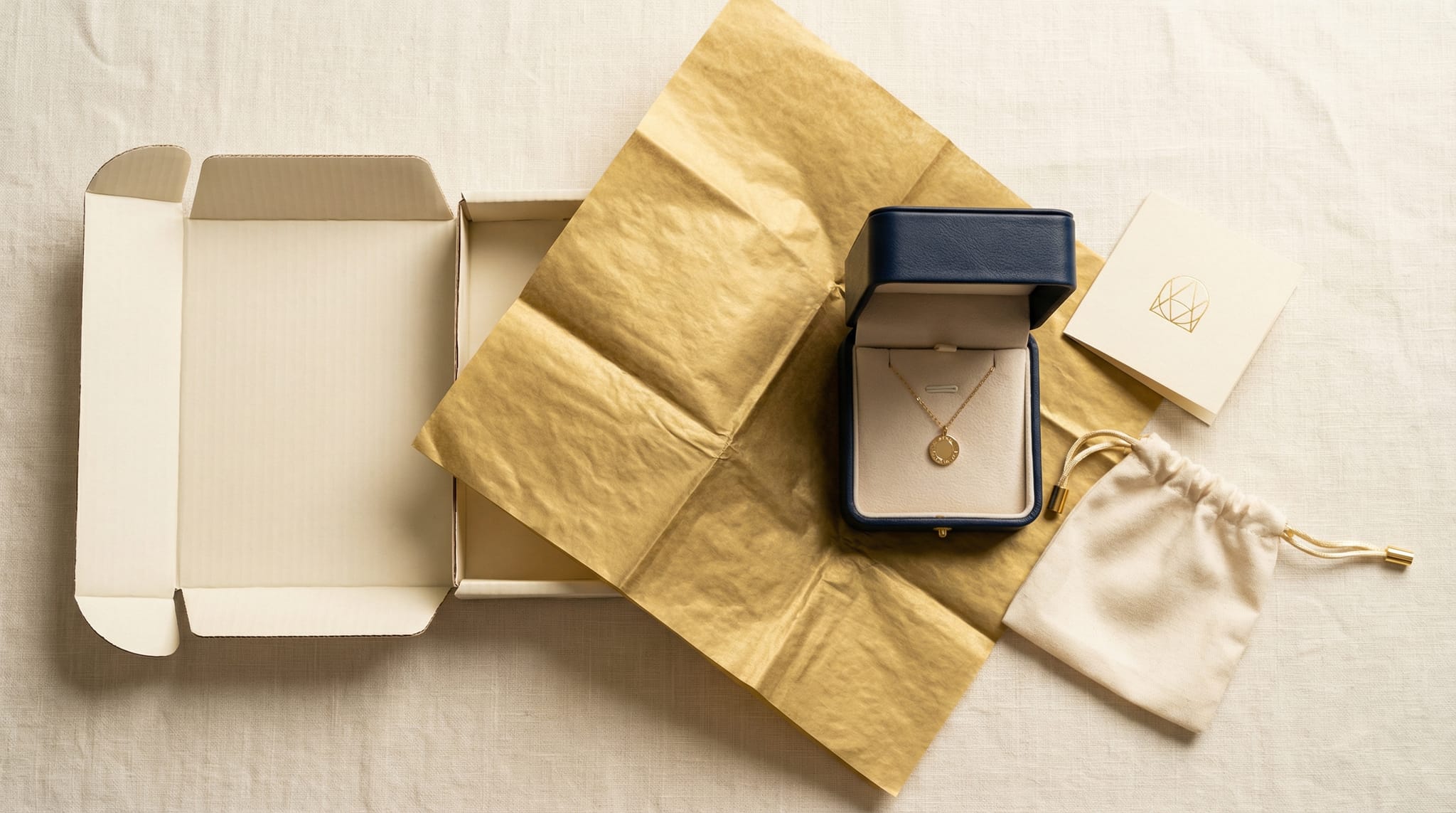
This is why e-commerce packaging benefits from deliberate layering: a branded outer mailer creates the first impression, tissue paper builds anticipation, an insert card adds a personal message or care instructions, and the jewelry box delivers the reveal. Each layer adds a moment of discovery.
The best e-commerce packaging feels intentional at every stage — not just a product in a box in another box.
Branded Mailers and Outer Packaging
The outer shipping layer is often an afterthought — and it shows. A plain brown corrugated box with a packing slip taped to the outside does nothing for brand perception. Worse, it sets low expectations before the customer even reaches your jewelry box inside.
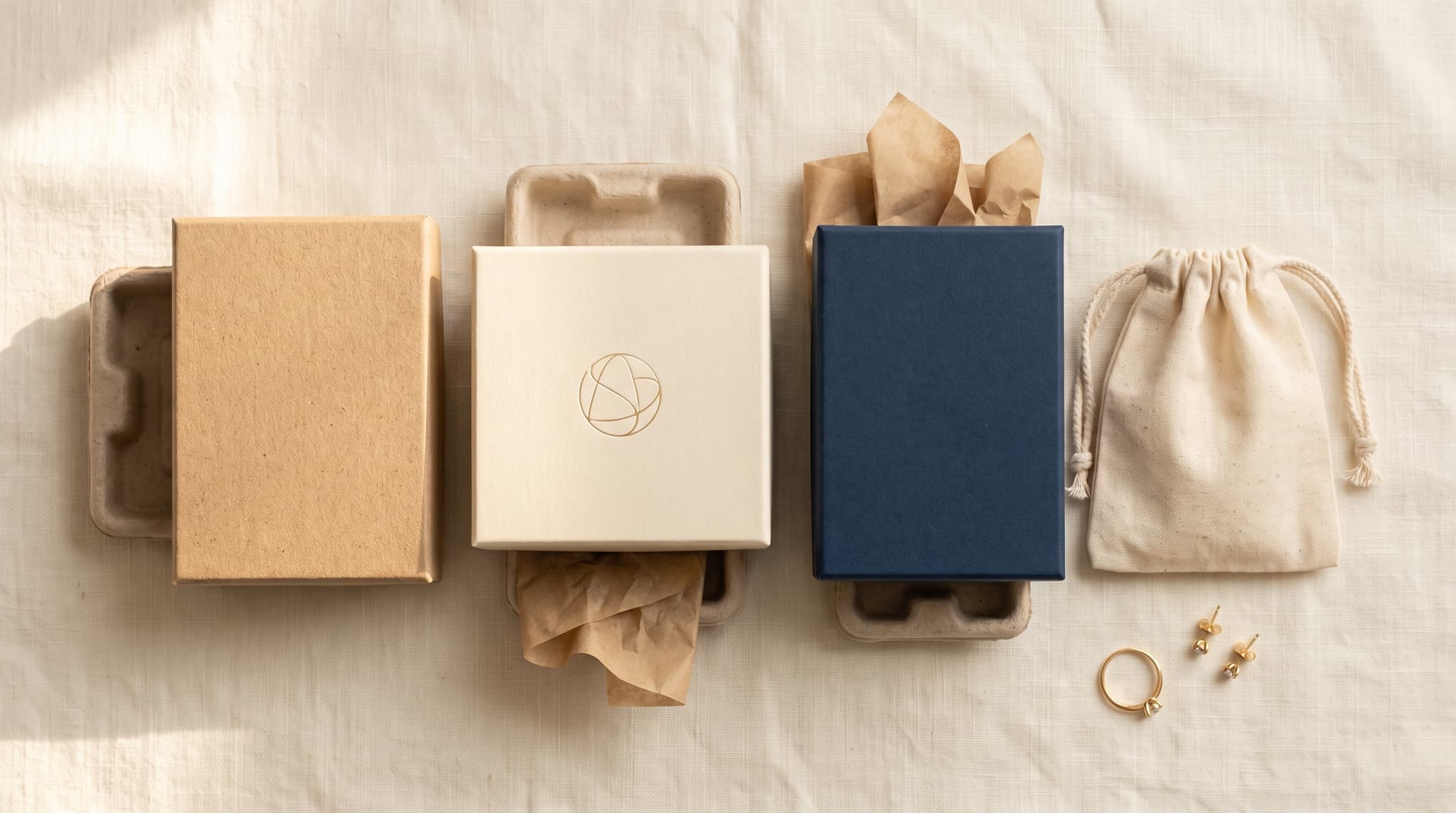
Options for branded outer packaging include custom-printed corrugated mailers, rigid mailers with interior printing, and poly mailers with branded graphics (though poly mailers are less appropriate for luxury positioning). The choice depends on your price point, sustainability priorities, and the protection level your product requires.
Retail vs. E-Commerce: Side-by-Side Comparison
| Requirement | Retail | E-Commerce |
|---|---|---|
| Primary function | Display, counter presence, try-on access | Transit protection, unboxing experience |
| Outer packaging | Branded shopping bag | Branded mailer or shipping box |
| Opening frequency | High (opened repeatedly in-store) | Once (single unboxing moment) |
| Closure type | Magnetic, hinged — quick access | Magnetic, ribbon, sleeve — ceremonial reveal |
| Interior inserts | Easy release for try-on | Secure hold for transit |
| Stackability | Critical for retail shelving | Less important |
| Layering | Box + bag | Box + padding + tissue + insert + mailer |
| Sustainability focus | Reusable shopping bags, recyclable boxes | Recyclable mailers, minimal void fill |
| Per-unit cost profile | Box + shopping bag | Box + mailer + padding + inserts |
Designing for Omnichannel: One System, Two Channels
The most practical approach for brands selling through both retail and e-commerce is a modular packaging system — a consistent inner box with channel-specific outer layers.
Start with the Inner Box
Your custom jewelry box is the constant. It should represent your brand equally well sitting on a retail counter or emerging from a shipping mailer. This means choosing materials and construction that look premium in both contexts and withstand transit without visible damage.
Keep the footprint considered. An oversized box commands attention on a retail shelf but increases dimensional weight charges for e-commerce shipping. Vela Packaging works with brands to find the balance — proportions that feel generous without inflating fulfillment costs.
Add Channel-Specific Layers
For retail, the outer layer is a coordinated shopping bag — matched in color, logo placement, and material quality.
For e-commerce, the outer layers include a protective mailer, tissue paper or wrapping, and an insert card. Some brands also include a return label or QR code linking to a care guide — touchpoints that replace the in-store conversation.
Budget Implications
E-commerce packaging typically costs more per order because of the additional protective and experiential layers. At Vela Packaging, brands ordering for both channels often produce inner boxes in a single run (300 units minimum for custom boxes), then split outer packaging by channel: shopping bags (500–1,000 minimum) for retail locations, and branded mailers for e-commerce fulfillment.
This approach keeps per-unit costs down by consolidating the highest-value component — the jewelry box itself — into one production run. For a detailed breakdown of packaging costs at each tier, see our jewelry packaging cost guide.
Common Mistakes to Avoid
Designing retail-first, then forcing it into e-commerce. A box designed for counter display may have a delicate finish that scuffs in transit, or proportions that waste space inside a mailer.
Skipping the outer layer for online orders. Your $8 custom leather box loses its impact when it arrives with a corner dent because it was shipped in a poly bag without padding.
Over-engineering e-commerce layers. Five layers of tissue, three insert cards, and a ribbon-tied outer box look impressive on an influencer unboxing video — but they add cost, waste, and assembly time in your fulfillment center. Every layer should earn its place.
Ignoring sustainability across channels. Customers notice when a brand uses sustainable inner packaging but ships it in non-recyclable plastic mailers. Consistency matters.
Getting Started
Whether your brand is retail-focused, e-commerce-first, or selling through both channels, the starting point is the same: define what your packaging needs to do in each context, then design from the inside out.
If you are building a packaging system for multiple channels — or rethinking one that is not working — request a custom quote and share your channel mix. We will design a solution that works everywhere your jewelry is sold.