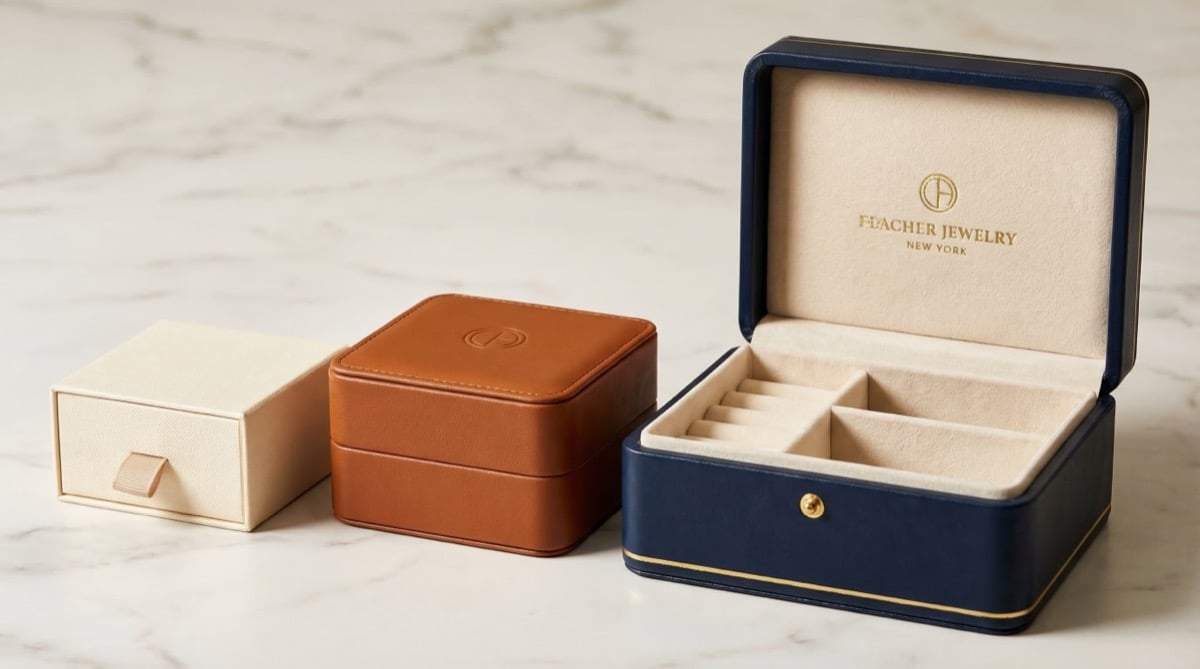
What Custom Jewelry Packaging Actually Costs
How much does custom jewelry packaging cost? Expect $2 to $25+ per unit at wholesale volumes of 300-500 pieces. Paper-wrapped rigid boxes run $2–$10, while genuine leather boxes reach $10–$25+. Setup and tooling are one-time fees charged on the first order only — reorders of the same design typically cost 15–25% less.
| Packaging Type | Per-Unit Range | Best For |
|---|---|---|
| Folding cartons / paperboard boxes | $0.50 – $2.50 | Fashion jewelry, high-volume brands |
| Standard rigid boxes (paper-wrapped) | $2.00 – $10.00 | Mid-market jewelry, gift sets |
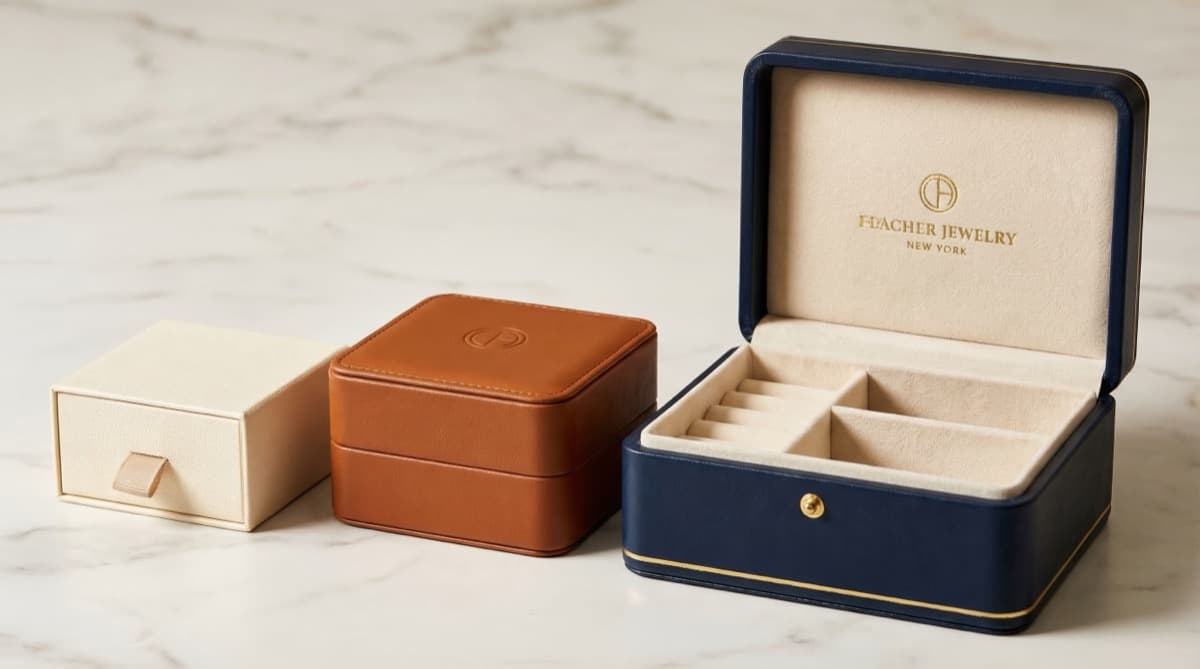
| Leather-wrapped rigid boxes | $8.00 – $25.00+ | Luxury/fine jewelry, signature collections |
| Velvet or suede pouches | $1.50 – $6.00 | Everyday jewelry, travel packaging |
| Genuine leather pouches | $4.00 – $15.00 | Premium brands, limited editions |
| Branded paper shopping bags | $0.80 – $3.50 | Retail boutiques, e-commerce fulfillment |
These are industry ranges, not fixed prices. Your actual cost depends on the factors below — and the right packaging partner will walk you through each one transparently.
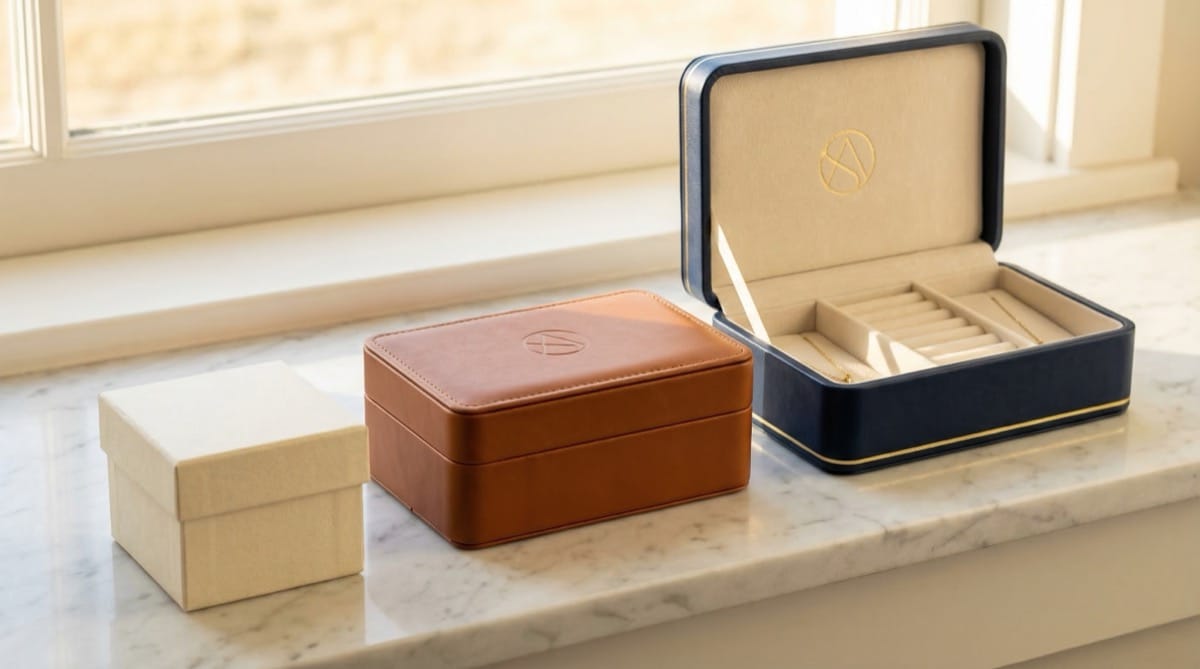
7 Factors That Drive Jewelry Packaging Pricing
1. Materials
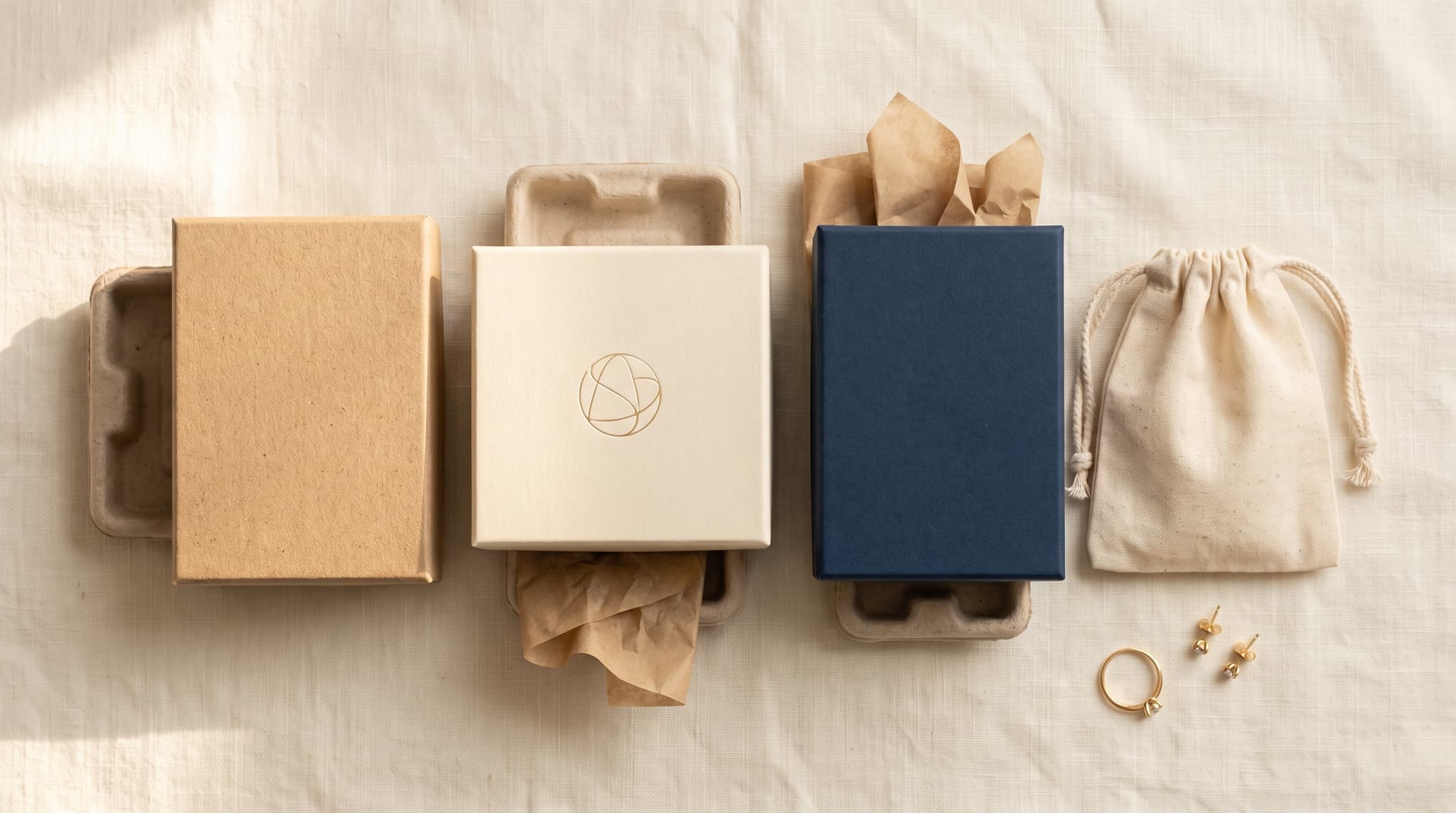
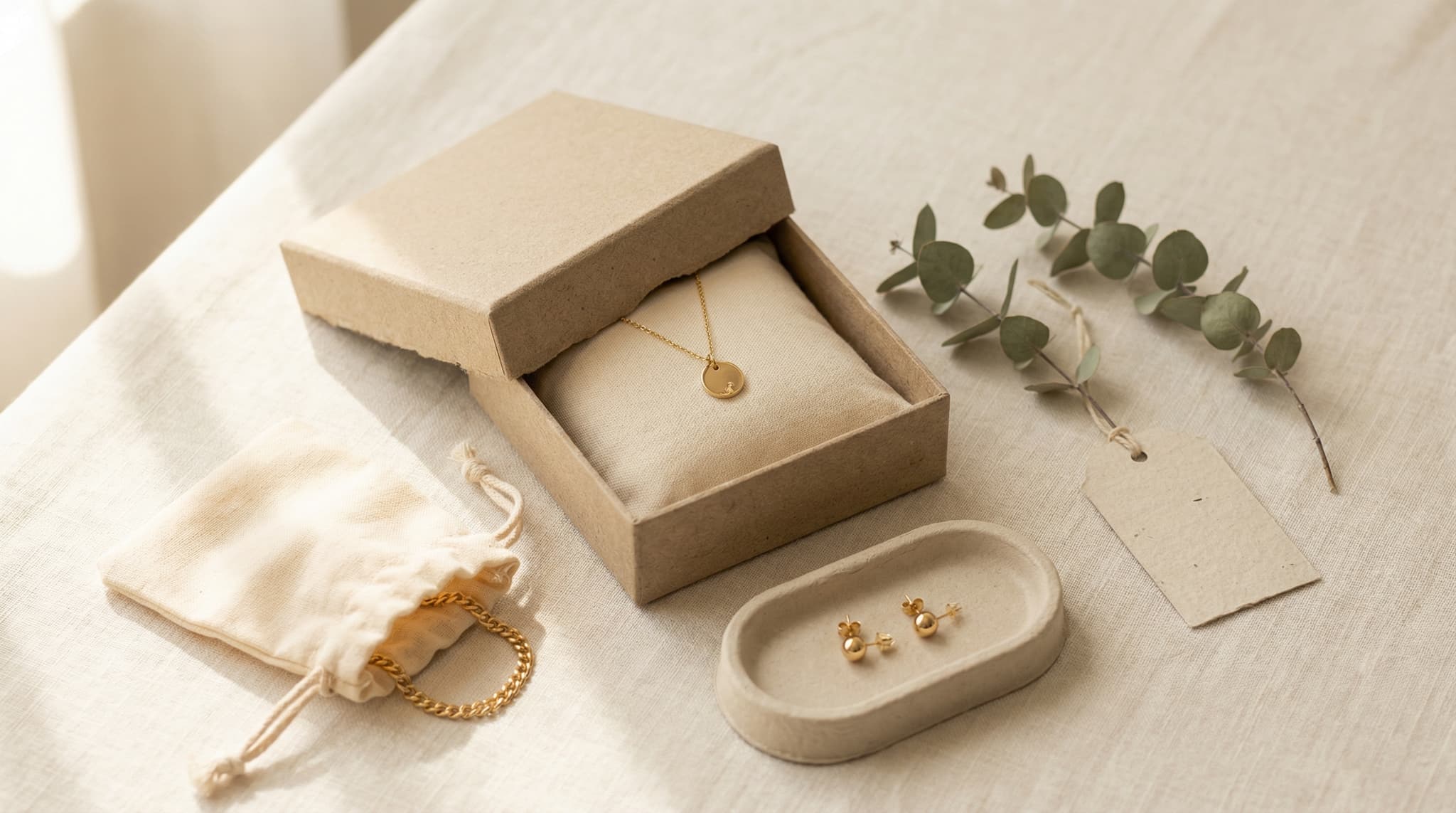
Materials are the single largest cost driver. The hierarchy is straightforward: genuine leather commands the highest price per unit, followed by premium fabrics like velvet and suede, then specialty papers, and finally standard cardboard.
Interior materials add cost too. A flocked foam insert with Pantone-matched velvet lining costs more than a basic satin pillow — but for a $500 necklace, the difference in perceived value is significant.
2. Order Volume
Volume is the most powerful lever for reducing per-unit cost. Setup and tooling costs are amortized across every unit, so larger orders bring the price down meaningfully.
A concrete example: a custom rigid box that costs $5.00 per unit at 500 pieces might drop to $3.25 per unit at 2,000 pieces — a 35% reduction — because the tooling, die-cutting, and setup fees are spread across four times as many units.
Most custom jewelry packaging requires a minimum order of 300 units per design. For a detailed look at MOQs and the ordering process, see our complete guide to ordering custom jewelry boxes.
3. Box Construction and Complexity
Simple two-piece lid-and-base boxes are the most economical rigid option. Magnetic closure boxes cost slightly more due to the embedded magnets but offer superior unboxing impact. Drawer-style and multi-component sets (box, pouch, and bag as a suite) sit at the higher end.
Custom shapes require custom dies — a one-time tooling cost that adds to your first order but is not repeated on reorders.
4. Logo and Finishing Techniques
Not all branding techniques cost the same. Here is the relative cost ranking from lowest to highest:
- Blind embossing — elegant, no ink or foil, lowest cost
- Debossing — similar to embossing, slightly more setup
- Single-color foil stamping — gold or silver foil, the most popular choice
- Multi-color foil — each color requires a separate pass
- Full-color digital printing — highest flexibility but highest per-unit cost
Setup plates and dies for logo application are one-time costs, typically $100–$300 depending on logo complexity. Read our guide to custom logo techniques for a detailed comparison.
5. Custom Colors and Pantone Matching
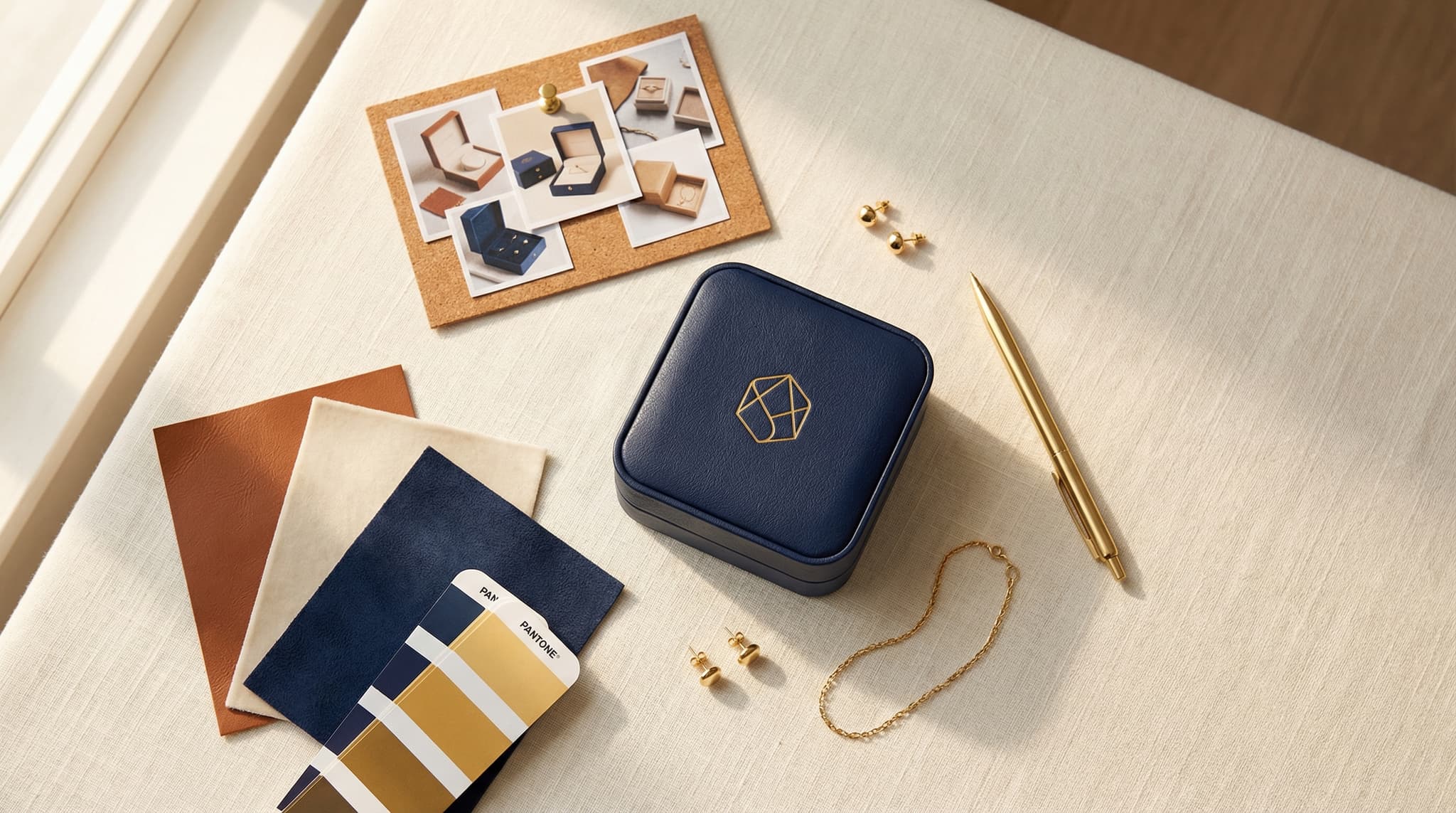
Standard colors from a supplier's existing stock carry no extra charge. Custom Pantone dyeing — matching your brand's exact shade on leather, fabric, or paper — adds both cost and lead time. Specialty finishes like soft-touch lamination or spot UV coating are moderate upcharges that can significantly elevate perceived quality.
6. Tooling and Setup Fees
This is the cost category most first-time buyers overlook — and the one most competitors fail to explain clearly.
- Die-cutting molds: $150–$300 (one-time)
- Embossing/foil plates: $100–$250 (one-time)
- Sample/prototype fees: $100–$300 (often refundable when you proceed with a production order)
The critical point: these are one-time costs. When you reorder the same design, you pay only the per-unit production cost. This makes second and third orders significantly cheaper than the first — an important detail for annual budget planning.
7. Shipping and Delivery Terms
How your packaging is shipped can add 10–20% to the total order value. Two common arrangements:
DDP (Delivered Duty Paid) — your packaging partner handles freight, customs, duties, and delivery to your door. You pay one all-inclusive price with no surprise charges. This is the safest choice for first-time international orders.
FOB (Free on Board) — a lower quoted price, but you arrange shipping from the origin port and handle customs yourself. The savings are real, but so is the administrative burden.
Air freight (DHL, FedEx) typically takes 3–7 days. Sea freight takes 25–35 days but costs significantly less for large shipments.
How to Budget for Jewelry Packaging
A widely used guideline: allocate 5–15% of your product's retail price to packaging. Here is how that looks at different brand tiers:
| Product Tier | Retail Price | Packaging Budget | What It Gets You |
|---|---|---|---|
| Fashion jewelry | $50 | $2.50 – $7.50 | Paper-wrapped rigid box with foil logo |
| Mid-market | $200 | $10 – $30 | Velvet or leatherette box with custom insert |
| Luxury | $1,000+ | $50 – $150+ | Genuine leather box, suede lining, foil stamp |
For annual budget planning, the formula is simple: (estimated units per year × per-unit cost) + one-time setup fees for new designs.
A practical tip: order fewer packaging designs in higher quantities rather than many designs in small batches. Consolidating SKUs gives you better per-unit pricing and keeps your brand presentation consistent.
Remember that first orders always cost more due to setup fees, but reorders drop significantly. If you plan to reorder the same packaging quarterly, your effective annual per-unit cost decreases with each cycle.
Where to Save — and Where Not To
Safe to Save On
- Number of packaging variations — consolidate box sizes and SKUs where possible
- Standard vs. custom box dimensions — standard sizes avoid custom die costs
- Shipping method — use sea freight for non-urgent reorders to save 40–60% on shipping
- Multi-color printing — a single-color gold foil stamp is often more elegant (and cheaper) than four-color printing
Do Not Cut Corners On
- Material quality — customers notice the difference between genuine leather and cheap leatherette. Your packaging represents your brand. Read our leather vs. leatherette comparison for details.
- Logo execution — a poorly applied foil stamp or misaligned emboss undermines even the best materials
- Interior fit — jewelry that rattles inside an oversized box feels careless. Custom inserts with proper dimensions protect the piece and elevate the presentation
Cheaper per-unit cost does not always mean lower total cost. Quality failures lead to reorders, customer complaints, and brand damage that costs far more than the savings on materials.
Getting an Accurate Quote
Before requesting a quote, prepare the following:
- Dimensions — measure your jewelry pieces and determine box size (interior dimensions matter most)
- Quantity — how many units per design? More units = lower per-unit cost
- Materials — do you want leather, velvet, paper? Or are you open to recommendations?
- Logo files — vector formats (AI, EPS, SVG) produce the cleanest results
- Finishing preferences — embossing, foil stamping, or printing?
When comparing quotes from multiple suppliers, look beyond the per-unit price. A transparent quote should itemize: unit price, tooling/setup fees, sample costs, shipping, and duties. If a quote feels unusually low, ask what is excluded — hidden fees on tooling, shipping, or customs are common in the industry.
To understand what the full packaging process looks like from consultation to delivery, see how we work step by step.
Frequently Asked Questions
How much does a custom jewelry box cost per unit?
Custom jewelry boxes range from $2 to $25+ per unit depending on materials, construction, and order volume. Paper-wrapped rigid boxes start around $2–$10, while genuine leather boxes with premium interiors can exceed $25 per unit at lower quantities.
Why is there such a wide price range for jewelry packaging?
Three factors create the range: materials (paper vs. leather), complexity (simple lid-and-base vs. magnetic closure with custom inserts), and volume (500 units vs. 5,000 units). A brand ordering 2,000 standard rigid boxes will pay significantly less per unit than one ordering 300 leather boxes.
Are setup fees charged on every order?
No. Tooling, die-cutting, and logo plate fees are one-time costs charged on your first order. Reorders of the same design skip these fees entirely, making subsequent orders 15–25% cheaper.
Can I get samples before committing to a full order?
Yes. Reputable suppliers offer physical samples for $100–$300, and many refund the sample fee when you proceed with a production order. Never approve production from digital mockups alone — always evaluate a physical sample.
Does DDP shipping cost more than FOB?
The quoted price is slightly higher, but DDP includes duties, taxes, and delivery — there are no surprise charges at customs. For first-time international orders, DDP is the safer and often more cost-effective option when you factor in the time and complexity of managing customs yourself.
Your packaging investment should reflect the value of the jewelry inside it. The right partner helps you find the balance between premium presentation and practical budgeting — not by cutting corners, but by making smart choices about materials, volume, and design.
Get a custom quote tailored to your brand and budget, or explore how our process works from first conversation to delivered packaging.