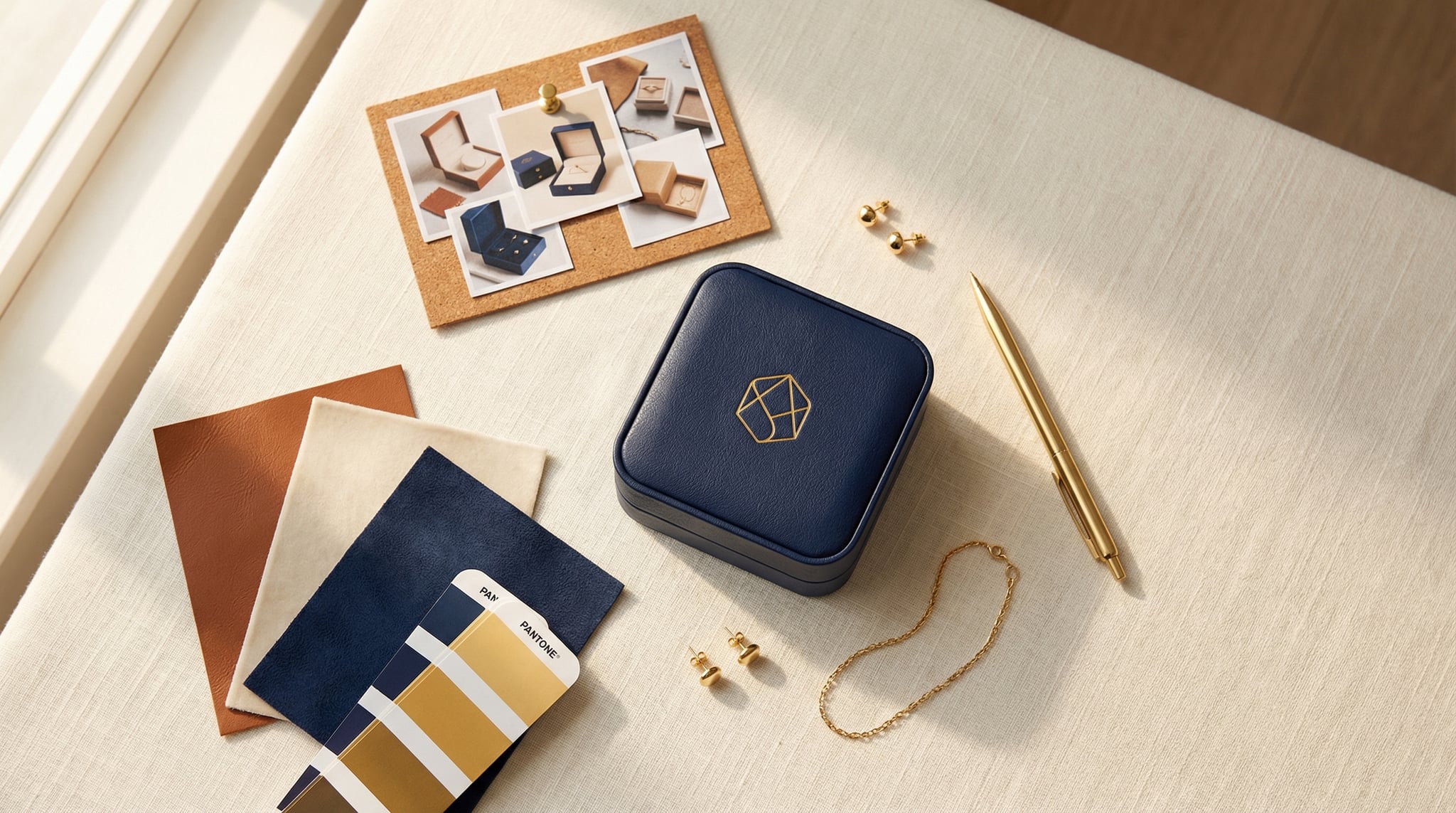
Why Your Packaging Brief Matters More Than You Think
A well-structured jewelry packaging brief cuts sampling time by 30-50% and eliminates the most common cause of project delays: miscommunication. Vela Packaging receives hundreds of inquiries each year, and the difference between a project that moves from concept to delivery in six weeks and one that stalls for months almost always comes down to the quality of the initial brief.
This guide gives you a reusable template — the same framework our team recommends to every brand we work with.
What a Packaging Brief Actually Is
A packaging brief is a single document that tells your supplier exactly what you need, who your brand is, and what success looks like. Think of it as the creative and technical foundation for your project. Without it, your supplier is guessing — and guessing leads to samples that miss the mark, quotes that do not reflect your actual needs, and timelines that slip.
A brief is not a purchase order. It is the conversation starter that leads to a purchase order.
The Complete Jewelry Packaging Brief Template
Use this checklist to build your brief before approaching any supplier. You do not need to have every answer finalized — a good partner will help you refine the details — but covering these sections up front saves significant time.
Section 1: Brand Overview
- Brand name and website — so the supplier can understand your visual identity
- Brand positioning — luxury, mid-market, artisan, fashion, bridal
- Target customer — age range, demographics, price sensitivity
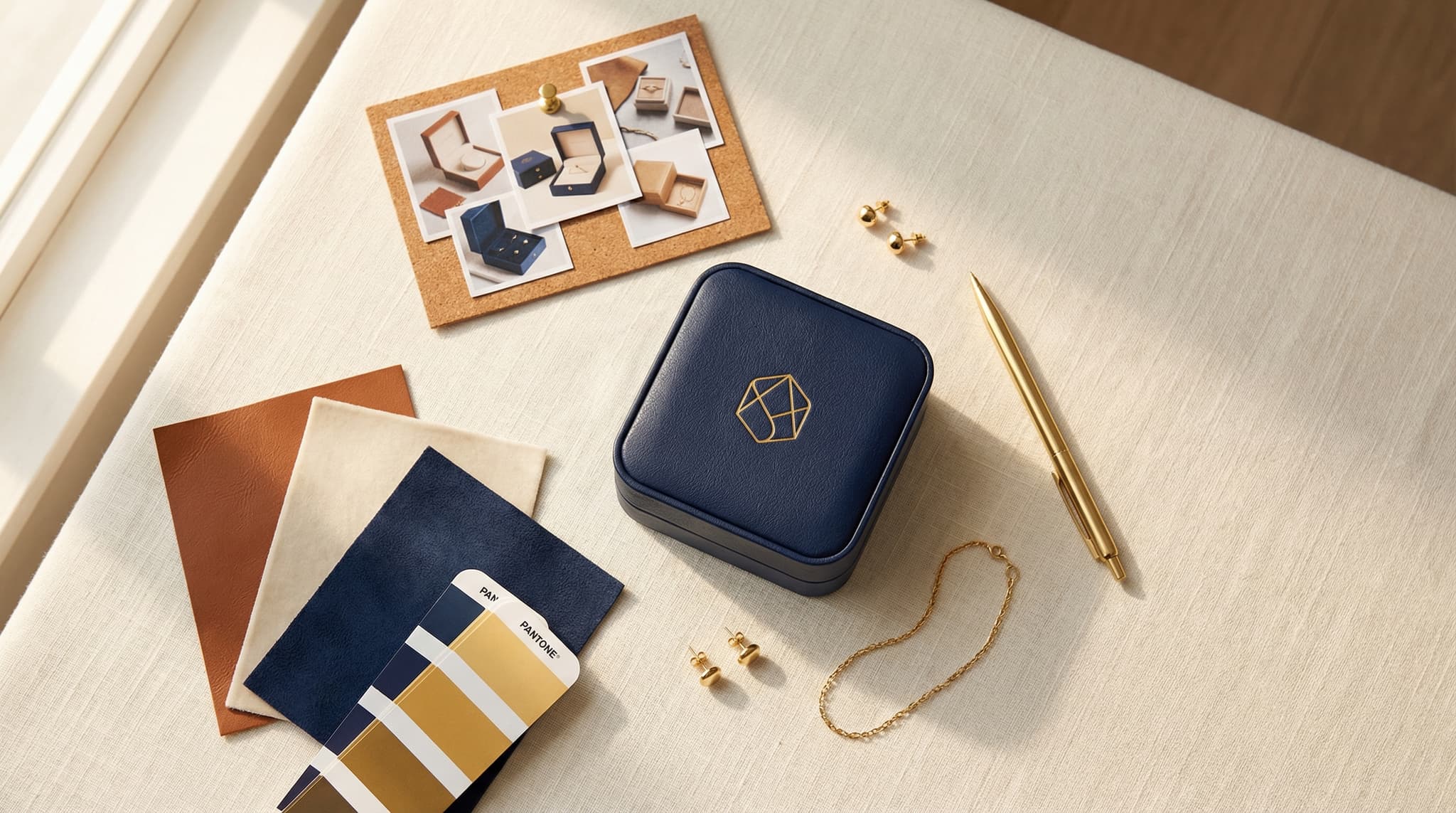
- Brand colors — Pantone references if available (never rely on screen colors alone)
- Brand tone — minimalist, maximalist, heritage, modern, playful
- Competitors or aspirational brands — "we want to feel like X but with our own identity"
This section is often skipped, but it is the most valuable. A supplier who understands your brand will make better material and finishing recommendations from the start.
Section 2: Packaging Requirements
- Jewelry types to package — rings, necklaces, earrings, bracelets, sets
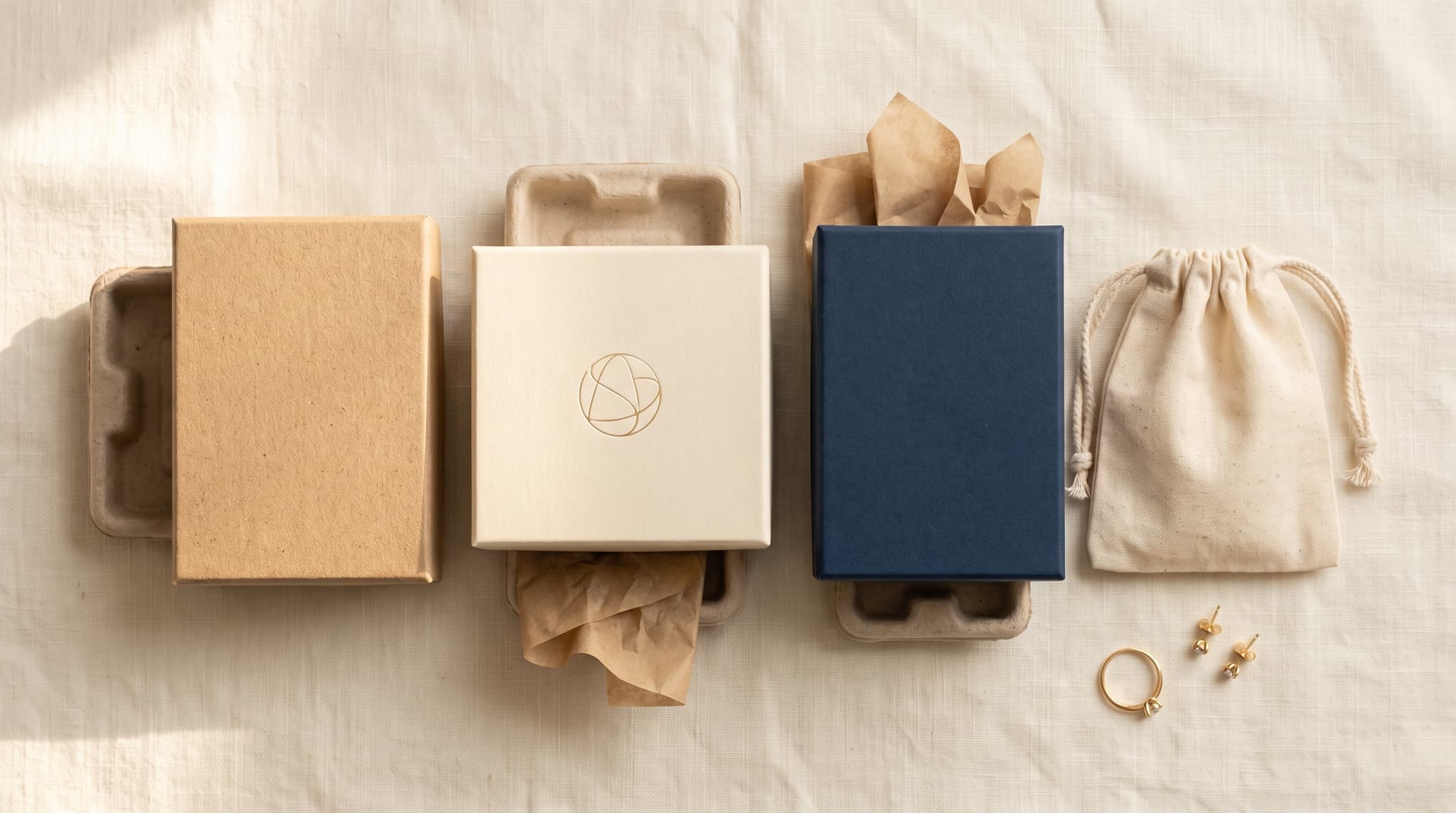
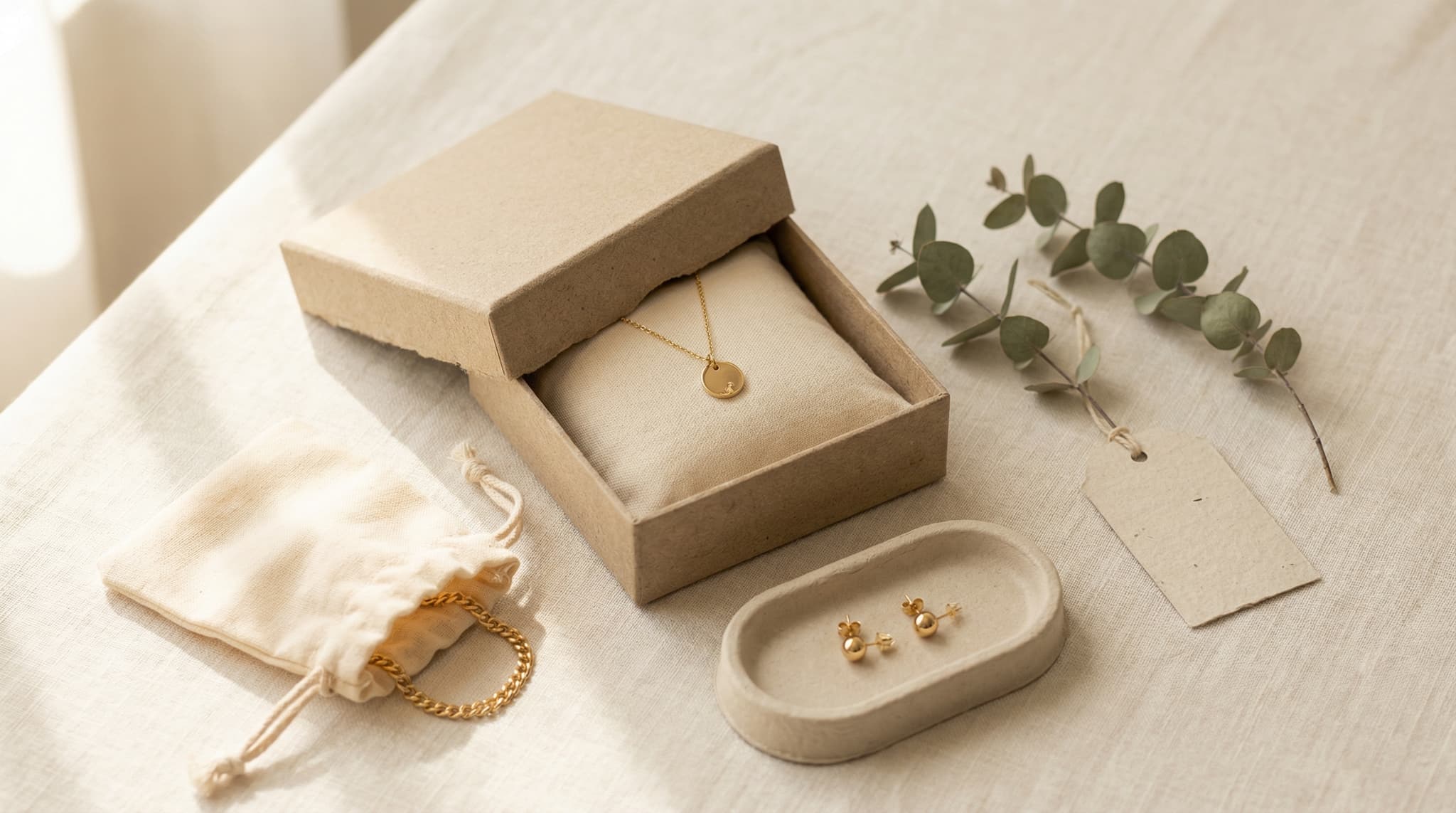
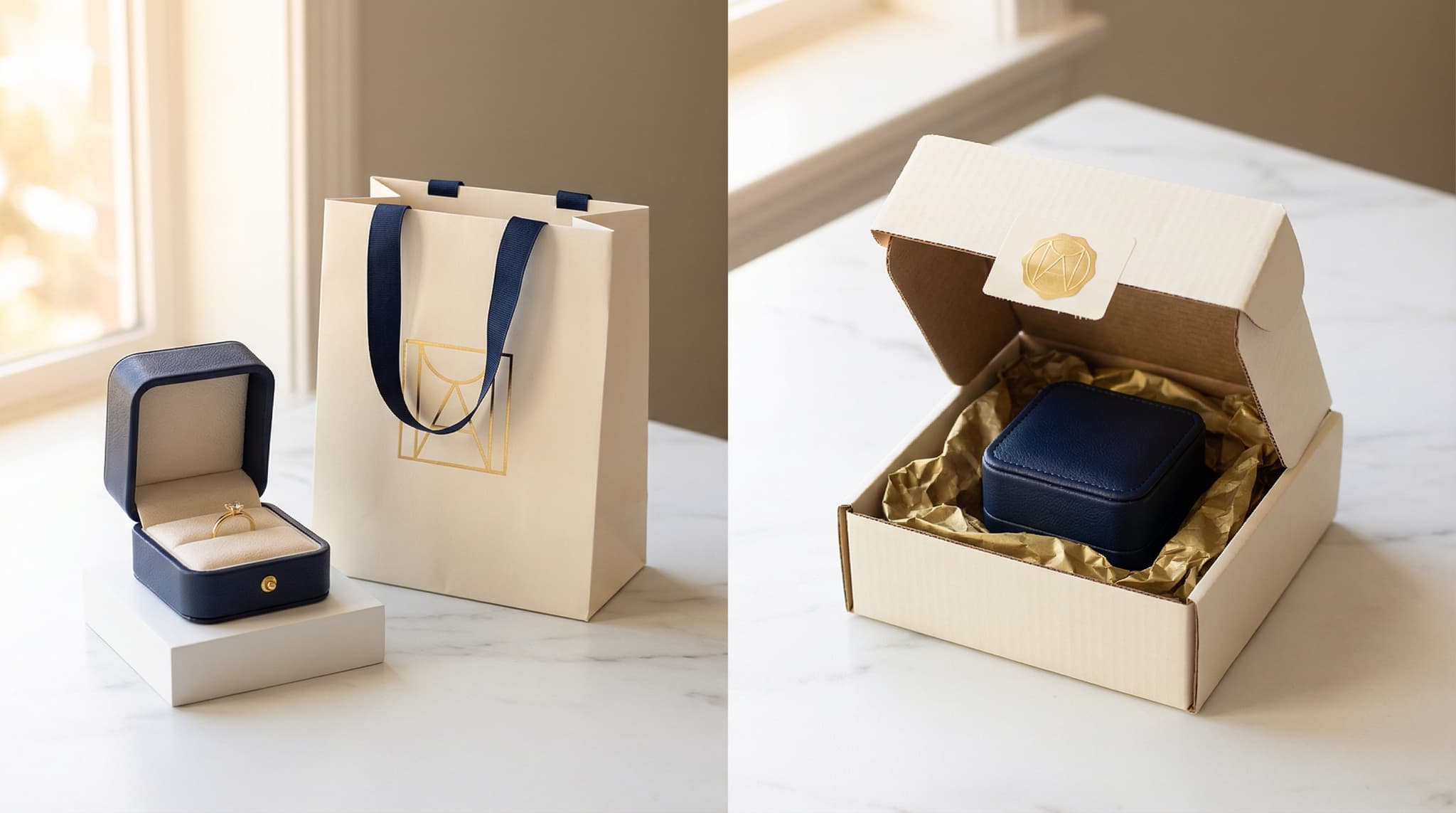
- Packaging styles needed — rigid boxes, pouches, bags, display trays
- Approximate dimensions — measure your jewelry and add 5-10mm clearance per side
- Interior requirements — foam insert, suede cushion, ribbon pull, velvet lining
- Closure type — magnetic, hinged, drawer, drawstring, snap
If you are unsure about styles, reference our custom jewelry boxes page for a visual overview of construction types. For closure comparisons, our magnetic closure guide breaks down the options.
Section 3: Materials and Finishes
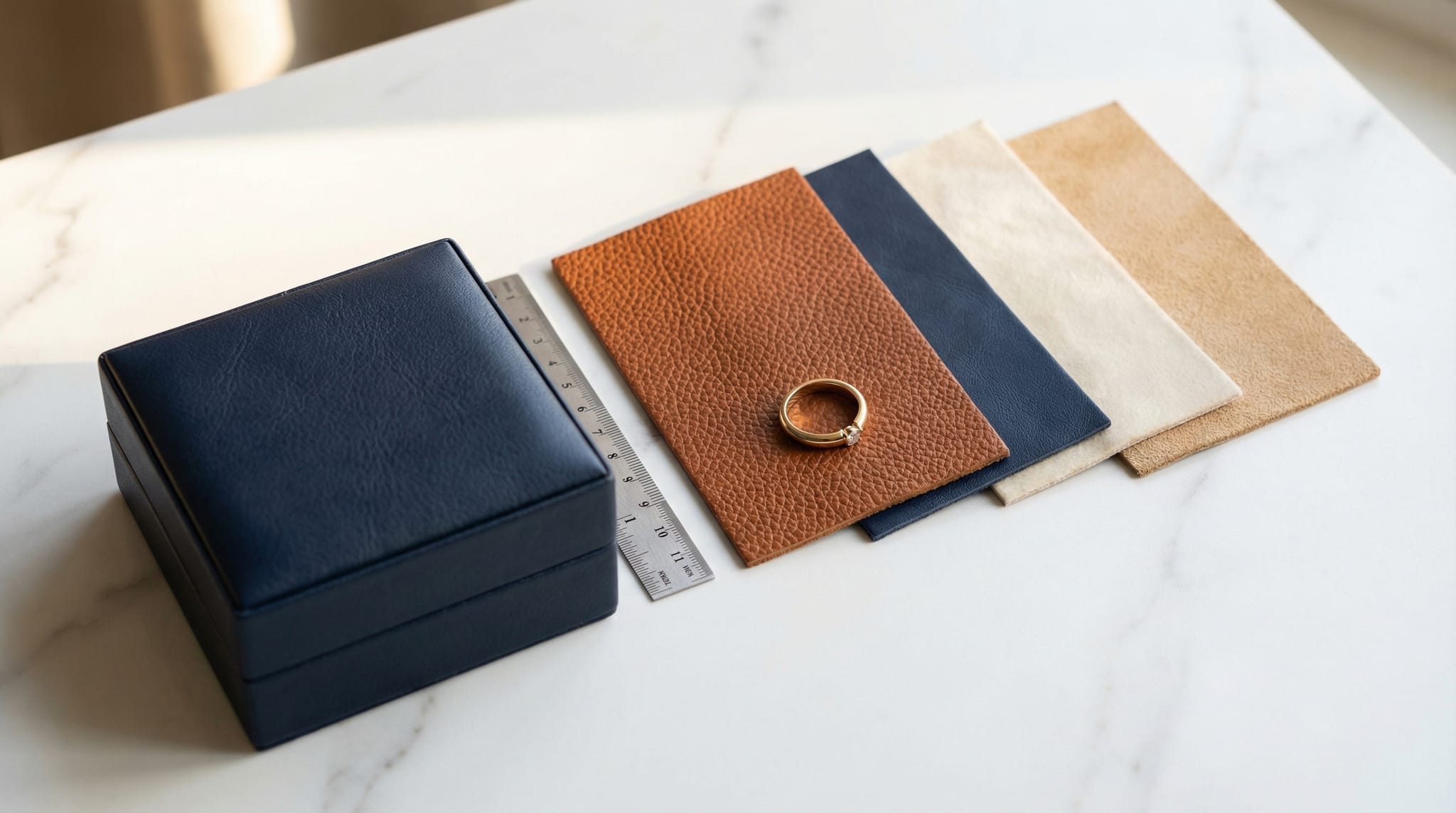
- Exterior material preference — genuine leather, leatherette, velvet or suede, paper wrap, sustainable options
- Interior material preference — velvet, suede, microfiber, silk, foam
- Color specification — Pantone numbers for exterior and interior (or "open to supplier recommendation")
- Finish — matte, gloss, soft-touch, textured
If you are not sure which material suits your brand, that is perfectly fine to state in your brief. A specialist supplier will present options with physical swatches rather than asking you to choose from a PDF catalog.
Section 4: Logo and Branding Specifications
- Logo file — vector format (AI, EPS, SVG, or high-resolution PDF). Raster files (PNG, JPG) do not produce clean results for embossing or foil stamping.
- Preferred logo technique — embossing, debossing, foil stamping, screen printing, embroidery, laser engraving, or "open to recommendation"
- Foil color — gold, silver, rose gold, custom Pantone metallic
- Logo placement — centered on lid, bottom corner, interior, multiple locations
- Additional branding — interior message, pattern embossing, branded tissue paper, ribbon
Section 5: Quantities and Budget
- Quantity per design — be specific. "500 ring boxes + 300 necklace boxes" is far more useful than "a few hundred"
- Number of SKUs — how many distinct box sizes or styles
- Reorder frequency — monthly, quarterly, seasonal, one-time
- Budget range — even a broad range ("$3-8 per unit" or "$5,000-10,000 total") helps the supplier recommend appropriate materials and finishes
Standard MOQs for custom jewelry packaging: 300 units for boxes and pouches, 500-1,000 for branded shopping bags. If your quantities fall below these thresholds, mention it — some suppliers offer semi-custom options at lower minimums.
Section 6: Timeline and Logistics
- When do you need the finished packaging? — work backward from your launch date
- Sampling deadline — allow 2-3 weeks for each round of sampling
- Shipping preference — DDP (supplier handles everything) or FOB (you manage freight)
- Delivery address — country and city at minimum, full address when ready
A realistic timeline for fully custom packaging is 6-10 weeks from approved brief to delivery. For a detailed walkthrough of each phase, see our step-by-step ordering guide.
Section 7: Reference Images
- 3-5 images of packaging you admire — from competitors, Pinterest, or trade shows
- Note what you like about each — "the matte finish on this one," "the way the logo is positioned here"
- Images of what you do not want — equally useful for alignment
- Photos of your jewelry — so the supplier can recommend appropriate sizing and interior construction
Reference images are not about copying another brand. They create a shared visual language between you and your supplier, which dramatically reduces the number of sampling revisions.
Five Common Briefing Mistakes
These are the errors we see most frequently — and each one adds days or weeks to a project timeline.
1. Vague descriptions without reference images. "We want something luxurious" means different things to different people. A moodboard with five images communicates more than a page of adjectives.
2. No vector logo files. Sending a low-resolution PNG and expecting crisp embossing is the single most common technical mistake. Prepare your logo in vector format before you brief anyone.
3. Unrealistic timelines. Requesting fully custom leather boxes in three weeks is not achievable with quality results. Build in at least 6-10 weeks, and start earlier for seasonal launches.
4. Skipping the sample phase. Approving production from a digital mockup alone is risky. Physical samples reveal material feel, color accuracy, and construction quality that screens cannot convey. Our process page explains why sampling is built into every Vela Packaging project.
5. No budget indication. Suppliers can recommend genuine leather or paper-wrapped alternatives, velvet or microfiber interiors, foil stamping or blind embossing — but only if they understand your budget constraints. A range is enough. For context on what different packaging types cost, see our pricing guide.
How a Good Brief Saves You Money
Every revision round during sampling costs time and often money. A clear brief reduces the typical 2-3 rounds of revisions to 1-2, which can save two or more weeks on your timeline.
It also ensures accurate quoting. When a supplier understands your exact requirements — materials, quantities, logo techniques, delivery terms — the first quote is realistic. Vague briefs produce vague quotes, which lead to budget surprises later.
And perhaps most importantly, a strong brief helps you evaluate suppliers on equal footing. When every supplier receives the same detailed specifications, you can compare responses based on capability, communication quality, and value — not just price.
Sending Your Brief
Once your brief is assembled, you have two options: send it as a PDF attachment with your logo files, reference images, and Pantone references bundled together, or use a supplier's quote form and paste the relevant sections.
Either way, include everything in a single communication. Sending requirements across five separate emails over two weeks is a recipe for details getting lost.
A thorough brief is the single highest-leverage step you can take before starting a packaging project. It protects your timeline, your budget, and the quality of the final result.
Ready to put your brief to work? Get a custom quote and share your specifications — our team will respond with material recommendations, a detailed quote, and a project timeline within days.