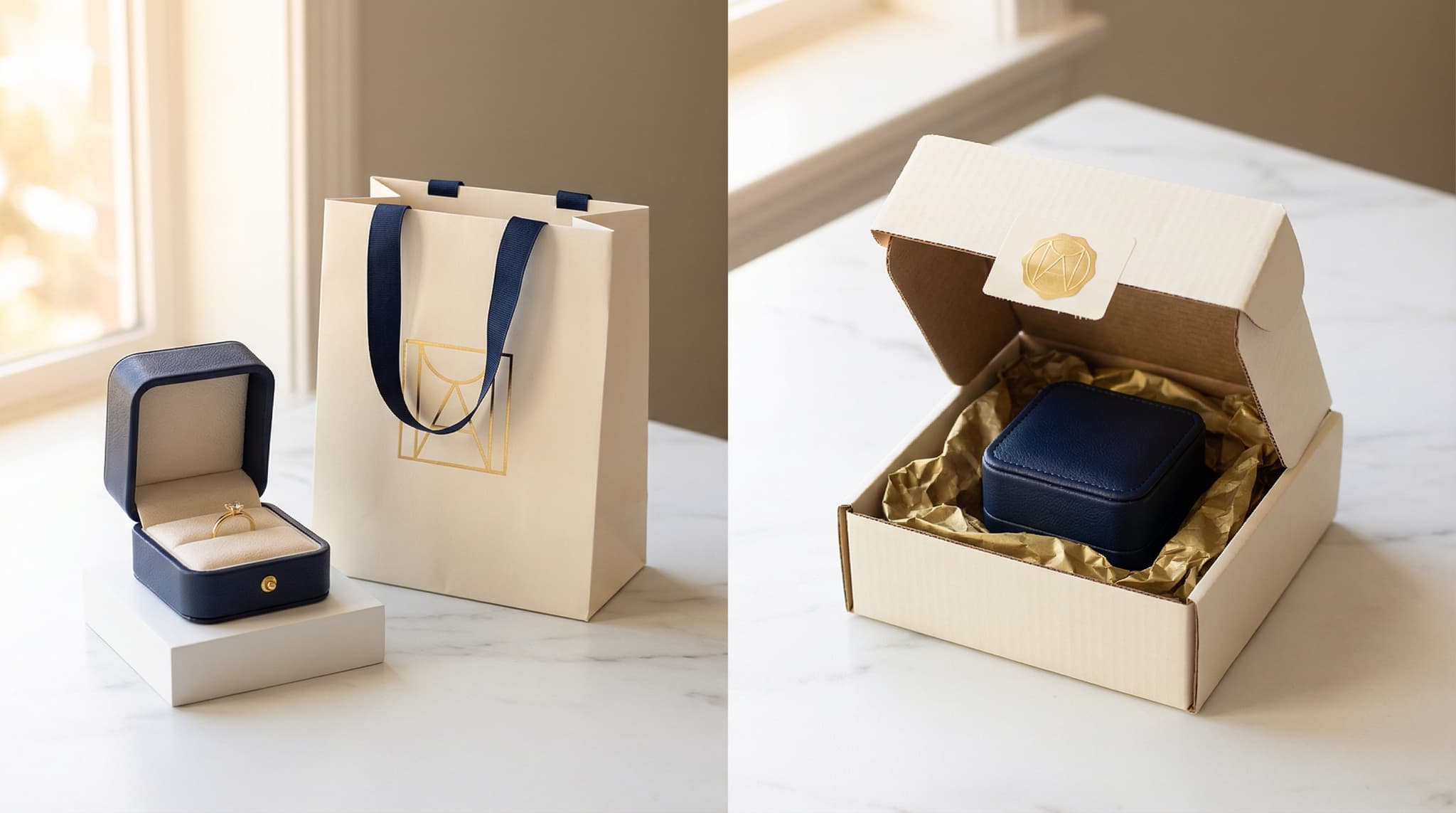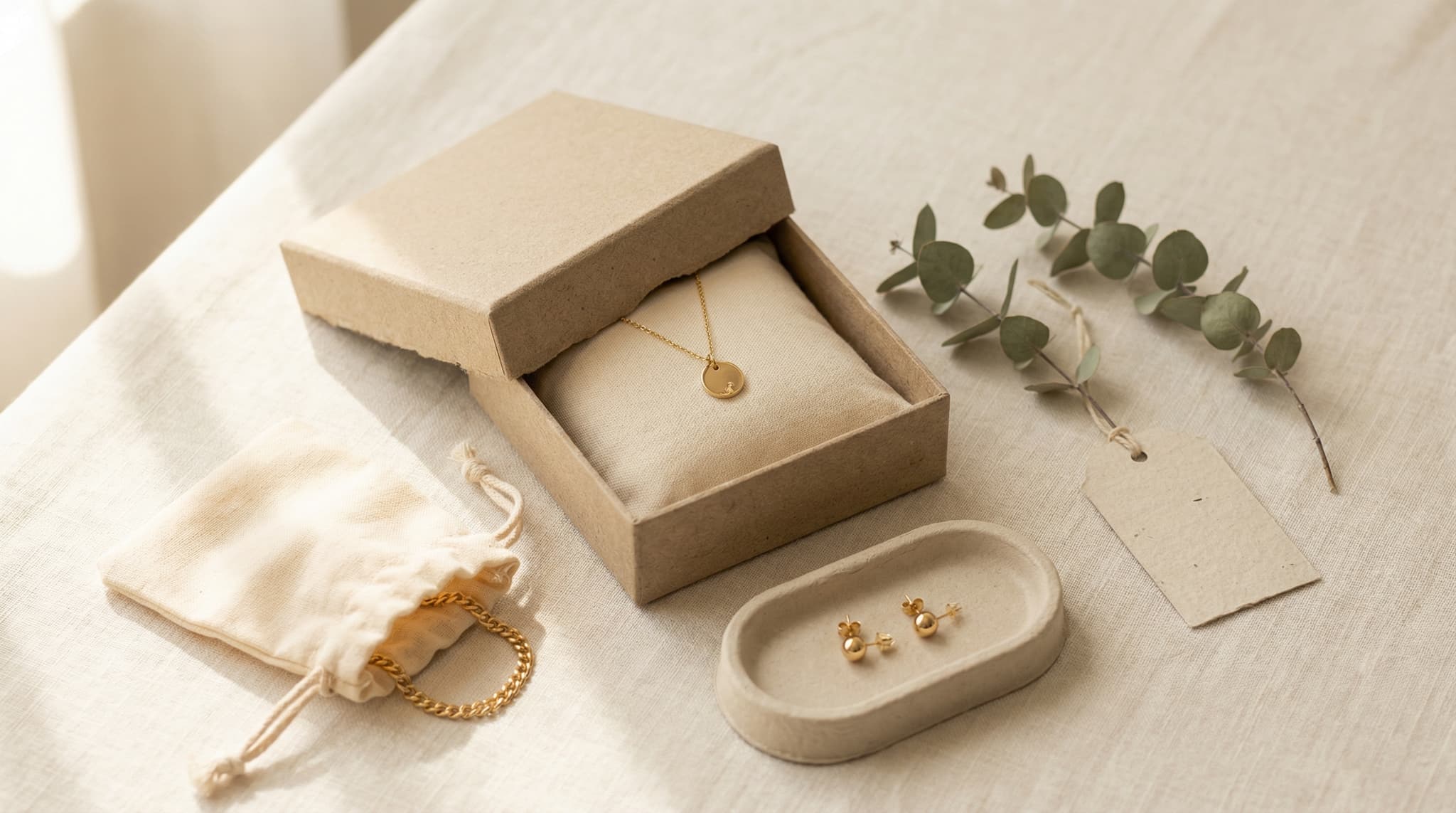
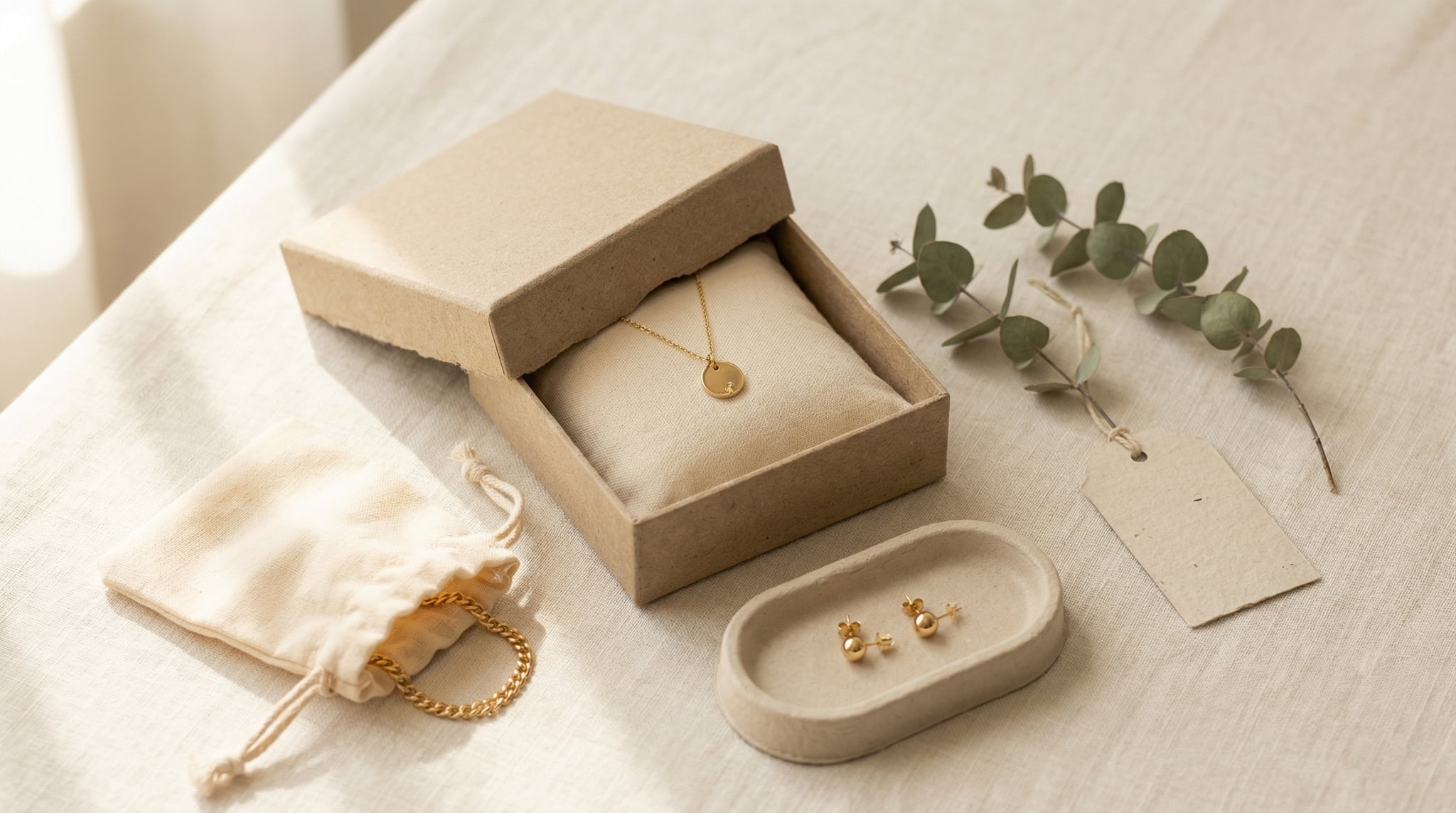
What Eco-Friendly Jewelry Packaging Actually Means
Eco-friendly jewelry packaging uses responsibly sourced, recyclable, or compostable materials without sacrificing the structural integrity and tactile quality that luxury jewelry demands. It is not a single material swap — it is a system-level decision that touches every layer of your packaging, from the rigid board core to the interior lining to the ink on your logo.
For brand managers navigating this space, the challenge is real: your packaging needs to meet rising consumer expectations around sustainability while still delivering a premium unboxing experience that justifies a high price point. Vela Packaging works with brands at every stage of this transition, and the most important thing we have learned is that sustainable and luxurious are not opposing forces. They require the same thing — thoughtful material selection and precise construction.
This guide covers the certifications that matter, the materials worth considering, the regulatory landscape (particularly in Europe), and the greenwashing traps that can damage brand credibility faster than any packaging choice can build it.
Certifications That Matter for Jewelry Packaging
Not all sustainability claims carry equal weight. Three certifications are the most relevant for jewelry packaging materials, and understanding them helps you evaluate supplier claims with confidence.
FSC (Forest Stewardship Council)
FSC certification verifies that paper, board, and wood-based materials come from responsibly managed forests. For jewelry packaging, this applies to the greyboard core of rigid boxes, paper wrapping materials, and insert cards. FSC-certified greyboard is the single easiest sustainability upgrade — it performs identically to conventional board and adds minimal cost.
GRS (Global Recycled Standard)
GRS certifies the recycled content in materials and tracks the chain of custody from raw recycled input to finished product. This matters for recycled polyester fabrics (used in pouch linings and interior flocking), recycled paper stocks, and recycled content in rigid board. If a supplier claims "recycled materials," GRS certification is the verification that the claim is real.
SFI (Sustainable Forestry Initiative)
SFI is the North American counterpart to FSC, with broader acceptance among US-based retailers. For brands selling primarily in the US market, SFI certification may be more recognizable to your retail partners than FSC.
Other certifications worth noting: OEKO-TEX Standard 100 certifies that fabric linings (velvet, suede, satin) are free from harmful substances. BSCI and SA8000 certify ethical labor practices in the manufacturing facility — not materials per se, but increasingly important for brand supply chain transparency.

Sustainable Material Options Ranked by Impact
The materials below are ranked by environmental impact — from the highest-impact swaps to incremental improvements. For a detailed look at specific sustainable materials we offer, visit our sustainable packaging options page.
Recycled Greyboard (Highest Impact)
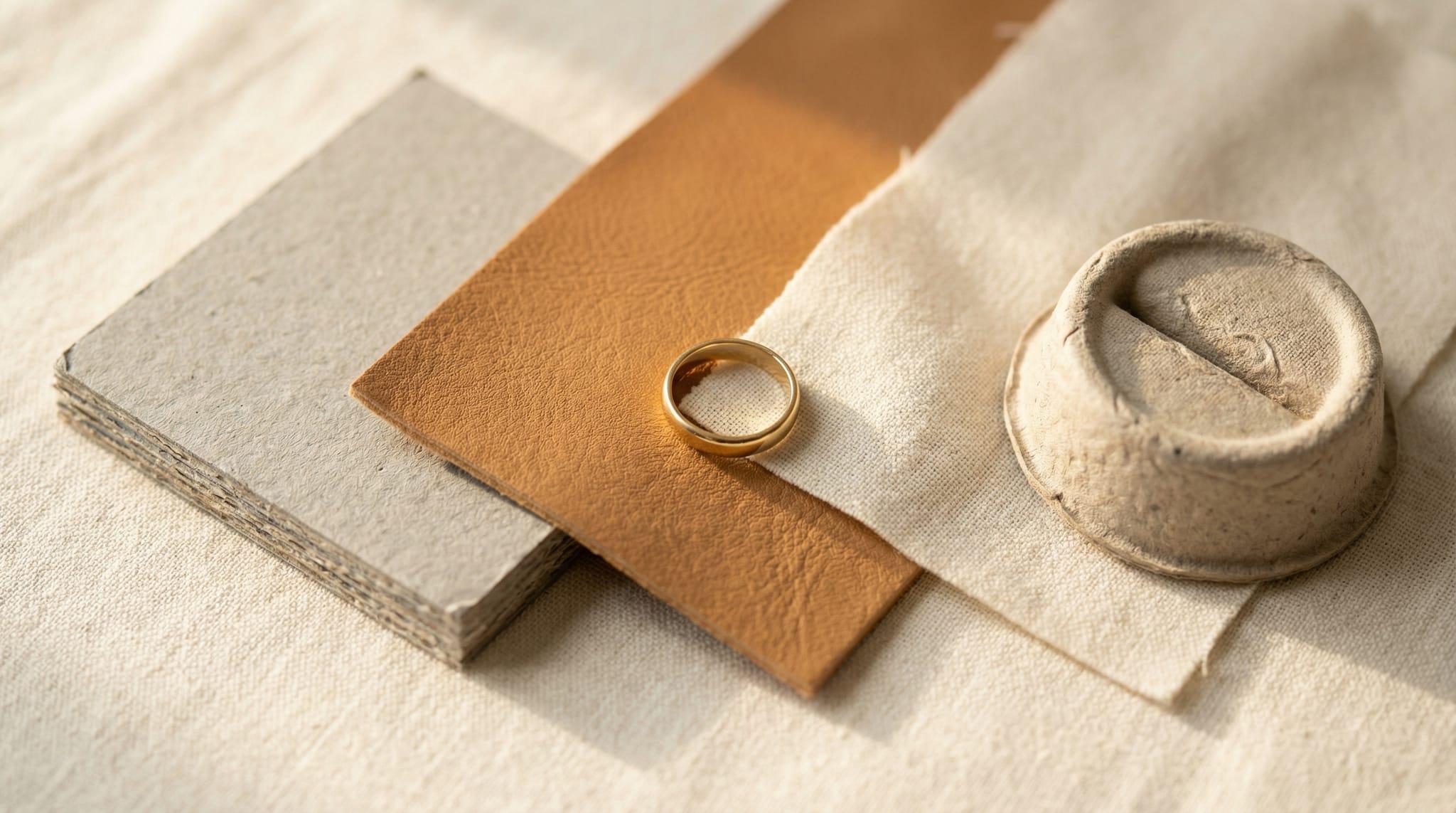
The rigid board core accounts for the largest material volume in any jewelry box. Switching from virgin chipboard to recycled greyboard — made from post-consumer waste paper — reduces the carbon footprint of each box significantly. Recycled greyboard at 1,200-1,400 GSM provides the same structural rigidity and weight that luxury packaging requires. Most customers cannot tell the difference by touch.
Plant-Based Leather Alternatives
For brands that want the look and feel of leather without the animal or petroleum-based materials, plant-based alternatives have improved dramatically. Cork-based leather, pineapple leaf fiber (Pinatex), and mushroom mycelium leather offer genuine texture and durability. These are distinct from PU leatherette — they are derived from agricultural byproducts rather than plastic polymers.
The hand feel varies by source material. Cork leather is firm and distinctive. Pinatex has a natural grain that resembles pebbled genuine leather. Mycelium leather is the closest to full-grain leather in softness and drape but carries a higher price point.
Soy-Based and Vegetable Inks
Conventional petroleum-based inks release volatile organic compounds (VOCs) during printing. Soy-based and vegetable-based inks produce equivalent color saturation — including metallic effects — with significantly lower emissions. For logo printing and interior patterns, this is a zero-compromise swap. Your gold foil stamping and embossing are unaffected, as these are heat-transfer processes that do not involve liquid ink.
Water-Based Adhesives
Solvent-based adhesives in box construction release VOCs and make the finished box harder to recycle (mixed materials bonded with solvent glue cannot be cleanly separated). Water-based alternatives achieve the same bond strength on paper-to-paper and paper-to-board joins. For fabric-to-board lamination, water-based adhesives may require slightly longer cure times.
Compostable Inserts and Cushioning
Molded pulp inserts (made from recycled paper fiber) replace EVA foam for jewelry cushioning. They can be die-cut to hold rings, earrings, and pendants with the same precision as foam. The trade-off: molded pulp has a more natural, textured appearance — which actually aligns well with the tactile minimalism trend shaping 2026 packaging.
The EU PPWR: What Jewelry Brands Need to Know
The EU Packaging and Packaging Waste Regulation (PPWR), adopted in 2024 and entering force in phases through 2030, is the most significant regulatory change for packaging in a generation. If your jewelry brand sells in Europe — or plans to — this regulation directly affects your packaging decisions.
Key Requirements
Minimum recycled content: By 2030, rigid packaging must contain at least 30% recycled content (rising to 65% by 2040). This applies to the total packaging weight, including board, paper wraps, and inserts.
Recyclability standards: All packaging must be recyclable by design. This pushes toward mono-material construction — boxes made entirely from paper-based components that can be recycled as a single unit, without requiring the consumer to separate materials.
Excess packaging limits: The regulation sets maximum void-space ratios. Oversized boxes with excessive padding will face restrictions. For jewelry brands, this means right-sizing your boxes to the jewelry they contain.
Digital Product Passport (DPP): Packaging will need to carry or link to data about its materials, recyclability, and supply chain origin. QR codes on packaging are the simplest compliance path.
What This Means Strategically
Brands that begin transitioning to compliant materials now — rather than waiting for enforcement deadlines — gain two advantages. First, they avoid the supply-chain bottleneck that will occur as thousands of brands scramble to reformulate packaging in 2029. Second, they can market their sustainability commitment as a genuine early-mover position rather than a regulatory response.
Balancing Sustainability and Luxury
The most common concern we hear from brand managers: will sustainable packaging feel cheaper? The honest answer is that it depends entirely on material selection and construction quality — not on whether the materials are sustainable.
Weight and structure: Recycled greyboard at the right GSM provides the same satisfying heft as virgin board. A well-constructed box with recycled content feels identical to a conventional box.
Surface finish: FSC-certified specialty papers come in the same range of textures and finishes — soft-touch, linen-embossed, smooth matte — as non-certified alternatives. The sustainability is in the sourcing, not the surface.
Interior quality: Recycled polyester velvet flocking is visually and tactilely indistinguishable from virgin polyester flocking. OEKO-TEX-certified satin and silk linings carry no quality compromise.
Where to be cautious: The one area where sustainable alternatives require careful evaluation is adhesives and lamination. Some water-based laminations are slightly less durable under high humidity. Discuss climate conditions with your packaging partner to ensure the right specification.
The brands achieving the best results are not replacing luxury materials with budget eco-alternatives. They are selecting premium sustainable materials — and telling that story to their customers through branded insert cards, QR-linked sourcing narratives, and certifications printed discreetly on the box base.
Greenwashing Pitfalls to Avoid
Sustainability claims in packaging are under increasing scrutiny from regulators, media, and consumers. These are the most common traps.
Vague language without certification. "Eco-friendly," "green," and "natural" mean nothing without third-party verification. If your packaging supplier cannot provide FSC, GRS, or equivalent certification documents, the claim is unsubstantiated.
Recyclable in theory, not in practice. A box that is technically recyclable but combines four material types (board, leather, fabric, foam) that must be separated by hand is not meaningfully recyclable. Mono-material design or clear disassembly instructions are the honest approach.
Focusing on one component while ignoring others. A recycled-paper box shipped in non-recyclable plastic wrap with solvent-based inks is not a sustainable packaging program. Credibility comes from addressing the full system.
Overstating percentages. Claiming "100% sustainable packaging" when only the outer box is certified — not the insert, lining, ribbon, or adhesive — invites justified criticism. Be specific: "FSC-certified rigid board with GRS-certified recycled content interior."
Cost Implications: What to Expect
Sustainable materials carry a modest premium over conventional alternatives, but the gap is narrower than most brand managers expect.
Recycled greyboard: 0-5% premium over virgin chipboard at equivalent GSM. At higher volumes, the cost is often identical.
FSC-certified paper wraps: 3-8% premium. Availability is broad enough that lead times are unaffected.
Plant-based leather alternatives: Comparable to mid-range PU leatherette. Less expensive than genuine full-grain leather but more expensive than basic synthetic options.
Soy inks and water-based adhesives: Negligible cost difference — typically under 2%.
Molded pulp inserts: Comparable to EVA foam at production volumes. Tooling costs for custom molds are similar to die-cutting fees for foam.
For a comprehensive view of packaging costs by type and volume, see our jewelry packaging cost guide. The sustainable premium is real but modest — and for many brands, the marketing value and regulatory preparedness justify the investment.
Building Your Sustainable Packaging Program
The most effective approach is phased, not all-at-once.
Phase 1 — Foundation (immediate). Switch your rigid board to recycled greyboard and your inks to soy-based. These two changes cover the highest-volume materials at minimal cost increase.
Phase 2 — Certification (1-3 months). Specify FSC-certified paper wraps and GRS-certified recycled content where available. Request certification documentation from your supplier for your records and marketing.
Phase 3 — Full system (3-6 months). Evaluate plant-based leather alternatives, water-based adhesives, and molded pulp inserts. Test these in sample runs before committing to production volumes. Sampling typically takes 2-3 weeks, with production runs of 3-5 weeks at MOQs of 300 units.
Phase 4 — Communication. Once your packaging program is genuinely sustainable across the full system, tell that story. A discreet certification mark on the box base, a QR code linking to your sourcing transparency page, and a branded insert card explaining your materials are all credible, non-performative ways to communicate your commitment.
Vela Packaging supports brands through every phase of this transition — from material specification and certification sourcing to sample production and full-volume manufacturing. If you are evaluating your packaging sustainability or preparing for EU PPWR compliance, start a conversation with our team about building a program that meets your standards and your customers' expectations.
Frequently Asked Questions
Does eco-friendly jewelry packaging cost more than conventional packaging?
Typically 5-15% more at equivalent volumes. FSC-certified paper adds minimal cost. Plant-based leather alternatives are comparable to mid-range genuine leather. The premium narrows significantly at higher volumes — most brands find the investment justified by customer perception and EU compliance benefits.
What certifications should I look for in sustainable jewelry packaging?
FSC (Forest Stewardship Council) for paper and board, GRS (Global Recycled Standard) for recycled content, and OEKO-TEX for fabric linings. These three certifications cover the most common materials in jewelry packaging and are recognized by retailers and consumers worldwide.
Will EU PPWR affect jewelry brands selling in Europe?
Yes. The EU Packaging and Packaging Waste Regulation requires minimum recycled content thresholds, recyclability standards, and reduced excess packaging by 2030. Jewelry brands exporting to Europe should begin transitioning now to avoid last-minute compliance costs.
Can eco-friendly packaging still feel luxurious?
Absolutely. Recycled greyboard has the same structural weight as virgin board. Soy inks produce rich, saturated color. Plant-based leather alternatives achieve a premium hand feel. The key is selecting high-quality sustainable materials rather than defaulting to the cheapest option.
What is the minimum order for eco-friendly custom jewelry boxes?
Most custom eco-friendly jewelry boxes start at 300 units per design. Sustainable material options are available at the same MOQs as conventional materials — there is no volume penalty for choosing greener alternatives.