What Is Changing in 2026
What are the jewelry packaging trends for 2026? Seven shifts are defining the year: tactile minimalism replacing glossy finishes, the warm Maillard color palette, mono-material sustainability, multi-functional packaging with a second life, gender-neutral tones, smart QR integration, and structural precision over surface decoration. Together they signal a move from visual excess toward quiet, material-driven luxury.
1. Tactile Minimalism Replaces Visual Maximalism
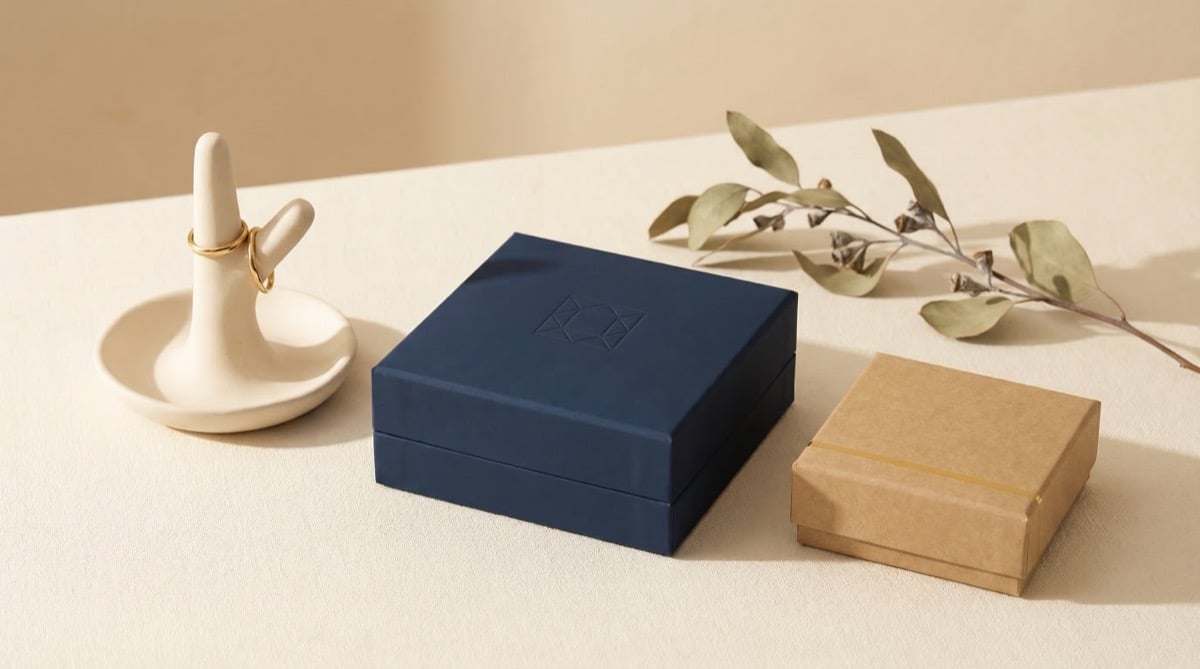
The "quiet luxury" movement has reached packaging. Brands are stripping away excess decoration — metallic prints, glossy lamination, ornate patterns — and letting texture and structure speak instead.
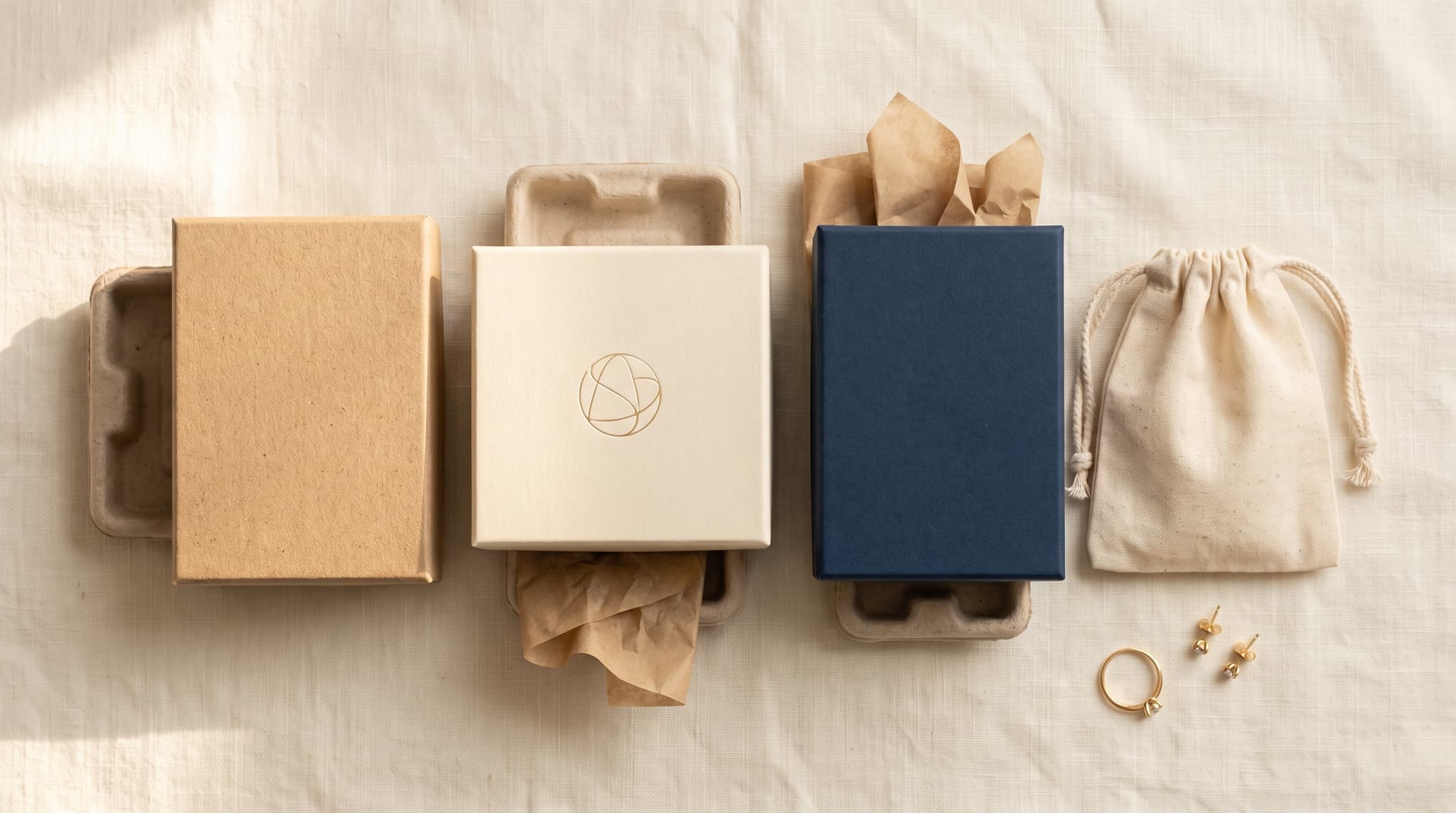
Uncoated papers and linen-wrapped boxes are replacing high-gloss finishes. Intentional negative space inside the box elevates perceived value. The focus is on structural precision over surface decoration: a perfectly weighted lid, a seamless edge, a material that feels extraordinary in the hand.
This matters because luxury customers in 2026 are signaling taste through restraint, not embellishment. A cream linen box with a blind-embossed logo communicates more sophistication than a foil-covered box with three metallic colors.
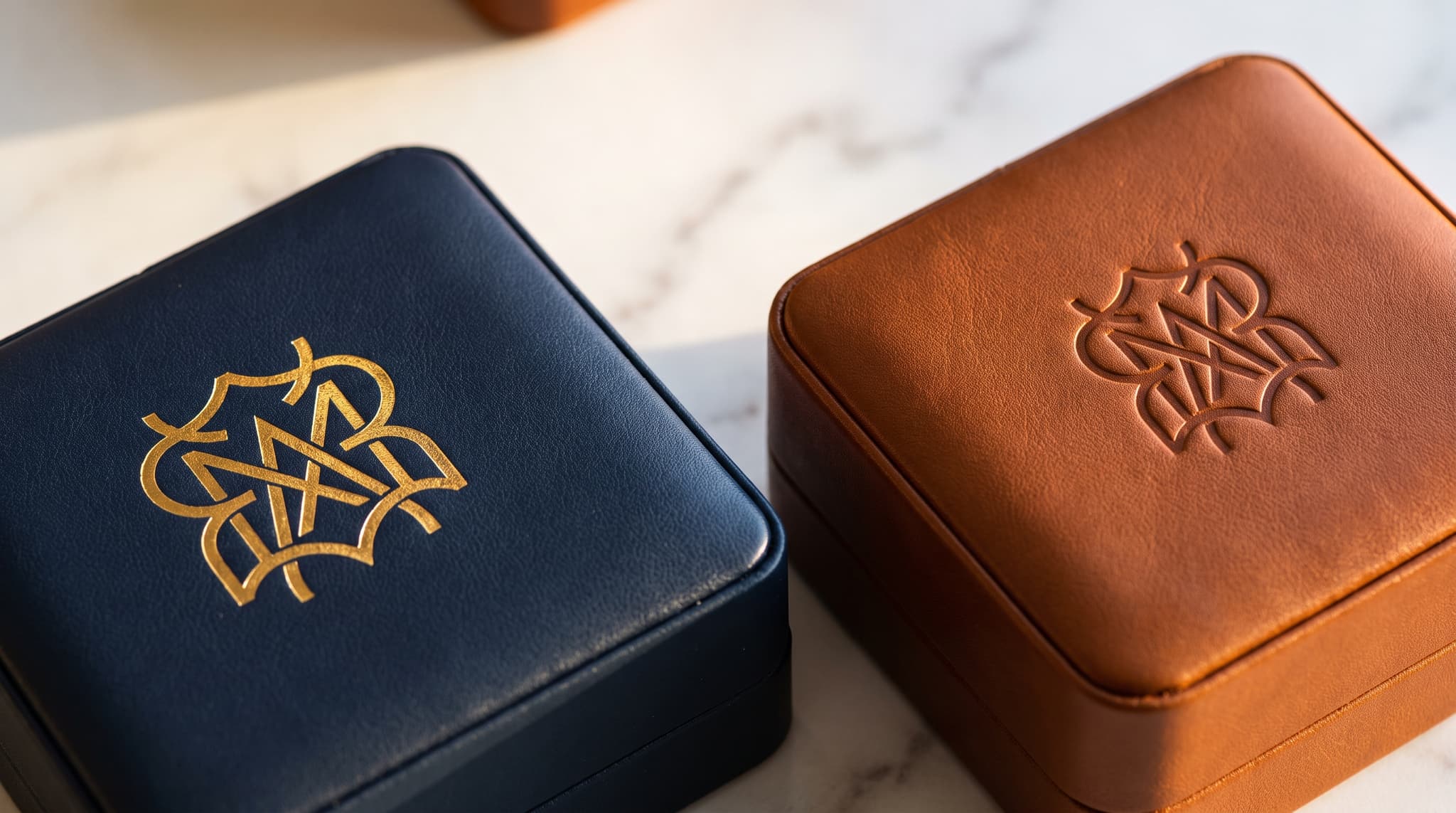
How to apply this: Choose one hero texture — premium suede, pebbled leather, or linen — and let it carry the design. Pair it with a single, understated logo technique like blind embossing.
2. The Maillard Palette and Warm Neutral Color Direction
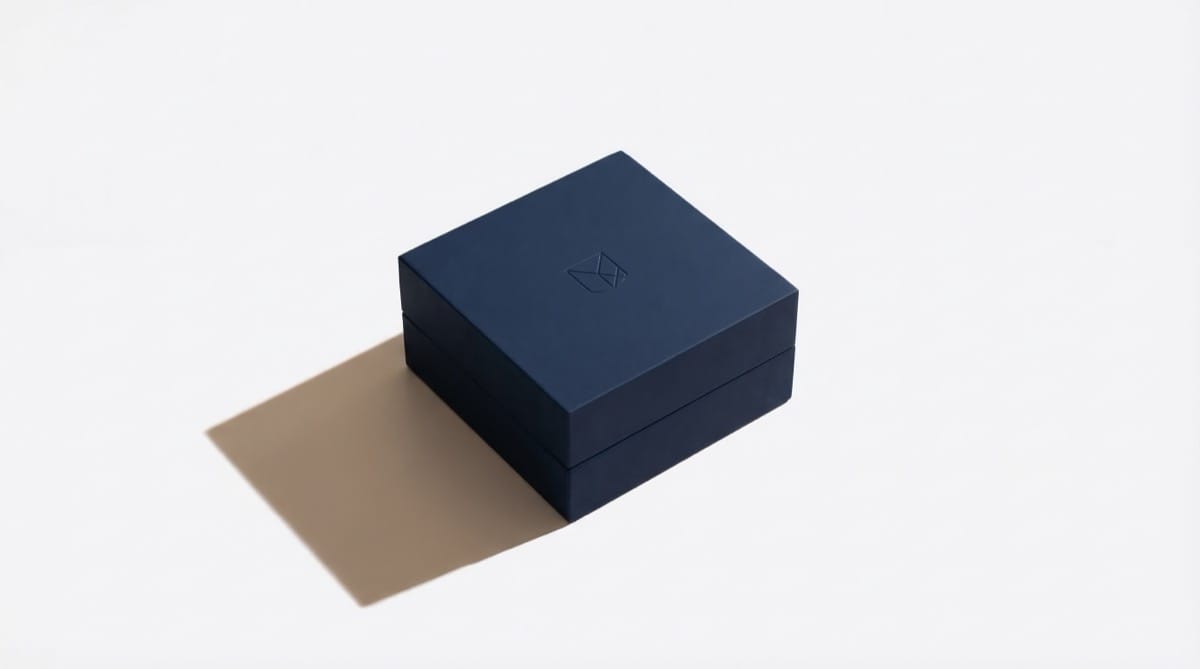
Pantone's 2026 Color of the Year is Cloud Dancer — a soft, warm white — but the broader direction in jewelry packaging leans warmer still. The "Maillard" palette, named after the cooking reaction that produces golden-brown tones, is defining the year: brownish-orange, light gray, warm gold, and cognac.
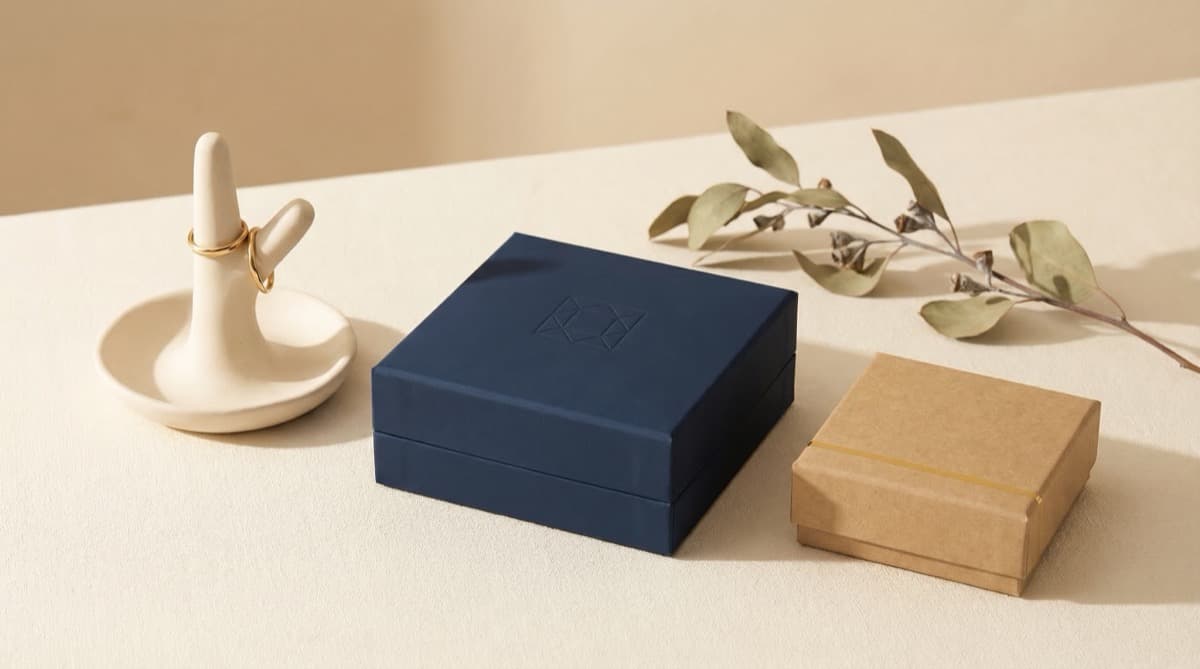
Gender-neutral tones are replacing pastel pink across the industry. Charcoal Grey, Midnight Blue, Deep Olive, and Rich Espresso are emerging as the new defaults — particularly as the men's jewelry market continues to grow.
For high-end positioning, look to matte off-white, hazy blue, and light slate gray. These colors feel contemporary without being trendy, making them safe for packaging that needs to stay relevant for multiple seasons.
How to apply this: Consider warm neutrals for your core collection packaging. Reserve Cloud Dancer white for bridal or special-edition lines. Pair warm tones with gold foil stamping for a rich, current look.
3. Mono-Material and Design for Disassembly
Sustainability in 2026 has evolved past "recyclable materials" into something more systemic: recyclable as a complete unit. Mono-material design uses a single material type for the entire box — including the insert, hinge, and closure — so consumers can drop the whole package into one recycling bin.
Design for Disassembly (DfD) is the complementary approach: making it easy for consumers to separate components (cardboard shell from foam insert) before recycling. Paper-based hinges are replacing metal ones. Water-based glues are replacing solvent adhesives.
This is not just an ethical choice — it is a commercial one. Over 60% of brands now require recyclable material usage and carbon-footprint certification as mandatory criteria when evaluating packaging suppliers. In the EU market, the Digital Product Passport regulation arriving in 2026 makes packaging part of the compliance chain.
How to apply this: Ask your packaging supplier if they offer mono-material box options and DfD-ready construction. Browse our sustainable materials for options that meet these standards without compromising on luxury.
4. Multi-Functional Packaging That Lives Beyond the Sale
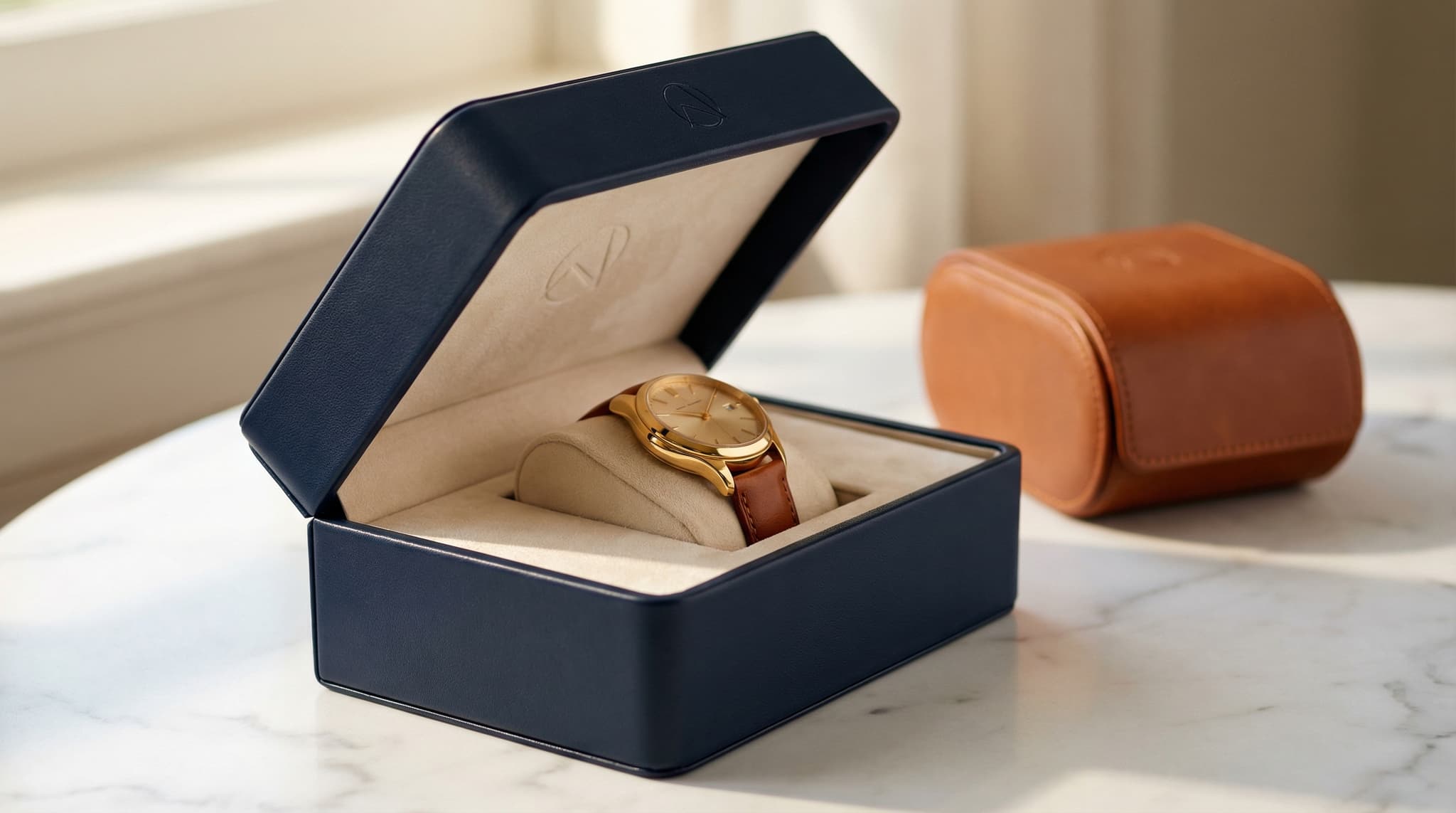
The best packaging in 2026 is designed for a second life. Boxes that double as permanent jewelry storage, travel cases, or tabletop displays create ongoing brand exposure long after the purchase.
Integrated drawer slides, magnetic travel pouches, and PE film "floating" displays that suspend jewelry visibly inside the box are all gaining traction. The economic logic is compelling: a customer who keeps and reuses your packaging generates brand impressions for months or years — at zero additional cost.
The trend also favors compact efficiency over oversized presentation. Modern consumers — especially younger luxury buyers — see excess material as waste, not generosity. A perfectly sized magnetic closure box that becomes a jewelry organizer is worth more than an oversized box that goes in the recycling bin.
How to apply this: Think about what your customer does with the box after opening. Can it serve a second purpose? A drawer-style box that stores rings. A hinged box that displays a bracelet on a vanity. Design for the second use, not just the first.
5. Smart Packaging: QR Codes, NFC, and Digital Product Passports
Technology integration in jewelry packaging has moved from experimental to expected. QR codes printed directly on packaging cards or box interiors now link to making-of videos, certificates of authenticity, care instructions, and loyalty programs.
NFC tags embedded in packaging enable tap-to-verify authentication — particularly valuable for luxury brands combating counterfeiting. When a customer taps their phone to the packaging, they see a verified digital certificate confirming the piece is genuine.
The EU's Digital Product Passport (DPP) regulation, taking effect in 2026, requires brands to make product origin, materials, and sustainability data accessible to consumers. Packaging is becoming the carrier for this data — and QR codes are the simplest bridge between physical packaging and digital compliance.
How to apply this: Start simple. Even a QR code on a branded insert card that links to your brand story or a care guide is a meaningful first step. As you scale, explore NFC for authentication and loyalty. The unboxing experience is increasingly a bridge between physical and digital touchpoints.
6. The Multi-Sensory Unboxing Ceremony
Unboxing in 2026 is not a moment — it is a ceremony. Brands are deliberately engineering multiple tactile touchpoints that slow down the reveal and elevate the experience.
The layered approach: a soft-touch outer sleeve, a ribbon pull, a textured inner box, a coordinating tissue wrap. Each step extends the anticipation. Sound matters too — the satisfying click of a magnetic closure, the weight of a well-made lid, the whisper of a leather pouch being untied.
This is the physical expression of what social media unboxing videos made popular — but now brands are engineering these moments deliberately rather than leaving them to chance. The brands getting the most organic social sharing in 2026 are the ones who designed their packaging with the camera in mind.
How to apply this: Map out your unboxing sequence step by step. Identify every touchpoint — outer packaging, box reveal, interior reveal, the piece itself — and design each moment intentionally.
7. Personalization at Scale
Personalized packaging has moved from luxury-only to mainstream expectation. Engraved logos, custom messages printed inside the lid, and recipient names on the outer wrap are all becoming standard for brands that want to stand out.
Seasonal color refreshes are another dimension of personalization — brands are updating their packaging accent colors quarterly to keep social media feeds fresh and signal an active, evolving brand. Small batch customization makes this feasible even for emerging brands.
Gender-neutral packaging design is expanding reach, particularly into the growing men's jewelry market. Packaging that once defaulted to soft pinks and florals is now gravitating toward the charcoal, navy, and espresso tones that appeal across demographics.
How to apply this: Start with your logo — embossing or foil stamping is the foundation of personalized packaging. From there, explore adding a handwritten-style thank-you card or an inner-lid message that surprises the customer during unboxing. Read our custom logo techniques guide for options.
How to Apply These Trends to Your Brand
Not every trend applies to every brand. The most effective approach is to choose two or three shifts that align with your positioning and execute them well.
For luxury brands: Lean into tactile minimalism, warm neutrals, and the multi-sensory unboxing ceremony. Your customers expect restraint, quality, and a sensory experience that matches the jewelry inside.
For emerging brands: Prioritize sustainable materials, add a QR code for digital storytelling, and invest in one strong personalization element (logo embossing is the highest-impact starting point).
For all brands: Start with materials and structure (trends 1, 3, and 4) before adding technology (trend 5). The foundation matters more than the features.
All of these trends are achievable with the right manufacturing partner. The question is not whether to evolve your packaging — it is which direction will serve your brand best.
Start a packaging consultation to discuss which trends make sense for your next collection, or see how our process works from concept to delivery.
Frequently Asked Questions
What is the biggest jewelry packaging trend for 2026?
Tactile minimalism — the shift from visual decoration to premium textures and structural precision. Brands are choosing uncoated papers, linen wraps, and genuine leather over glossy finishes. The focus is on how packaging feels in the hand, not just how it looks.
What colors are trending in jewelry packaging for 2026?
Warm neutrals dominate — the "Maillard" palette of brownish-orange, light gray, and gold accents. Gender-neutral tones like Charcoal Grey, Midnight Blue, and Rich Espresso are replacing pastels. Pantone's 2026 Color of the Year, Cloud Dancer (soft white), is influencing bridal and special-edition packaging.
How can small jewelry brands keep up with packaging trends?
Start with one or two high-impact changes: switch to FSC-certified mono-material boxes for sustainability credibility, and add a QR code linking to your brand story. These are cost-effective and make a strong impression without requiring a full packaging overhaul.
Are QR codes on jewelry packaging worth it?
Yes. They connect physical packaging to digital experiences — authentication, care guides, loyalty programs, and brand storytelling. Industry projections show a 20%+ increase in social media shares from packaging that includes scannable content.