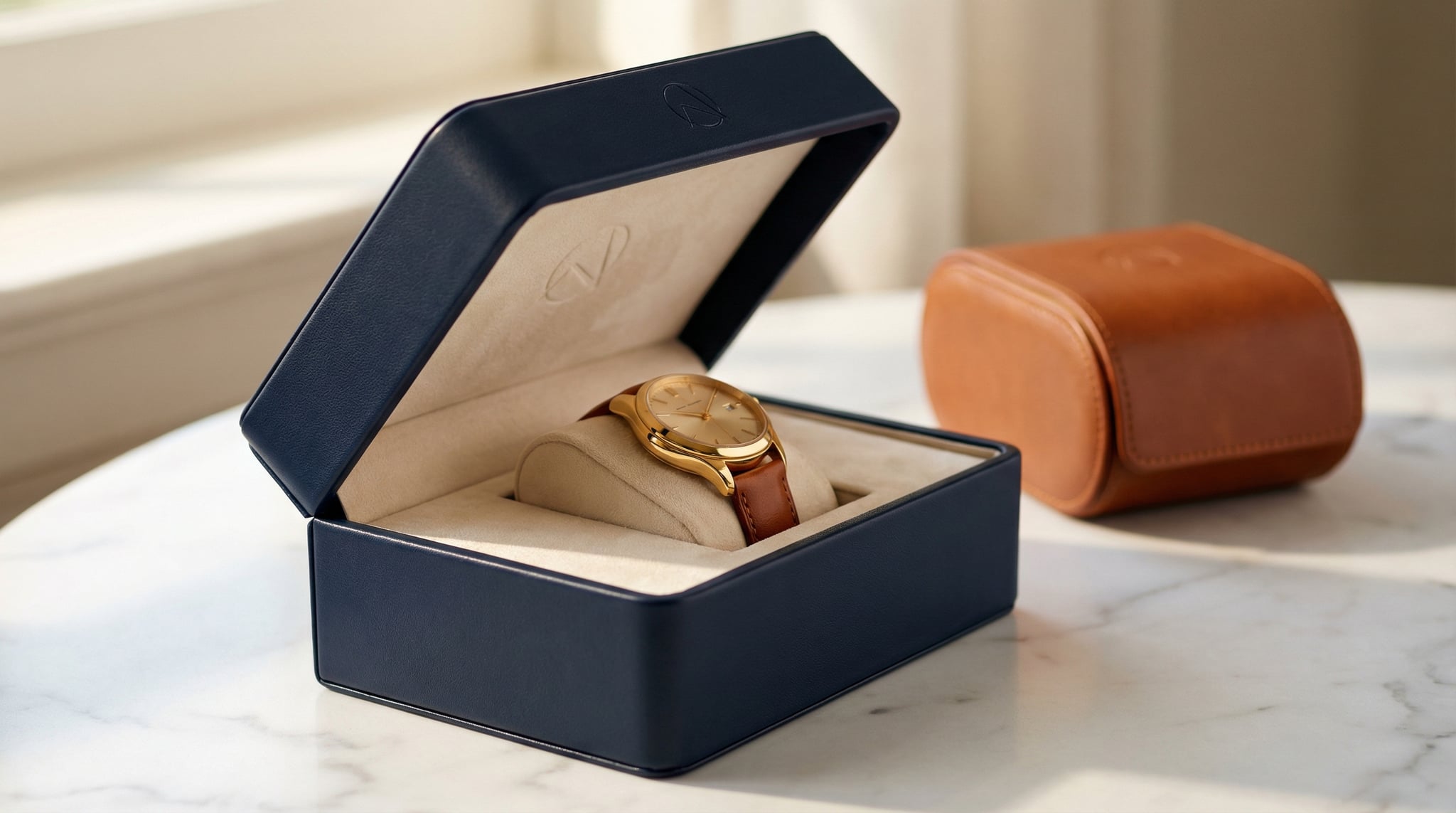
Why Watch Packaging Requires a Different Approach
A watch is worn, felt, and seen every day — and the box it arrives in sets the tone for that entire relationship. Custom watch packaging demands heavier construction, larger dimensions, and interior engineering that standard jewelry boxes simply do not provide. Vela Packaging designs custom watch boxes in four formats — single presentation, collector sets, travel cases, and display boxes — with pillow inserts, foam cradles, and branded finishing, starting from 300 units. This guide covers watch box types, interior construction, materials, branding techniques, and production considerations for brands entering or refining this category.
For brands already familiar with jewelry box construction, many of the same principles apply — but at a different scale. Our custom jewelry box guide covers the foundational techniques that watch packaging builds upon.
Watch Box Types
The right format depends on whether you are packaging a single timepiece, a collection, or a travel-ready product.
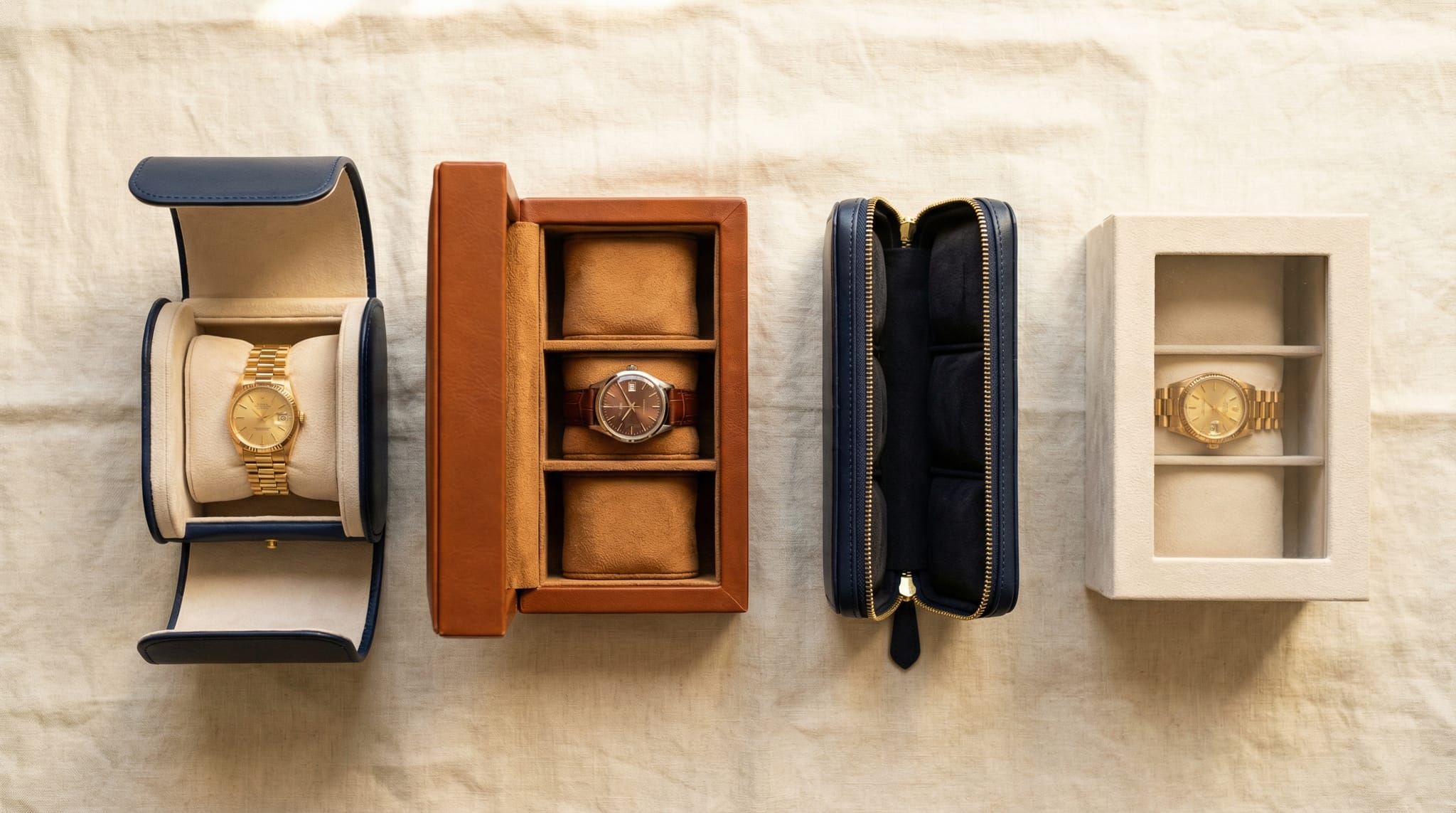
Single Presentation Box
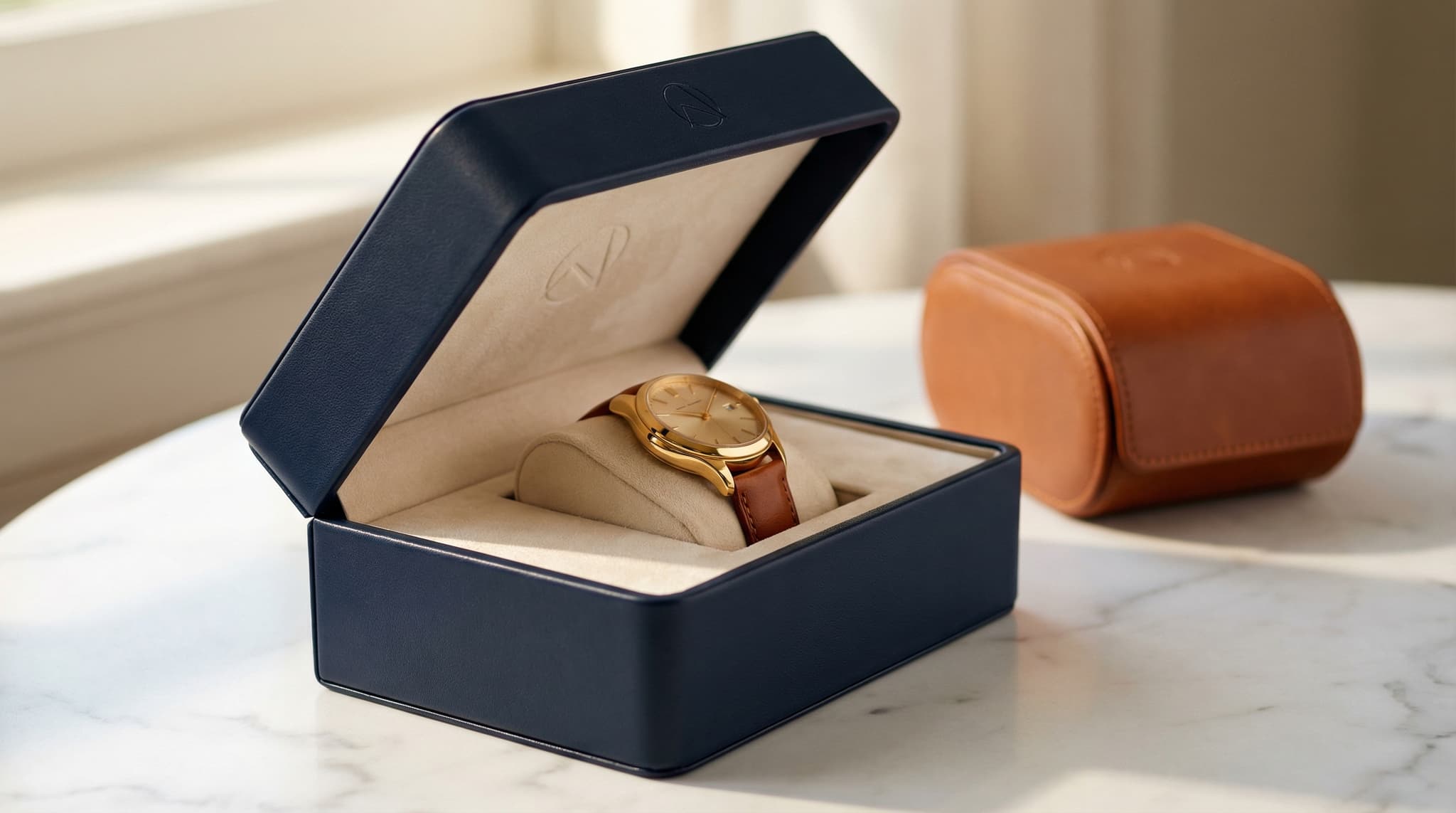
The most common format for retail and gifting. A rigid box with a hinged or magnetic lid, sized to hold one watch on a pillow insert. Typical dimensions run 100–120mm square and 75–90mm deep — substantially larger than a ring or earring box.
Single presentation boxes are the format most customers will encounter first. The weight of the box, the resistance of the lid, and the moment the watch is revealed all shape the brand impression. A magnetic closure adds a clean, hardware-free finish that suits contemporary watch brands particularly well.
Collector Set Boxes
Designed to hold two, three, or more watches in a single case. Collector boxes use individual pillow compartments separated by padded dividers, often with a clear glass or acrylic window in the lid for display.
These are popular for limited editions, anniversary collections, and brand loyalty programs where customers receive a curated set. The interior layout must accommodate different case sizes within the same box, which requires careful insert engineering.
Travel Cases
Compact, impact-resistant cases designed for watches in transit. Travel cases typically feature a zip closure, a reinforced shell, and foam cradles that grip the watch case firmly. Interior dimensions must account for bracelet width and clasp thickness.
Travel cases straddle the line between packaging and accessory — many customers use them daily. This makes material durability and hardware quality especially important.
Display Boxes
Open-top or glass-lid boxes designed for retail counters, showrooms, or collector shelving. Display boxes prioritize visibility — the watch should be fully visible without opening the box. Interior lighting, lacquered finishes, and branded backdrops are common features in high-end display formats.
Interior Construction
The interior of a watch box must solve a problem that most jewelry packaging does not face: securing a heavy, irregularly shaped object with a clasp, crown, and bracelet that can shift and scratch surfaces.
Pillow Inserts
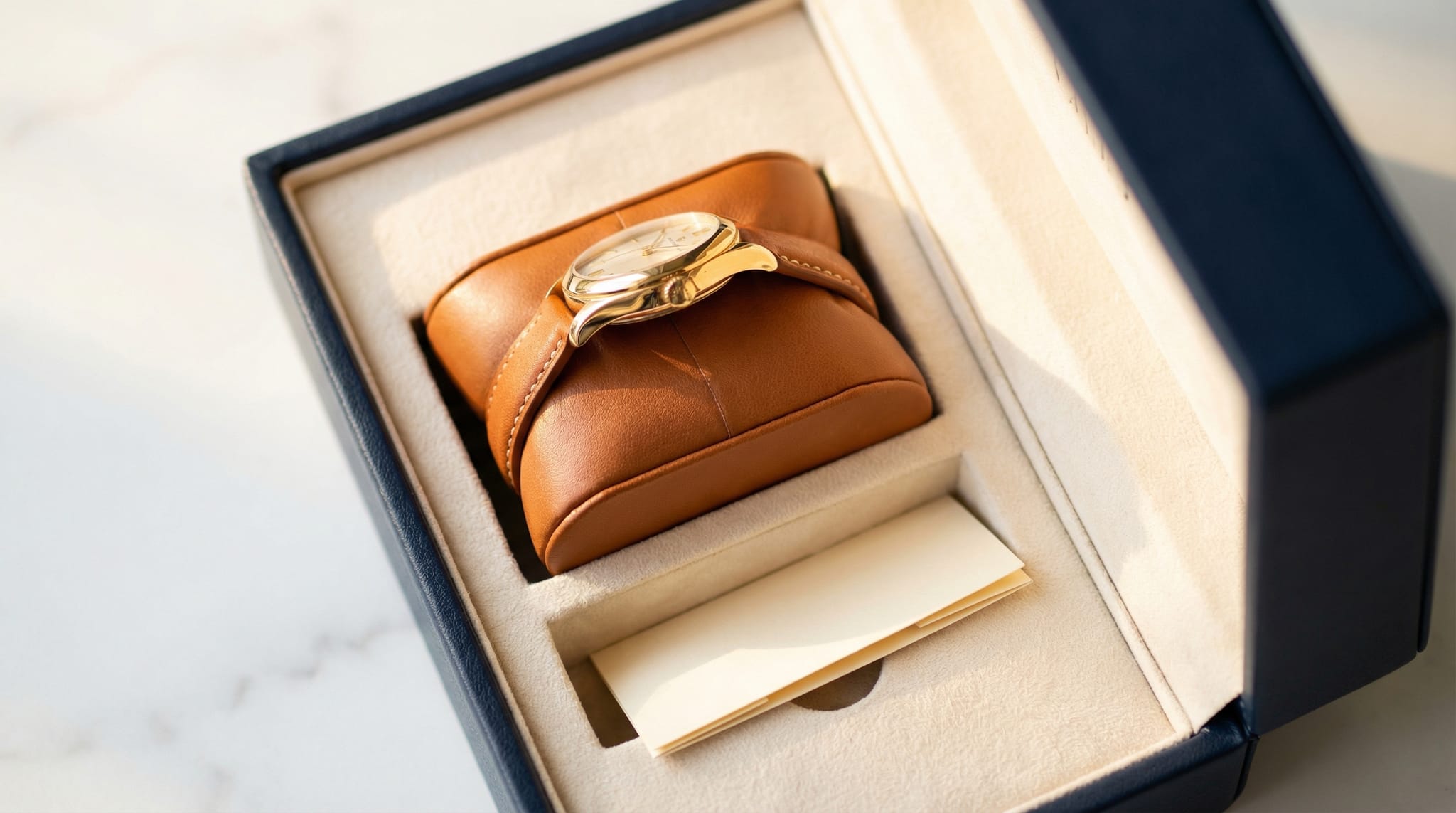
The classic watch presentation interior. A padded pillow — typically covered in velvet or suede — sits in a shaped recess. The watch bracelet wraps around the pillow, holding the watch upright at a slight angle for maximum visual impact.
Pillow dimensions matter. A pillow too small lets the watch slide off; too large, and the bracelet cannot close around it naturally. For brands offering multiple case sizes, a medium-profile pillow (approximately 70mm wide by 50mm tall) accommodates most men's watches, while a narrower version suits women's timepieces.
Contoured Foam Cradles
EVA foam with a flocked (velvet or suede) overlay, precision-cut to match the watch case diameter. The watch sits face-up in a shaped depression, with a separate channel for the bracelet. This format provides the most secure hold — critical for shipping and transit.
Foam cradles can be engineered with a spring-loaded base that lifts the watch when the lid opens, adding a theatrical reveal element.
Winding Mechanism Housing
For automatic watch brands at the highest tier, some presentation boxes include a built-in watch winder. The pillow rotates on a battery-powered or USB-powered motor, keeping the movement wound during display or storage. This is a specialized feature with a significant cost premium, but for brands selling timepieces above $10,000, it communicates an extraordinary level of care.
Certificate and Accessory Compartments
Watch purchases typically include warranty cards, certificates of authenticity, operating instructions, and sometimes spare links or a cleaning cloth. A lift-out tray with a hidden compartment beneath, or a hinged flap behind the pillow, provides dedicated space for these documents without cluttering the primary presentation.
Materials for Custom Watch Boxes
Watch packaging materials overlap significantly with jewelry packaging, but the scale and weight of watch boxes change the performance requirements.
| Material | Best For | Character | Durability |
|---|---|---|---|
| Genuine leather | Heritage and luxury brands | Rich, warm, ages with character | Excellent |
| Wood-effect rigid board | Prestige and collector editions | Substantial, traditional | Very good |
| Velvet-wrapped | Classic and mid-market brands | Soft, tactile, jewel-toned | Good |
| Suede-wrapped | Contemporary luxury brands | Matte, modern, understated | Good |
| Soft-touch laminated paper | Minimalist and fashion-forward brands | Smooth, clean, lightweight | Good |
Greyboard weight is the hidden differentiator. Standard jewelry boxes use 1.5–2mm greyboard. Watch boxes demand 2.5–3mm to support the heavier contents and deliver the substantial, weighty feel that customers associate with premium timepieces.
Interior materials follow the same logic as engagement ring boxes — the lining should provide a quiet backdrop that does not compete with the watch. Cream velvet, ivory suede, and stone-grey microfiber are the most versatile interior choices for watch packaging.
Branding Techniques for Watch Packaging
Watch boxes offer more branding surface area than most jewelry packaging, and the techniques used should take advantage of that scale.
Exterior Logo Placement
Watch box lids are typically 100mm or wider — large enough for a full brand logo, logotype, or emblem at a size that reads clearly from a distance. Embossing, debossing, and foil stamping are the most common techniques. Blind debossing (no color, just a pressed impression) suits heritage brands; gold or silver foil stamping suits brands that want their logo to catch light.
Logo placement is almost always centered on the lid. Some brands position a secondary mark — a crest, monogram, or tagline — on the base or the spine of a hinged box.
Case-Back Window
A distinctive feature unique to watch packaging: a cutout or transparent panel in the box lid or interior that allows the watch case-back to remain visible while the watch sits on its pillow. This is particularly effective for brands with exhibition case-backs that showcase the movement.
The window is typically acrylic or tempered glass, set flush with the interior surface and framed by the lining material.
Interior Branding
The interior lid is prime branding real estate. A foil-stamped logo, a printed brand story, or a serial number plate creates a second moment of discovery when the box is opened. Some brands include a subtle embossed pattern across the entire lid lining — a repeating monogram or texture that adds richness without overwhelming.
How Watch Packaging Differs from Standard Jewelry Boxes
Brands transitioning from jewelry packaging to watch packaging should expect several key differences:
Dimensions and weight. A standard ring box measures roughly 60mm square. A single watch box starts at 100mm and can exceed 130mm for larger sports watches. The box itself will weigh 150–300g empty — two to three times heavier than a jewelry box.
Interior engineering. Jewelry uses cushion inserts and die-cut foam slots. Watch packaging requires pillow inserts or contoured cradles that account for case depth, lug width, bracelet length, and clasp bulk. The tolerances are tighter because the object is heavier and more prone to shifting.
Structural requirements. Heavier greyboard, reinforced corners, and stronger magnets (if using magnetic closure). A watch box must support the weight of the timepiece without bowing, warping, or losing its shape over repeated openings.
Accessories. Jewelry packaging rarely needs to accommodate documents. Watch packaging almost always includes warranty cards, instruction booklets, and certificates — requiring dedicated compartments or inserts.
Production Timeline and MOQ
Custom watch packaging follows the same production framework as other custom packaging, with slightly longer sampling times due to the larger dimensions and more complex interiors:
- Minimum order quantity: 300 units per design
- Sampling: 2–3 weeks for a pre-production sample
- Production: 3–5 weeks after sample approval
- Total timeline: 6–10 weeks from design brief to delivery
For collector sets and boxes with specialized features (winding mechanisms, display windows, complex multi-compartment interiors), add 1–2 weeks to the sampling phase for engineering review.
Frequently Asked Questions
What is the minimum order quantity for custom watch boxes?
Custom watch boxes start at 300 units per design, depending on materials and customization level. This MOQ applies to fully custom dimensions, materials, and branding.
How does watch packaging differ from standard jewelry boxes?
Watch boxes are larger (typically 100–120mm square and 75–90mm deep), use heavier greyboard (2.5–3mm), and require pillow inserts or foam cradles sized to specific case diameters. Standard jewelry boxes are shallower and use slot or cushion inserts designed for lighter items.
What is the best material for a luxury watch box?
Genuine leather is the most popular choice for luxury watch packaging — it communicates craftsmanship, ages well, and pairs naturally with watchmaking heritage. Wood-effect rigid board and velvet wrapping are also strong options depending on brand positioning.
Can watch boxes include a compartment for warranty cards and certificates?
Yes. Custom watch boxes can include a secondary compartment beneath a lift-out tray or behind a hinged flap for warranty cards, certificates of authenticity, operating manuals, and cleaning cloths.
How long does it take to produce custom watch packaging?
Sampling takes 2–3 weeks, followed by 3–5 weeks for production after sample approval. Total timeline from design brief to delivery is 6–10 weeks. Complex formats with display windows or winding mechanisms may require an additional 1–2 weeks for sampling.
A watch box is not ancillary to the product — it is the first chapter of ownership. The weight in hand, the resistance of the lid, the moment the timepiece is revealed on its pillow — these details tell your customer that the brand behind the watch considered everything.
Share your watch packaging vision with us and we will develop a sample that matches the caliber of your timepieces.