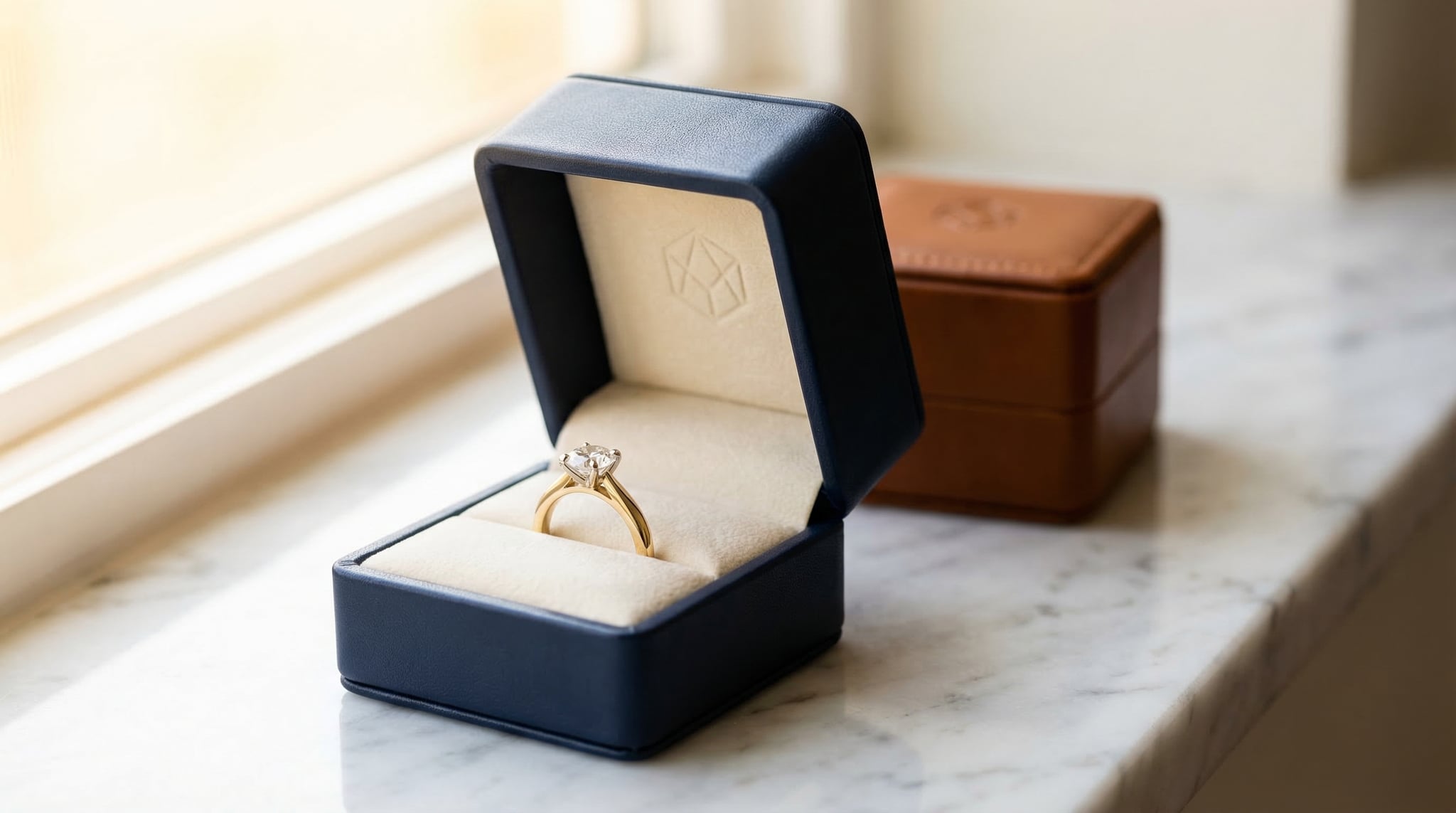
Why Engagement Ring Packaging Demands More
An engagement ring box is held in a pocket for days, opened in a moment someone will remember forever, and kept as a keepsake for decades — making it the single highest-stakes piece of packaging a jewelry brand produces. Vela Packaging creates custom engagement ring boxes in four styles — flip-top, drawer, clamshell, and book-style — with precision cushion inserts, genuine leather or velvet exteriors, and branded finishing, starting from 300 units. This guide covers ring box styles, interior construction, materials, branding, and how to design packaging that matches the caliber of the ring inside. For a broader overview of jewelry box types, see our complete guide to custom jewelry boxes.
Engagement Ring Box Styles
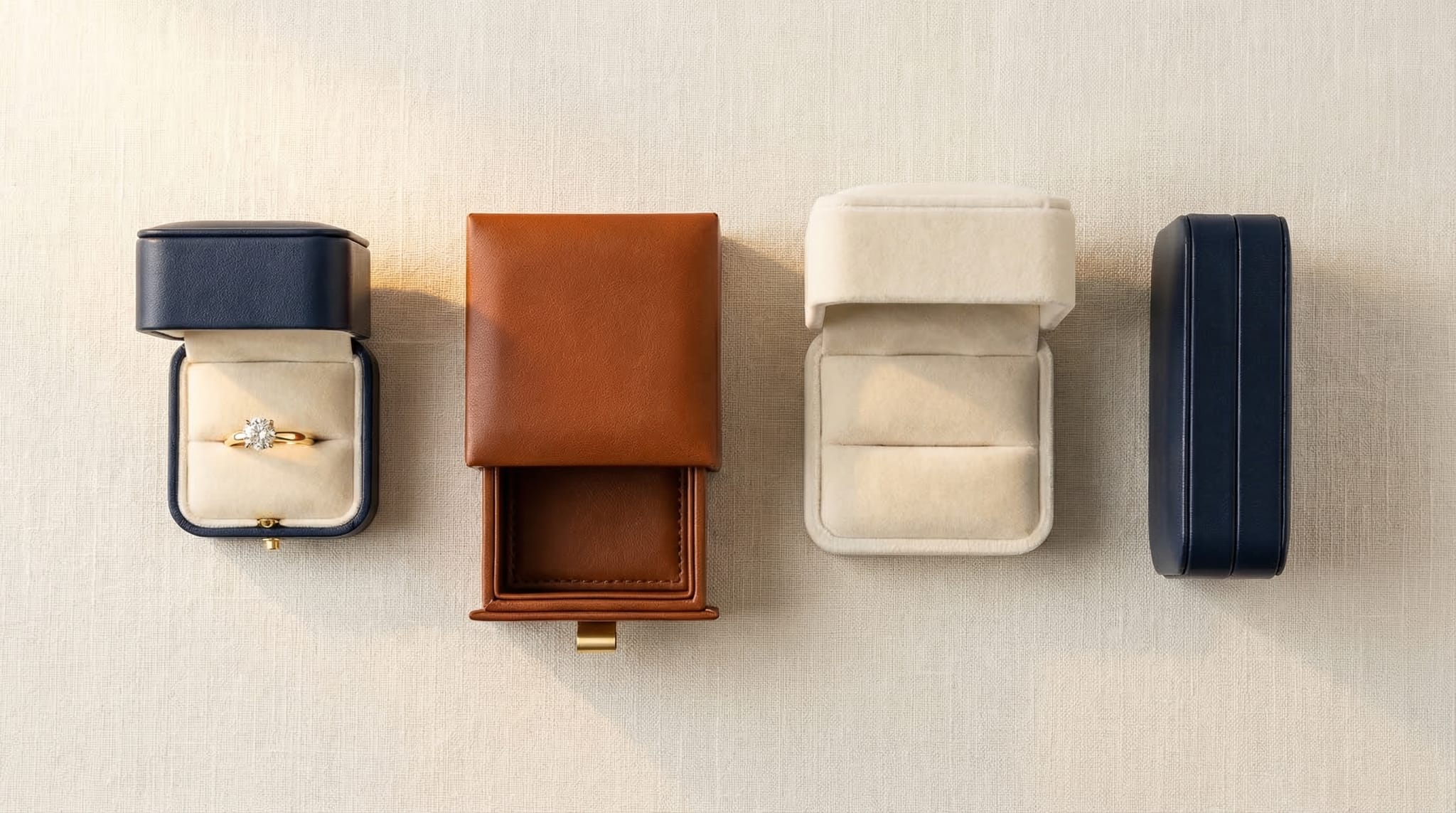
Not every ring box serves the same purpose. The right style depends on your brand aesthetic, your price point, and how your customers will use the box — at a proposal, in a retail setting, or as part of an e-commerce unboxing.
Flip-Top (Book-Style) Ring Box
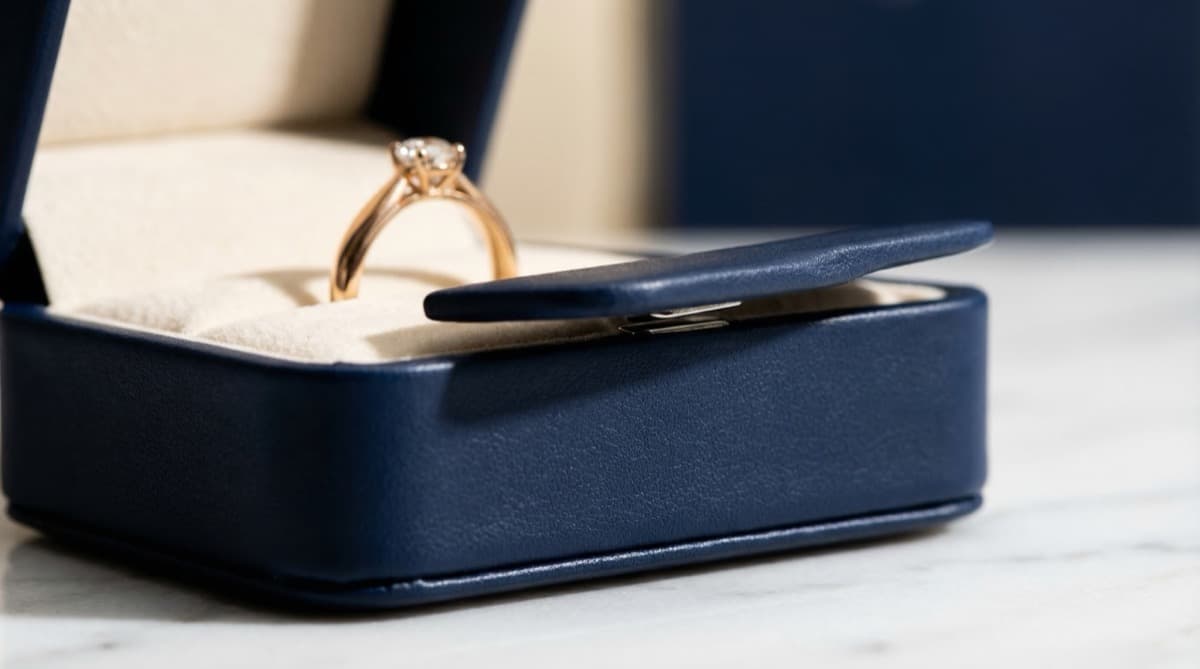
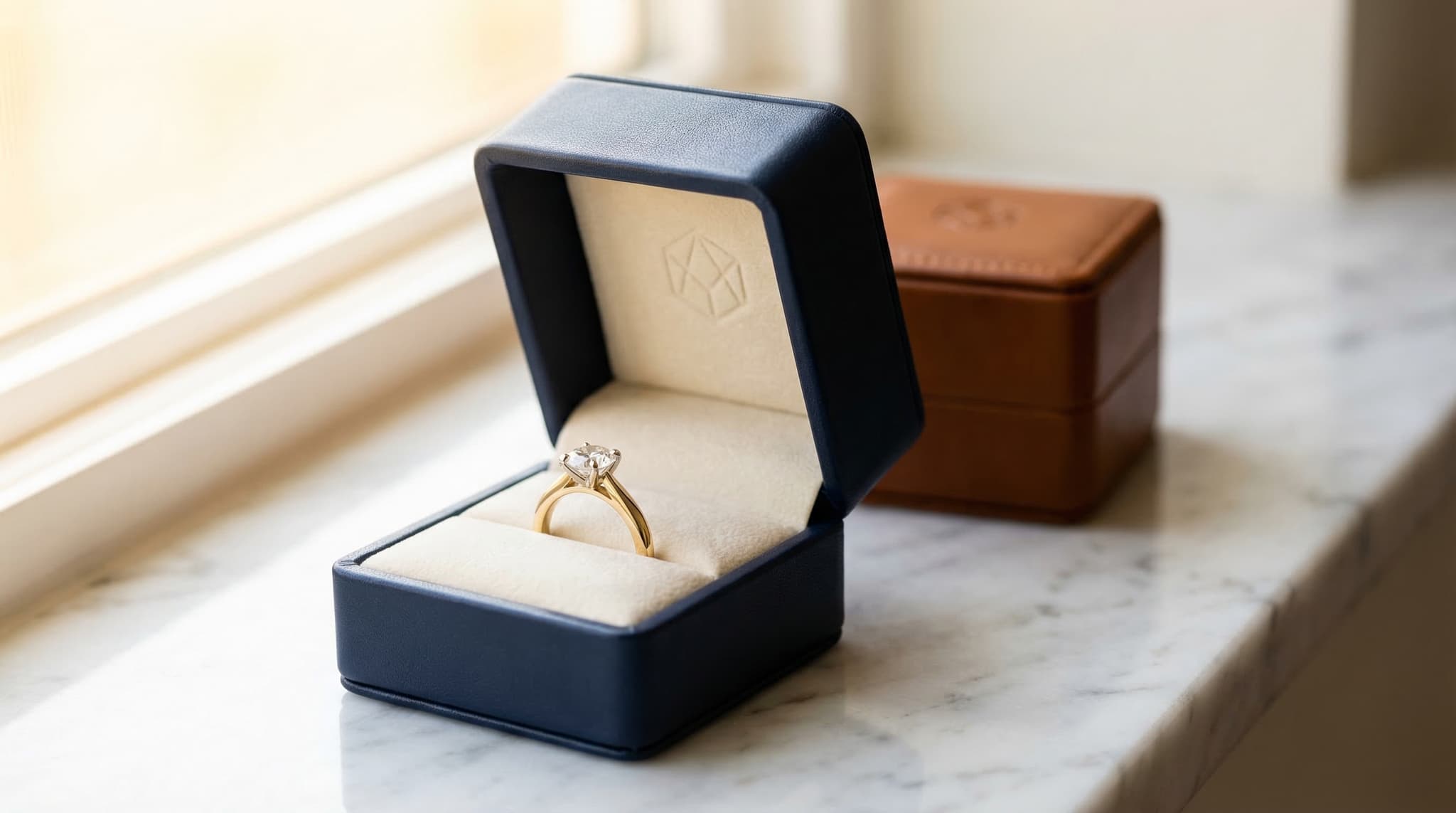
The classic engagement ring box. The lid opens upward on a concealed hinge or magnetic closure, revealing the ring immediately. Compact, pocketable, and familiar — this is the style most people picture when they imagine a proposal.
Flip-top boxes work equally well for retail counter display, in-store try-on, and e-commerce shipping. A magnetic closure adds a satisfying snap that signals quality. For more on magnetic options, see our guide to magnetic closure jewelry boxes.
Drawer-Style Ring Box
A sliding drawer held shut by concealed magnets or friction fit. The slow reveal — pulling the drawer open to expose the ring — builds anticipation and creates a theatrical unboxing moment.
Drawer-style boxes are particularly effective for luxury brands positioning engagement rings above $5,000. The added complexity in construction communicates that every detail has been considered.
Clamshell Ring Box
Opens along the front edge with a wide hinge, allowing the full interior to be visible at once. The traditional jeweler's presentation box — often lined in velvet with a central ring slot and a padded lid.
Clamshell boxes are the most retail-friendly format. They sit flat on a counter, open easily for try-on, and close securely for display. They also stack efficiently in cases and safes.
Slim Profile Ring Box
A modern alternative to the traditional deep ring box. Slim profile designs reduce the box height to just enough to hold the ring securely, creating a sleek, contemporary silhouette. These work well for minimalist brands and brands that want a box thin enough to slide into a jacket pocket without a visible bulge.
Interior Construction for Ring Boxes
The interior of an engagement ring box is where engineering meets emotion. The ring must be held securely, presented beautifully, and protected completely — all at once.
Ring Slot and Cushion Inserts
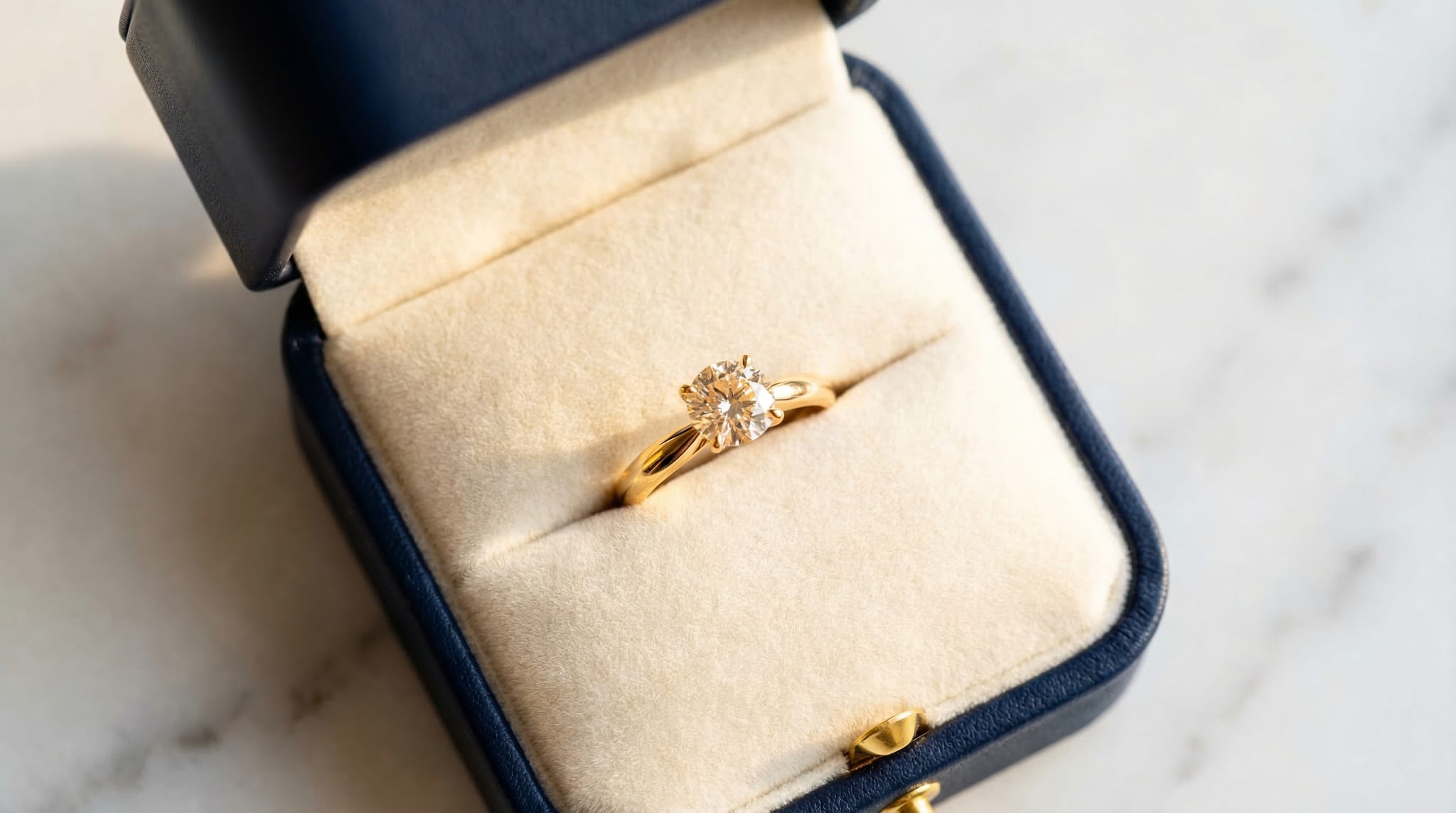
The most common interior for engagement ring boxes is a slotted cushion — a padded insert with a narrow channel that grips the ring band. The cushion elevates the ring above the base, creating a visual pedestal effect that draws the eye to the stone.
Cushion materials include velvet (the classic choice for luxury), suede (modern, matte, tactile), and satin (luminous, ideal for showcasing diamond brilliance). The slot width should be calibrated to your ring band range — too loose and the ring tilts; too tight and removal feels awkward.
Die-Cut Foam Inserts
EVA foam with flocked (velvet or suede) overlay, precision-cut to cradle the exact ring silhouette. Die-cut inserts offer the most secure hold and are the best choice for shipping and transit protection.
For brands that sell multiple ring sizes and styles, interchangeable foam inserts allow one box to accommodate different pieces without the ring shifting.
Ribbon Pull and Lift-Out Trays
A ribbon tab beneath the ring allows easy removal without fumbling — a subtle but meaningful detail. Lift-out trays add a second layer: the ring sits on an upper tray, with a hidden compartment below for a warranty card, cleaning cloth, or certificate of authenticity.
Materials for Custom Engagement Ring Boxes
The exterior material sets the first impression and signals your brand's positioning tier.
| Material | Best For | Feel | Durability | Price Tier |
|---|---|---|---|---|
| Genuine leather | Luxury and bespoke brands | Rich, warm, ages beautifully | Excellent — improves with age | $$$ |
| Leatherette | Mid-market brands | Leather-like, consistent | Very good — uniform finish | $$ |
| Velvet-wrapped | Heritage and traditional brands | Soft, tactile, classic | Good — shows wear over time | $$ |
| Soft-touch paper | Contemporary and minimalist brands | Smooth, matte, modern | Good — scuff-resistant | $ – $$ |
| Sustainable options | Eco-conscious brands | Varies by material | Good | $$ |
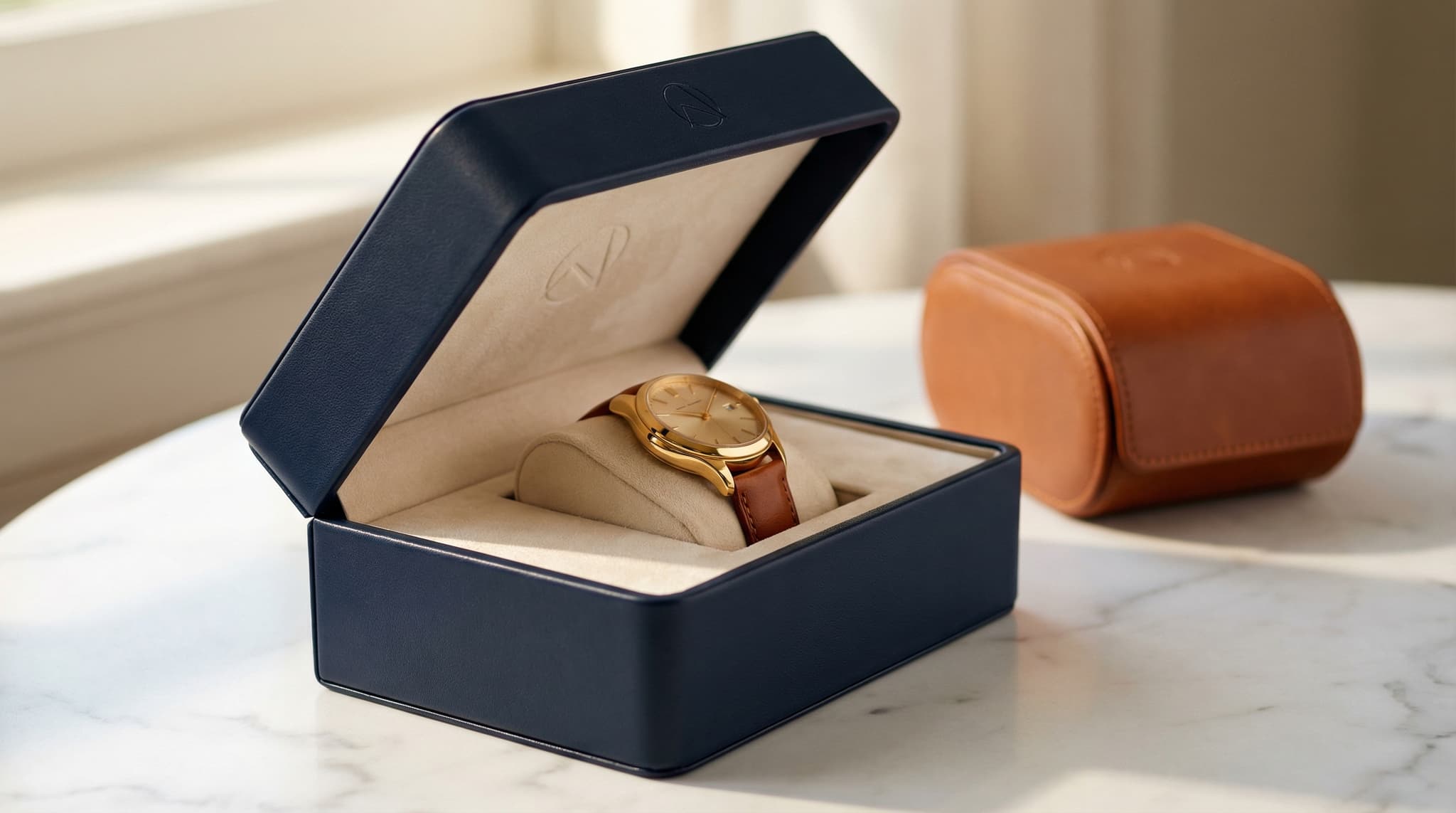
Interior linings should complement the exterior: cream velvet for navy leather, ivory suede for cognac leather, white satin for contemporary paper boxes. The interior color should never compete with the ring — it should provide a quiet, luminous backdrop.
Anti-tarnish protection matters for rings stored in the box between purchase and proposal (often weeks or months). Acid-free materials and anti-tarnish lining prevent oxidation on silver, white gold, and plated metals.
Branding Your Engagement Ring Box
A custom engagement ring box is a branding touchpoint that stays in your customer's home for years — often decades. The branding should be refined, not loud.
Exterior logo: An embossed or debossed logo on the lid is the most common approach for engagement ring boxes. Blind embossing (no color, just texture) creates an understated luxury effect. Hot foil stamping in gold adds warmth and visibility. The logo should be proportional to the box — typically centered on the lid, scaled to occupy no more than 40% of the surface.
Interior branding: A printed or foil-stamped logo on the interior lid creates a subtle surprise when the box opens. Some brands include a discreet message — "Crafted for you" or the brand origin — on the lid lining.
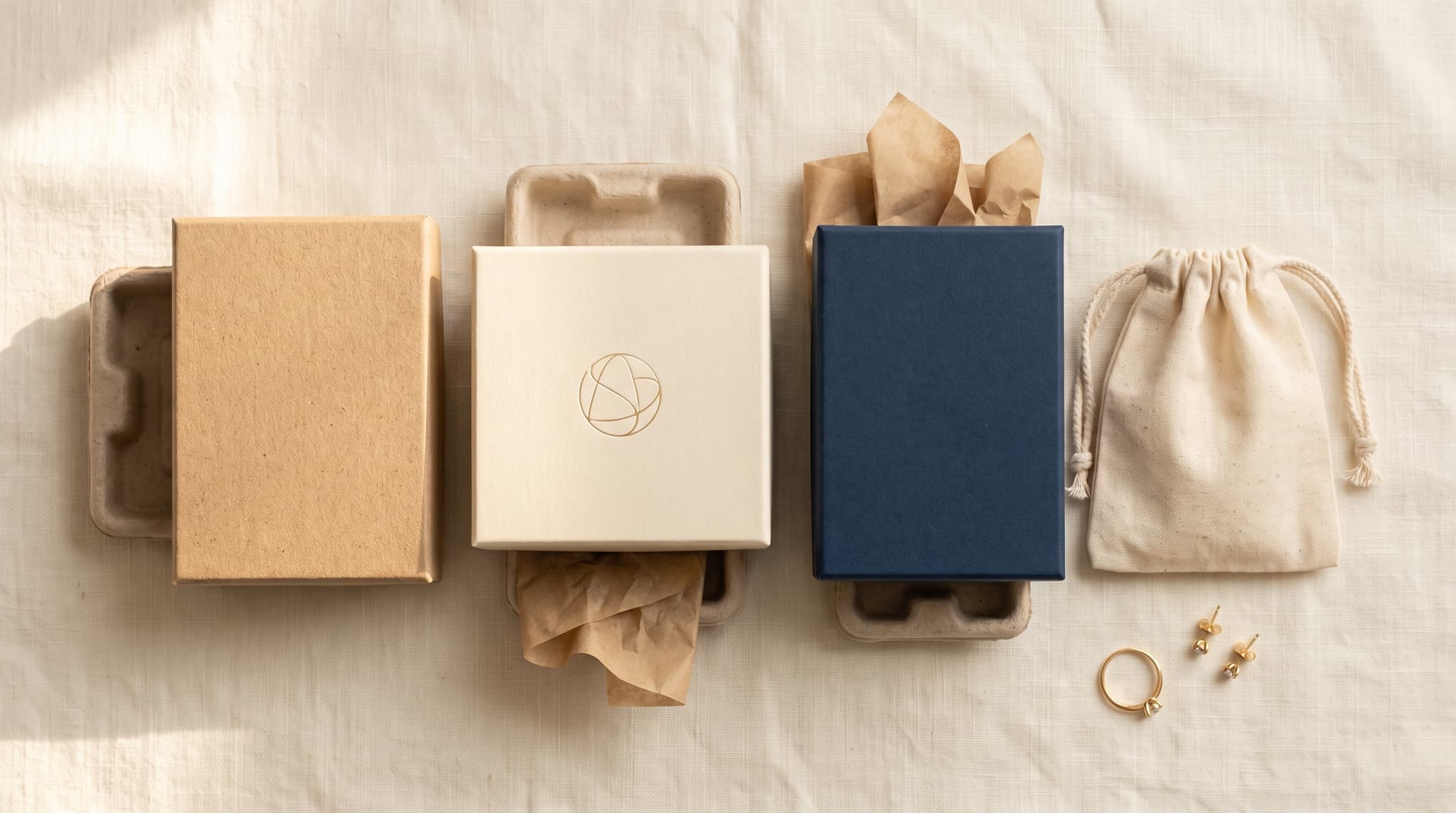
Packaging suite consistency: If you sell engagement rings alongside wedding bands, earrings, and necklaces, your ring box should be part of a coordinated packaging family. Same leather, same color, same branding technique — scaled to different sizes. This is especially important for retailers where customers see multiple boxes side by side.
For a detailed comparison of logo techniques — embossing, foil stamping, laser engraving, and more — see our custom logo options guide.
What Makes a Ring Box Proposal-Ready
Proposal packaging has requirements that standard retail packaging does not. Consider these factors when designing engagement ring boxes for customers who will propose:
-
Pocketability — the box must fit comfortably in a jacket or trouser pocket. Maximum dimensions for pocket carry: roughly 65mm x 65mm x 50mm.
-
Silent closure — the box should open smoothly and quietly. A magnetic closure that clicks shut is acceptable; a stiff hinge that squeaks is not.
-
One-hand operation — the proposer often holds the box in one hand. The lid should open easily without requiring both hands.
-
Secure hold — the ring must not shift or fall during transport. A proposer may carry the box for hours before the moment arrives.
-
Photogenic interior — proposals are photographed and shared on social media. The interior color and material should photograph well under varied lighting — natural daylight, restaurant ambiance, sunset.
Production Timeline and MOQ
Custom engagement ring boxes follow the same production process as other custom jewelry boxes:
- Minimum order quantity: 300 units per design
- Sampling: 2–3 weeks for a pre-production sample based on your specifications
- Production: 3–5 weeks after sample approval
- Total timeline: 6–10 weeks from design brief to delivery
For brands launching a new engagement collection, we recommend starting the packaging design process at least 10 weeks before your target launch date. This allows time for sampling, revisions, and production without rushing.
Frequently Asked Questions
What is the best material for a custom engagement ring box?
Genuine leather is the top choice for luxury engagement ring packaging — it feels warm, ages beautifully, and communicates quality immediately. For mid-market brands, leatherette offers a similar aesthetic at a lower price point. The right material depends on your brand positioning and retail price.
What is the minimum order for custom engagement ring boxes?
Fully custom engagement ring boxes — with custom dimensions, materials, and branding — start at 300 units per design. This MOQ is achievable for most jewelry brands and allows full customization of every detail.
How do you keep the ring secure inside the box during a proposal?
A precision-slotted cushion insert grips the ring band firmly. Die-cut foam inserts calibrated to your ring band width provide the most secure hold. The ring should not shift even when the box is carried upside down in a pocket.
Can I order matching boxes for engagement rings and wedding bands?
Yes. Custom packaging suppliers create coordinated suites where the engagement ring box and wedding band box share the same material, color, and branding — with different interior inserts sized to each piece. This creates continuity across the customer journey from proposal to wedding.
The engagement ring box is not just packaging — it is the opening scene of a story your customer will tell for a lifetime. The brands that understand this create boxes that feel as inevitable as the moment they are opened for.
Share your vision with us and we will design a sample that brings it to life, or reach out to discuss your engagement ring packaging needs.