Why Jewelry Packaging Design Deserves as Much Thought as the Jewelry Itself
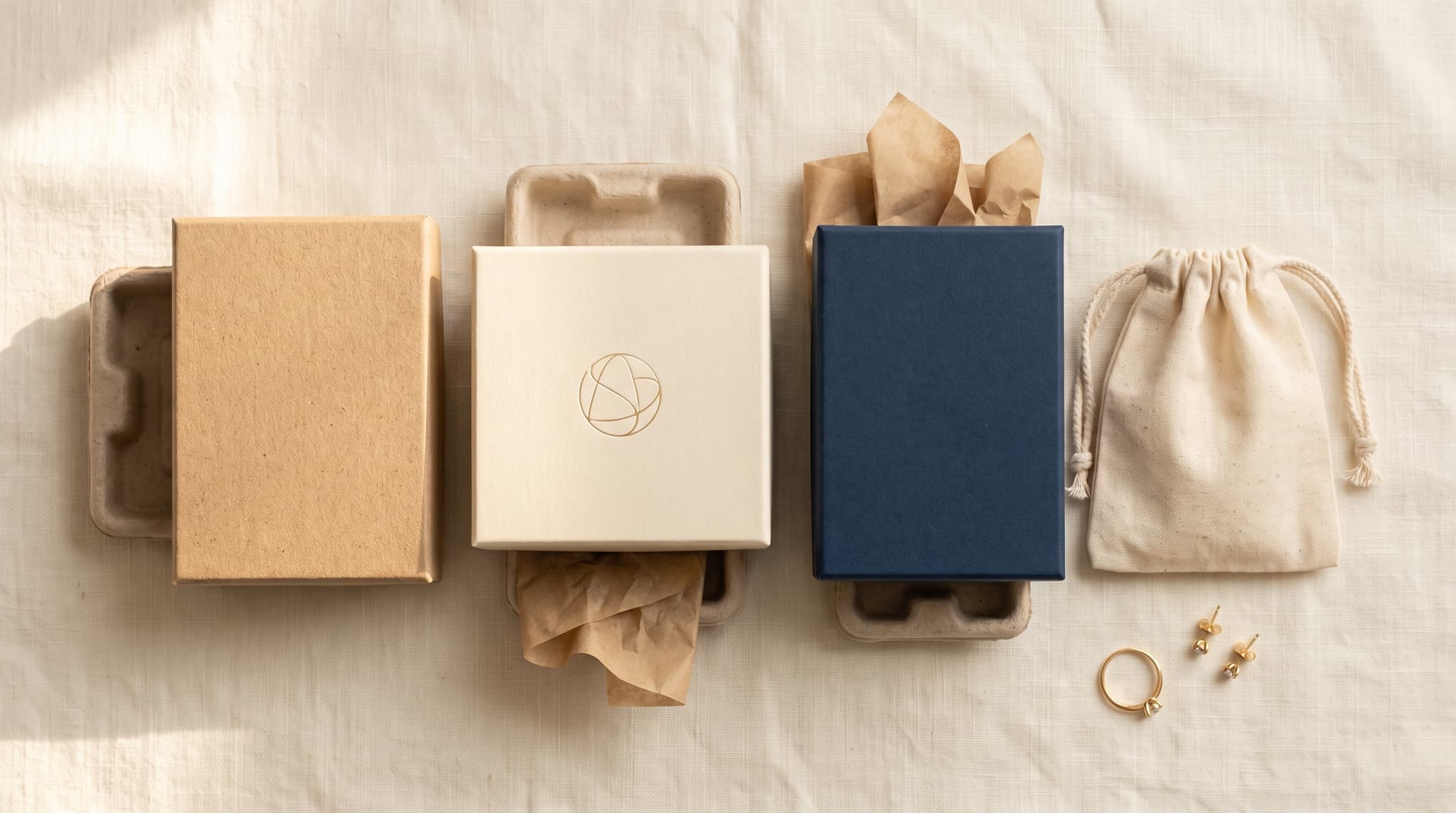
The best jewelry packaging design ideas share a common thread: one deliberate element, executed precisely. This guide collects 15 approaches — flush-lid rigid boxes, drawer-pull reveals, tone-on-tone texture layering, convertible travel cases, and more — that Vela Packaging sees working for luxury and mid-market brands right now. Each is achievable from 300 units per design.
Structural Design Ideas
1. The Flush-Lid Rigid Box
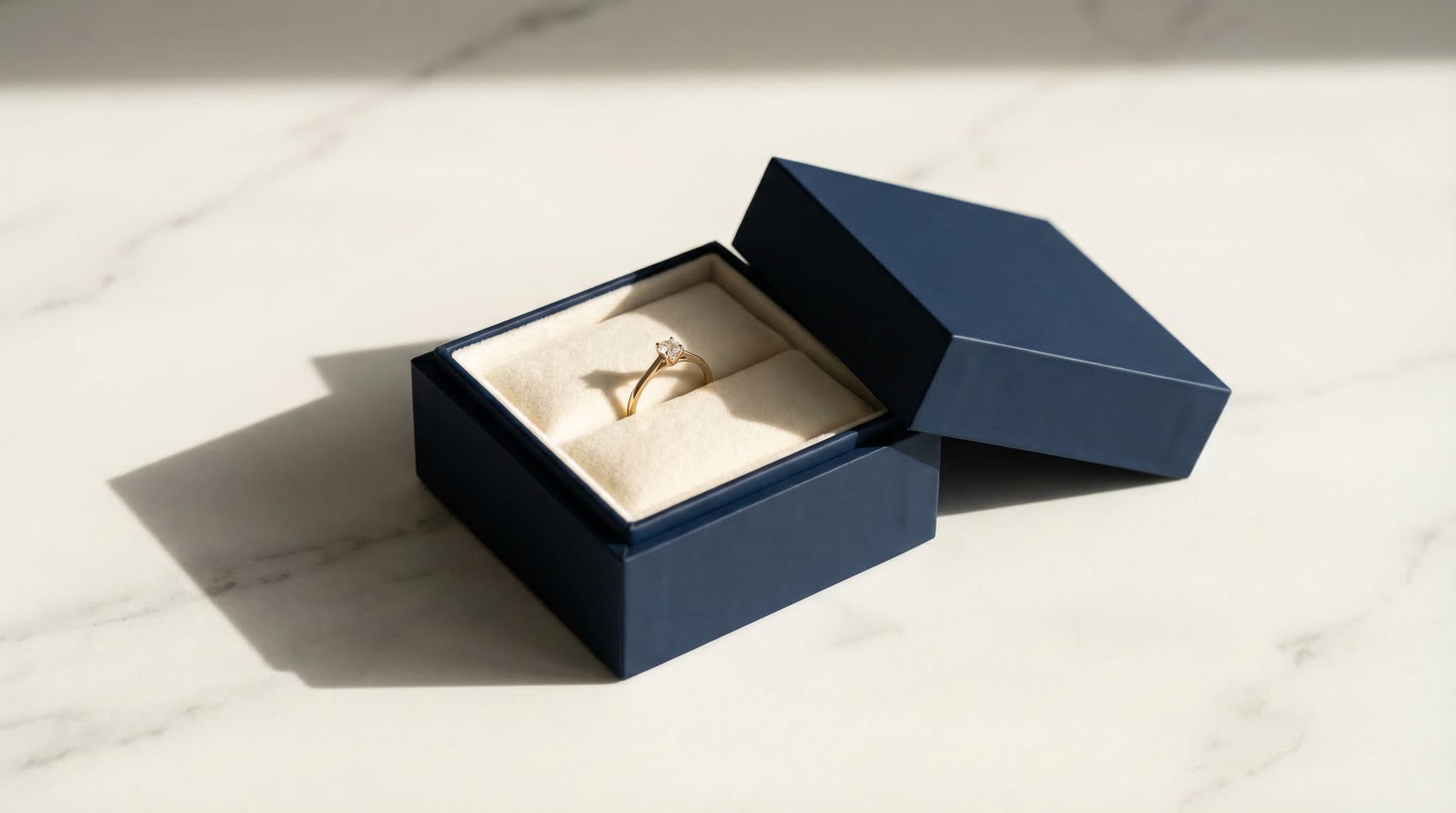
A rigid box where the lid sits perfectly flush with the base — no lip, no overhang, just a seamless silhouette. This design relies on precise tolerances and high-quality construction, which is exactly why it communicates luxury so effectively. The clean geometry reads as confident and intentional.
Best for: high-value pieces where the packaging needs to feel architectural. Pair with a magnetic closure for a satisfying tactile moment when the lid lifts — our guide to magnetic closure jewelry boxes covers construction and closure types in depth.
2. The Drawer-Pull Reveal
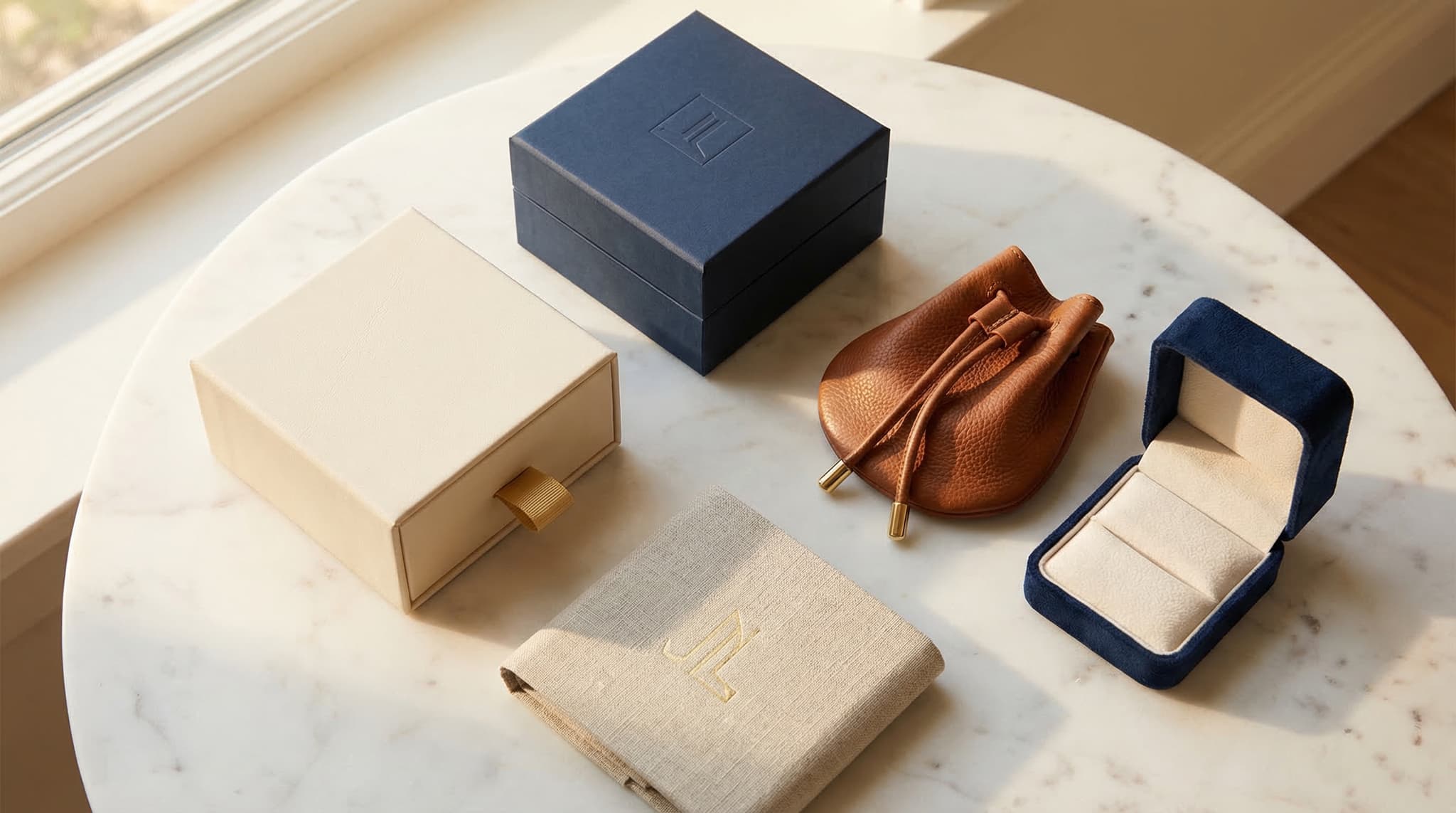
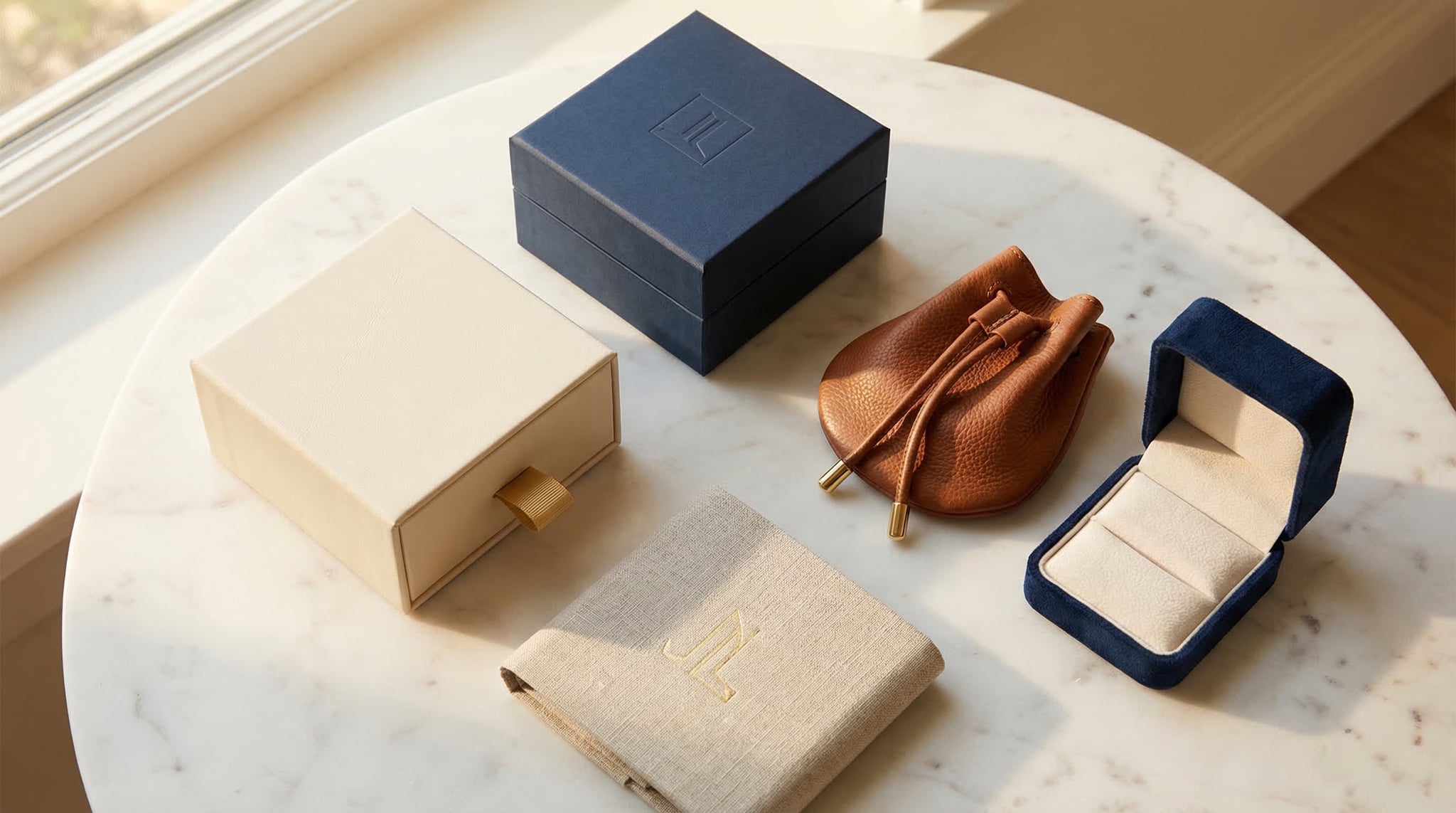
A sliding drawer mechanism that transforms opening into a slow reveal. The customer pulls a ribbon or tab, and the drawer glides out to present the jewelry. This design extends the anticipation — the piece appears gradually rather than all at once.
The drawer-pull works exceptionally well for rings and earrings, where the piece is small enough that a dramatic reveal adds perceived value. Add a debossed logo on the drawer front for brand presence without visual clutter.
3. The Nested Set
Design your packaging as a coordinated family rather than individual pieces. A large outer box holds a medium box and a pouch, all in matching materials and colors. When a customer purchases multiple pieces — say, a necklace and matching earrings — the nested set keeps everything together and reinforces the feeling of a curated collection.
This approach is particularly effective for bridal jewelry and gift sets, where the presentation is part of the purchase decision.
4. The Convertible Travel Case
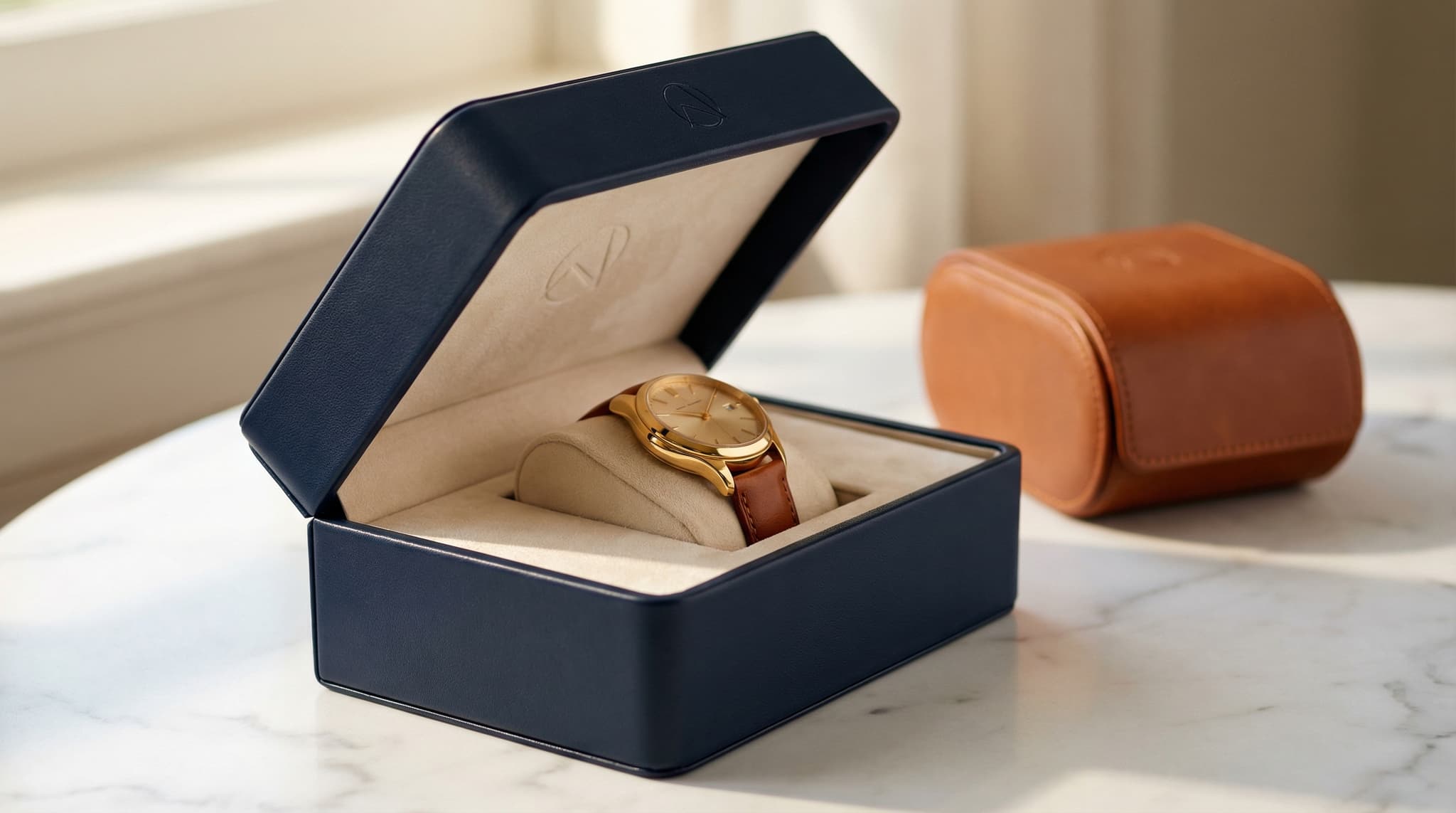
A jewelry box engineered with a second life in mind. The interior features removable cushions or reconfigurable compartments, so the box becomes a travel jewelry organizer after the initial unboxing. Customers who keep and reuse your packaging generate brand impressions for months — at zero additional cost.
Consider a compact clamshell design with a snap closure and a mirror insert for a genuinely useful travel companion.
5. The Sleeve-and-Tray System
An outer sleeve slides off to reveal an inner tray — two distinct moments in one opening. The sleeve carries your branding (logo, color, texture), while the tray carries the jewelry. This separation lets you design each component for its specific role: the sleeve for visual impact, the tray for protection and presentation.
The sleeve-and-tray system also makes reordering efficient — you can refresh the sleeve design seasonally while keeping the inner tray consistent.
Surface and Texture Design Ideas
6. Tone-on-Tone Texture Layering
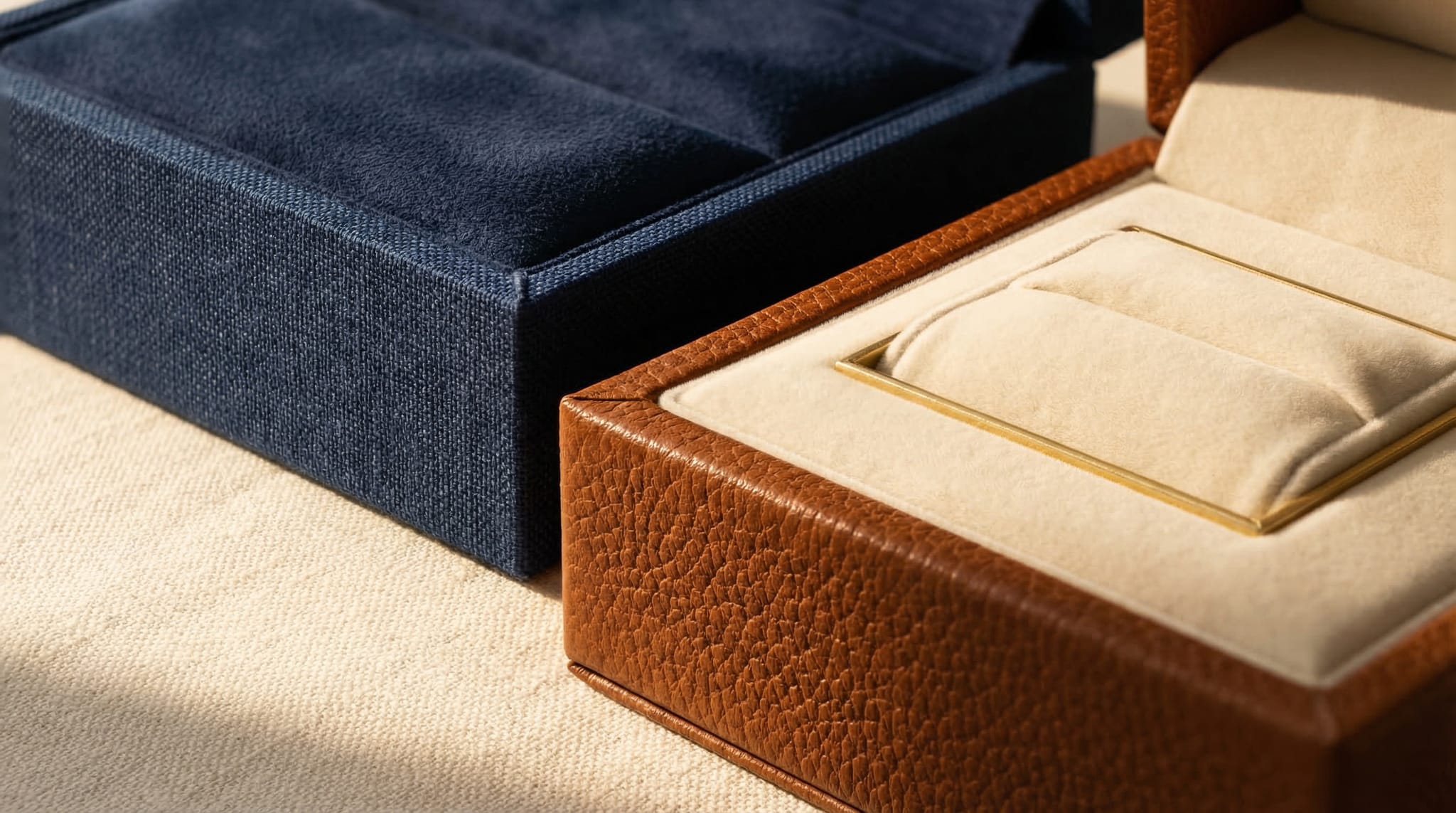
Use the same color across different textures — a navy pebbled leather exterior with a navy smooth leather interior panel, or a cream linen wrap over a cream suede-lined tray. The monochromatic approach feels cohesive and refined, while the texture variation adds tactile depth that rewards handling.
This technique is one of the most cost-effective ways to elevate perceived value. The material cost difference between a single texture and a layered approach is minimal, but the sensory impact is significant.
7. Contrast-Lined Interiors
Design the exterior and interior as deliberate opposites. A deep navy exterior opens to reveal a warm cream velvet interior. A matte cognac leather shell conceals a rich gold satin lining. The contrast creates a moment of surprise that photographs beautifully and makes the jewelry pop against its background.
The most effective contrast pairings we see: navy exterior with cream or gold interior, cream exterior with navy interior, and cognac exterior with cream interior.
8. Raw-Edge and Exposed-Construction Details
Let the making show. Exposed stitching along a leather pouch seam, a visible linen weave on a wrapped box, or a raw-cut leather edge that reveals the material's layers — these details signal craftsmanship and authenticity.
This approach works best for brands positioned as artisanal or handmade. It pairs naturally with genuine leather and natural fiber materials where the raw qualities are genuinely beautiful.
9. Embossed Pattern Fields
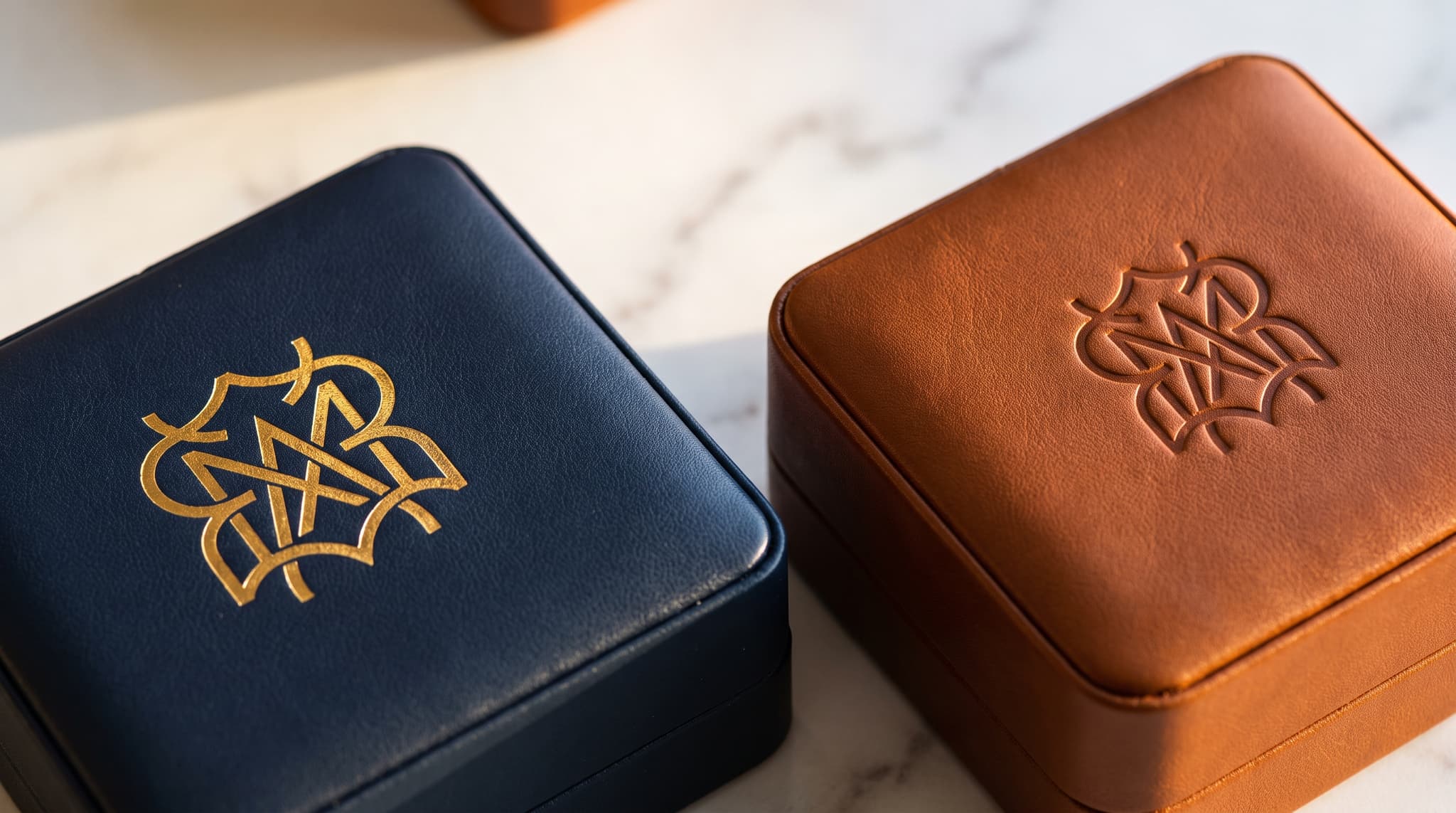
Move beyond the single-logo emboss. Cover an entire panel — the box lid, the pouch flap, or the bag face — with a repeating pattern: a geometric grid, an abstract wave, or a custom motif derived from your brand identity. The all-over pattern creates visual richness without any printed color, relying entirely on light and shadow.
Blind embossing (no foil, no ink) on premium leather produces the most sophisticated result, with the pattern appearing and disappearing as the light shifts.
Branding and Detail Design Ideas
10. The Interior Message
Print or emboss a short message inside the lid — visible only after the customer opens the box. "Crafted for you" or "Designed to be kept" or a simple brand tagline. This hidden detail creates a private moment between the brand and the customer, separate from the external presentation.
The inside-the-lid message is one of the highest-impact, lowest-cost design additions available. It costs almost nothing in production but generates consistent positive reactions and social media shares.
11. The Signature Closure Detail
Make the closure mechanism itself a design feature. A gold foil monogram on a magnetic flap. A woven ribbon in your brand color that ties the box shut. A custom-molded button on a leather pouch. The closure is the last thing a customer sees before the jewelry is revealed — it deserves design attention.
The best closure details are ones that feel intentional rather than functional. They should slow the opening just slightly, adding a beat of anticipation.
12. Coordinated Tissue and Insert Cards
Design the interior accessories — tissue paper, care cards, thank-you notes — as part of the packaging system rather than as afterthoughts. Custom-printed tissue in a tonal pattern, a heavyweight card with your logo letterpress-printed, or a care booklet bound with a matching ribbon. When every element shares the same design language, the total effect is greater than any single piece.
13. The Single-Material Commitment
Choose one material and let it define everything: the box, the pouch, the bag, the insert card holder. A brand that uses cognac leather across every packaging touchpoint creates an immediately recognizable identity. Customers begin to associate the material itself with the brand — before they even see a logo.
This works particularly well for brands with a strong point of view. The consistency reads as conviction, and it simplifies ordering and inventory management.
Finishing and Production Design Ideas
14. The Pantone-Matched Custom Color
Move beyond standard neutrals and expected tones. Work with your packaging partner to develop a proprietary color — matched to a specific Pantone reference — that becomes exclusively yours. A specific shade of sage, a particular warm gray, or an unusual indigo. When your packaging color is distinctive enough to be recognized without a logo, you have achieved something rare.
At Vela, we offer full Pantone color matching across leathers, fabrics, papers, and foils. The investment in a custom color pays dividends in brand recognition over time.
15. The Modular Packaging System
Design packaging components that mix and match across your product line. A universal outer box that accepts different interior trays — one configured for a ring, another for a pendant, another for earrings. The exterior stays consistent (maintaining brand recognition), while the interior adapts to each piece (maintaining protection and presentation).
The modular approach reduces your total SKU count, simplifies inventory, and creates visual consistency across your entire product range. It is the most operationally intelligent design decision a growing jewelry brand can make.
Choosing the Right Design Direction for Your Brand
Not every idea here will suit every brand. The most effective packaging design starts with two questions: What does your brand stand for, and what should the customer feel when they hold your packaging?
For luxury-positioned brands: Lean toward ideas 1, 6, 7, and 13 — structural precision, tonal texture layering, contrast interiors, and material consistency. These communicate quality through restraint.
For artisan and independent brands: Consider ideas 8, 10, and 12 — raw-edge details, interior messages, and coordinated accessories. These create warmth and personal connection without requiring large production runs.
For growing brands scaling up: Ideas 5, 14, and 15 — the sleeve-and-tray system, custom colors, and modular packaging — give you flexibility and brand recognition as your product line expands.
The common thread across all 15 ideas is intentionality. The packaging that works hardest for your brand is the packaging where every decision — material, color, structure, detail — was made on purpose.
Browse our portfolio to see how these design principles come to life in real projects, or explore our materials library to start imagining what your packaging could feel like.
Start Designing Your Packaging
The best time to think about packaging design is before your next product launch — not after. Whether you are refreshing an existing line or building packaging from scratch, starting with a clear design direction saves time, reduces sampling rounds, and produces a stronger result.
Request a custom quote to start a conversation about your packaging vision. Share your brand guidelines, your inspiration, and the pieces you need to package — we will translate that into a design concept that works for your brand, your customers, and your budget.